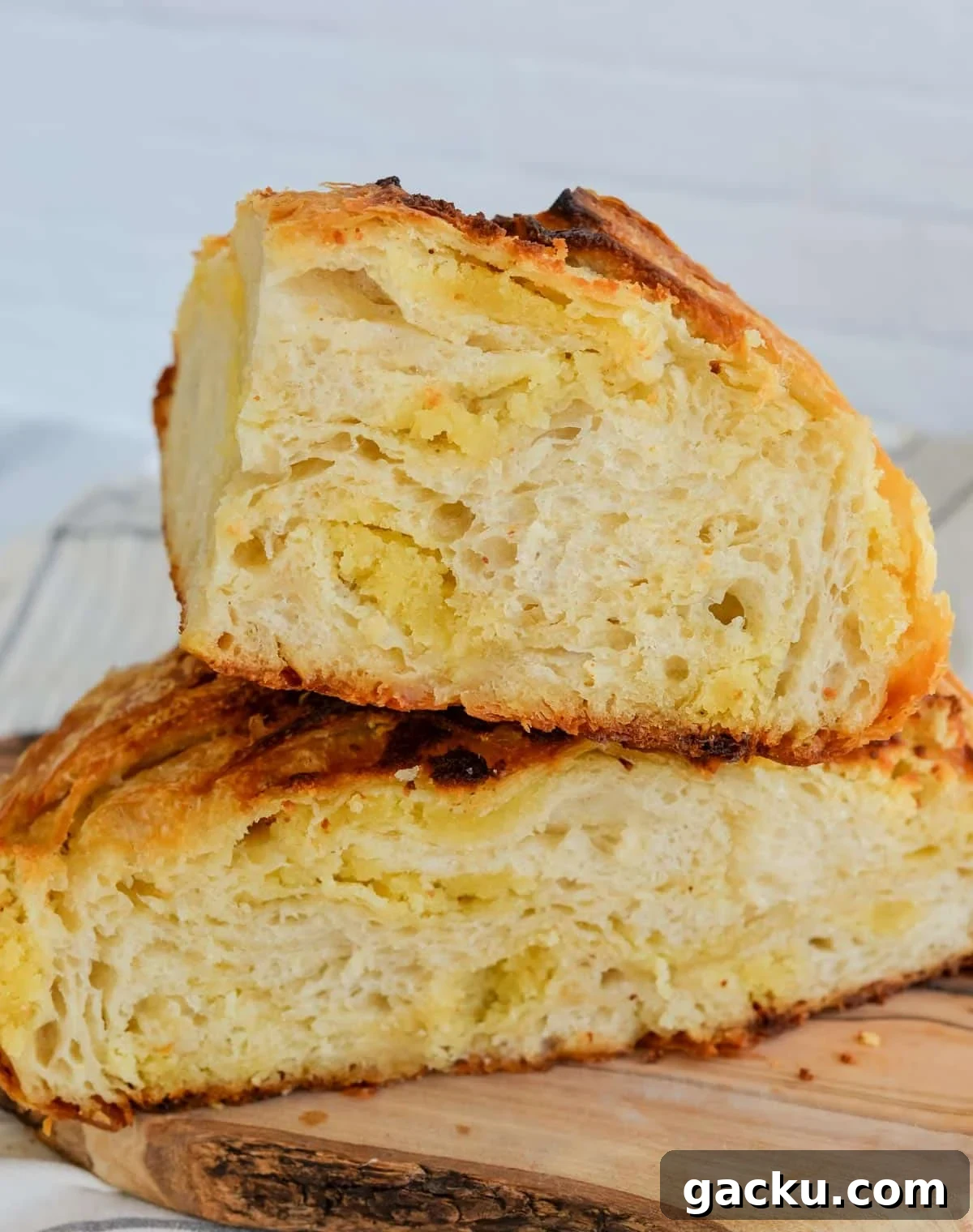
I’ve always loved almond croissants, so after creating the original sourdough croissant loaf, an almond version was the natural next step.
Buttery, lightly sweet, and filled with homemade frangipane, this Almond Croissant Sourdough Loaf captures the cozy, nutty flavor of an almond croissant in an easier sourdough loaf. It delivers flaky layers, tender crumb, and rich almond filling—perfect for brunch, an afternoon treat, or a weekend bake you’ll keep repeating.
Why You’ll Love Almond Croissant Sourdough
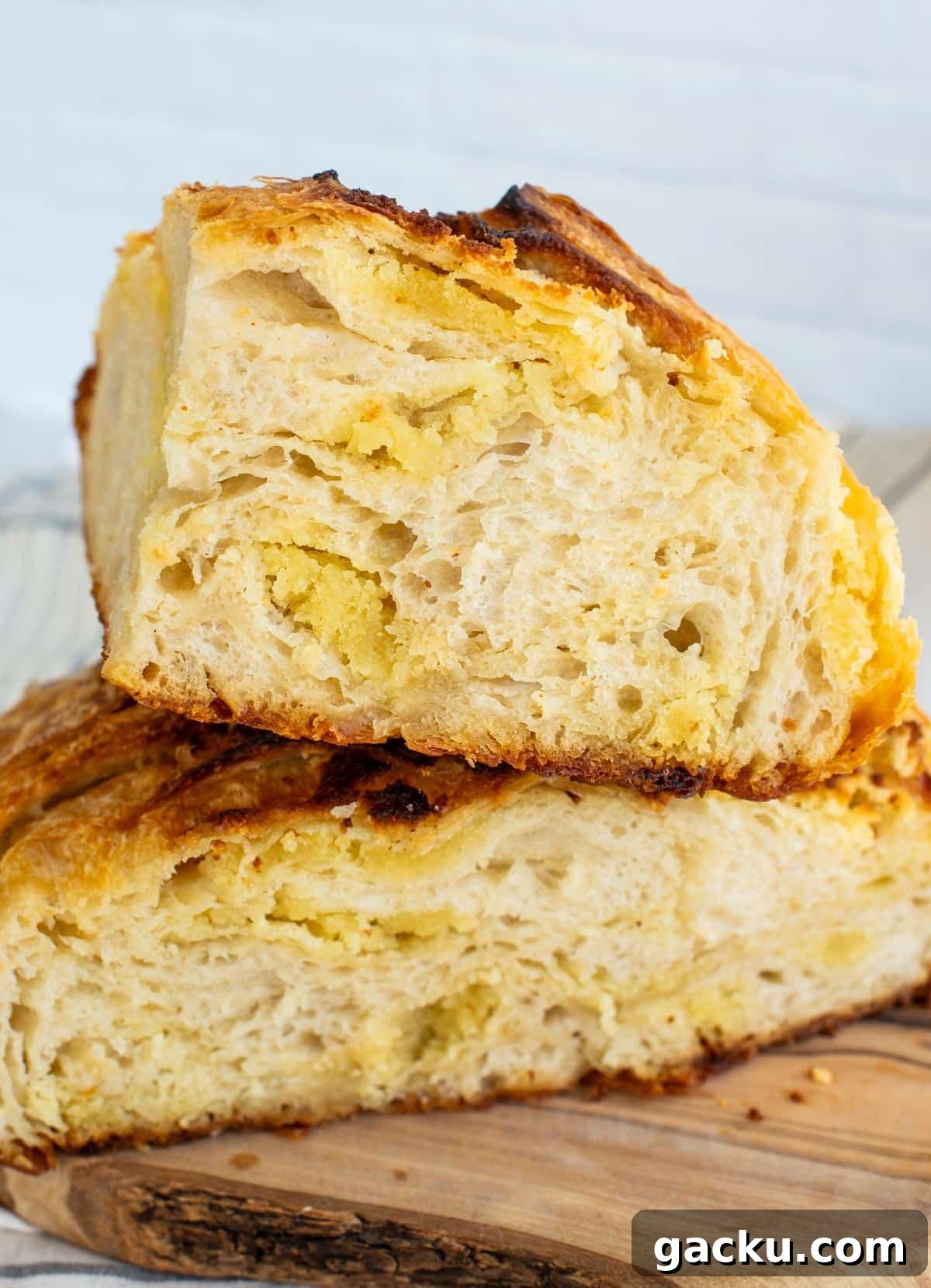
- Flaky Layers – Cold butter is incorporated during the stretch-and-folds so the dough develops flaky layers throughout, giving a croissant-like texture.
- Flavor and Texture – Buttery layers combined with almond frangipane provide the classic almond croissant taste in a simpler sourdough format.
- Versatile Loaf – The frangipane is delicious on its own; add almond paste or flaked almonds for extra almond flavor and texture.
New to sourdough? If you’re just starting, learn how to build a sourdough starter and check out beginner guides to fermentation. Naturally fermented sourdough takes longer but rewards you with deeper flavor and fermentation benefits.
Important Ingredients
Almond Croissant Sourdough Bread Base
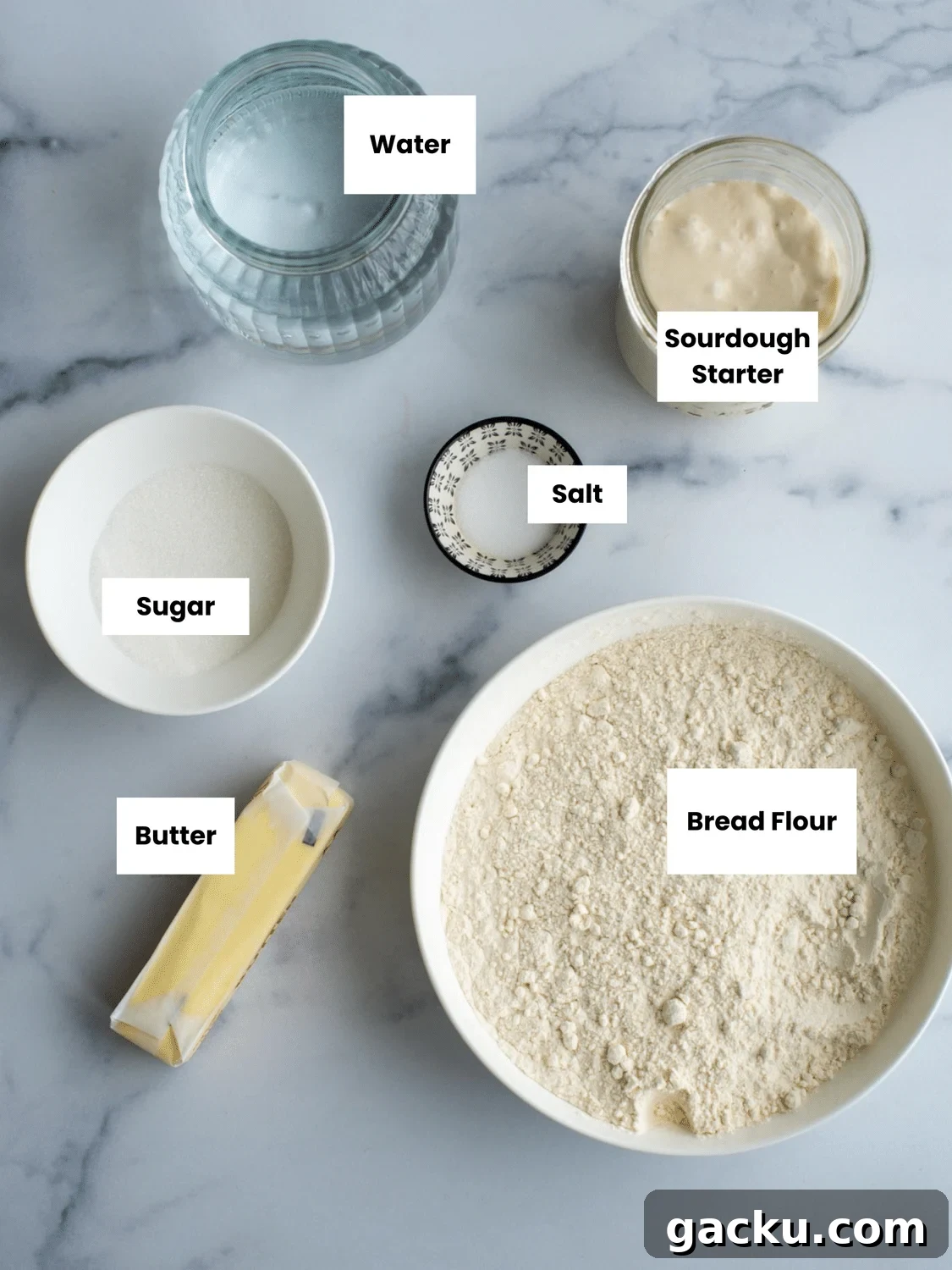
- Levain – A ripe levain made from active starter, flour and water is used to leaven this loaf.
- Unsalted Butter – Cold unsalted butter is key for flaky layers. You may use salted butter if preferred; both American and European-style butters work.
- Granulated Sugar – A small amount of sugar sweetens the dough to echo almond croissant flavor.
See the recipe card for full ingredient quantities.
Frangipane (Almond) Filling
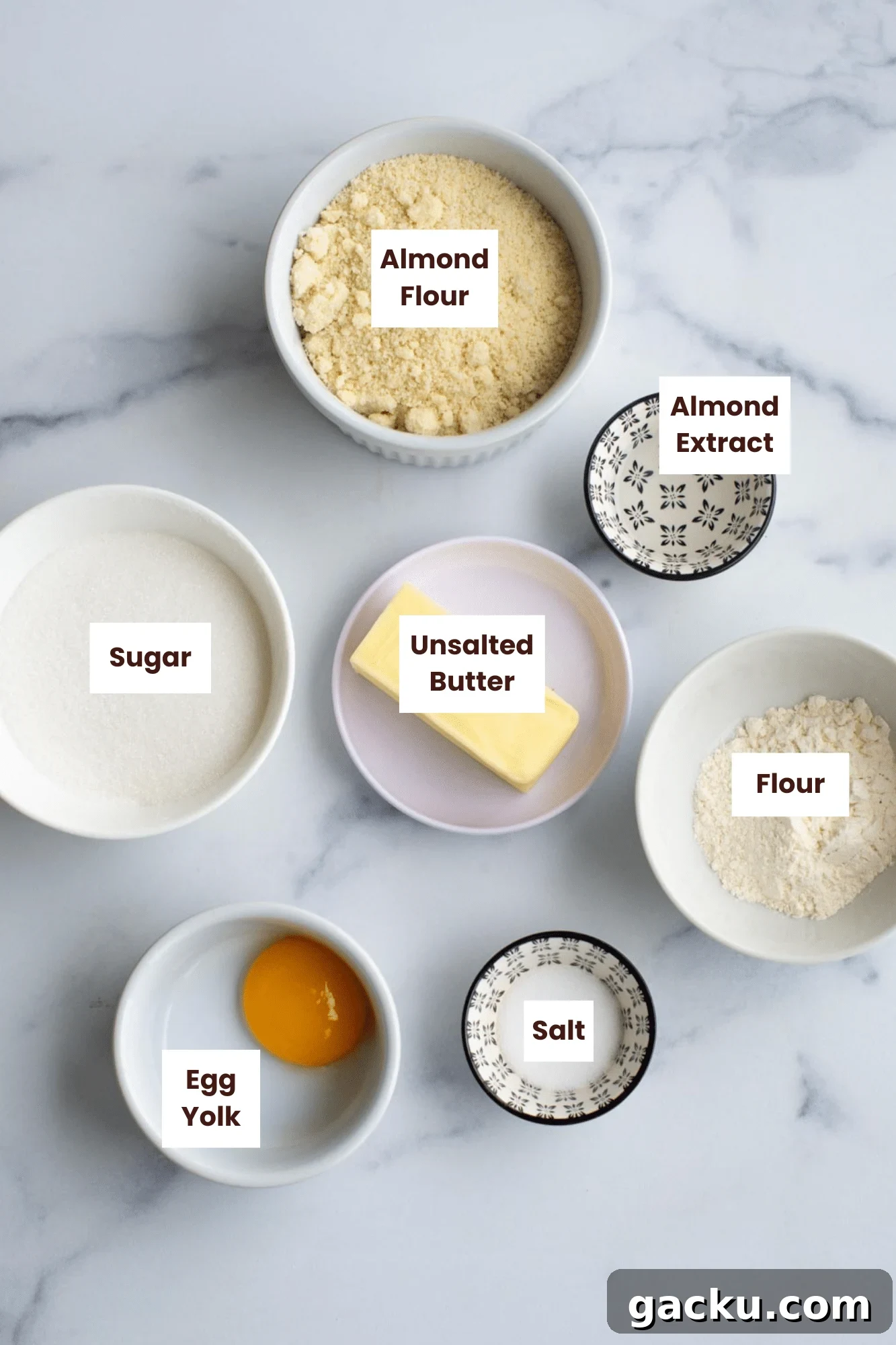
- Almond Flour – The base of the frangipane, giving it almond texture and flavor.
- Almond Extract – Boosts almond flavor throughout the loaf.
- Egg Yolk – Binds the filling; a whole egg can be used as an alternative if desired.
See the recipe card for full ingredient quantities.
Substitutions
- Sugar – Omit the extra sugar in the dough if you prefer a less sweet loaf.
- Unsalted Butter – Salted butter can be substituted.
- Levain – A bubbly, active starter can replace the levain if preferred.
- Frangipane – Add almond paste or flaked almonds for more texture and almond intensity.
Sourdough Baker’s Timeline
A sample schedule helps plan this longer sourdough bake. This loaf requires slower fermentation than commercial yeast breads, and keeping the butter chilled is essential. Aim for a dough temperature around 70–72°F so the dough rises while the butter remains cold.
| Day 1 | Mix Levain |
| 8:00 PM – 8:00 AM | Mix levain and let it mature 10–12 hours at about 78°F until doubled and bubbly. |
| Day 2 | Mix Dough → Bulk Fermentation → Lamination/Shaping → Cold Fermentation |
| 8:00 AM | Mix dough and begin bulk fermentation. |
| 8:30–10:05 AM | Perform a series of stretch-and-folds, adding grated cold butter in stages. Make frangipane and chill. |
| 10:00 AM – 5:00 PM | Continue bulk fermentation at 70–72°F until the dough has risen about 70%. |
| 5:00–5:15 PM | Laminate dough with frangipane, shape, and begin cold fermentation. |
| Day 3 | Score and Bake |
| 9:00–9:20 AM | Preheat Dutch oven, score the cold loaf, and bake as directed. |
How to Make Almond Croissant Sourdough
Mix the Levain
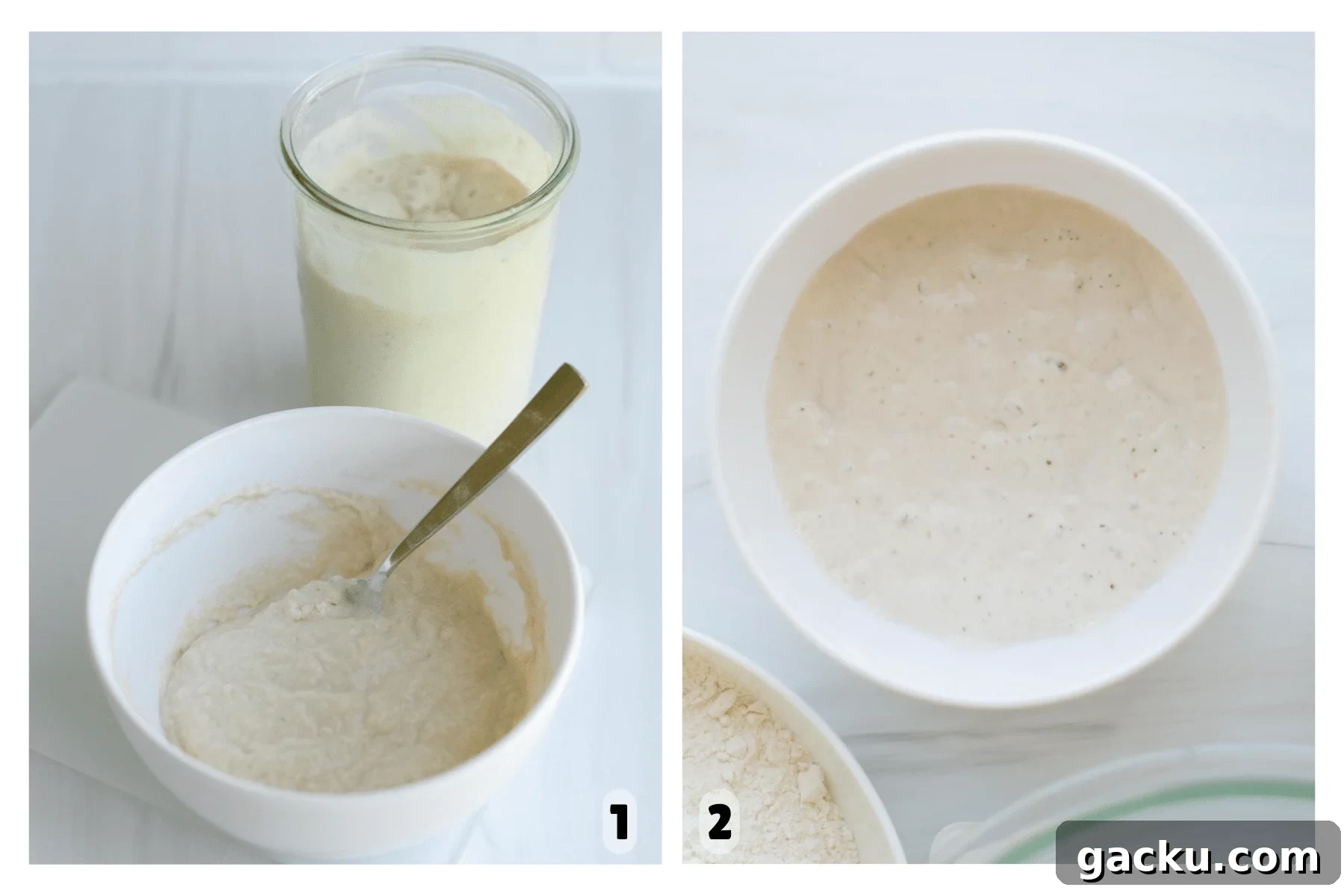
Step 1: Mix Levain. Combine ripe starter with water and flour and let it rise until bubbly and active.
Do you have to use levain? No—if you maintain a healthy, active starter you can substitute it for the levain.
Mix Dough & Bulk Fermentation
Step 2: Mix Dough. Combine levain, water, salt, sugar and bread flour into a shaggy dough. Cover and rest 30 minutes.
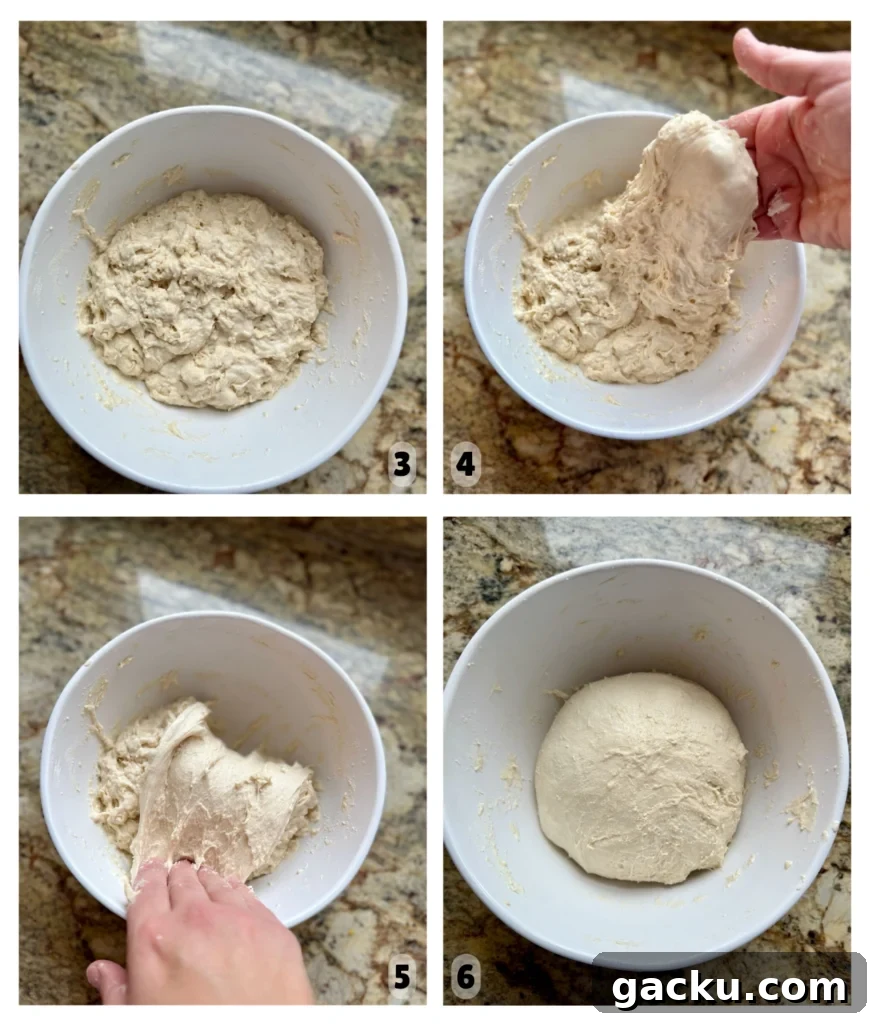
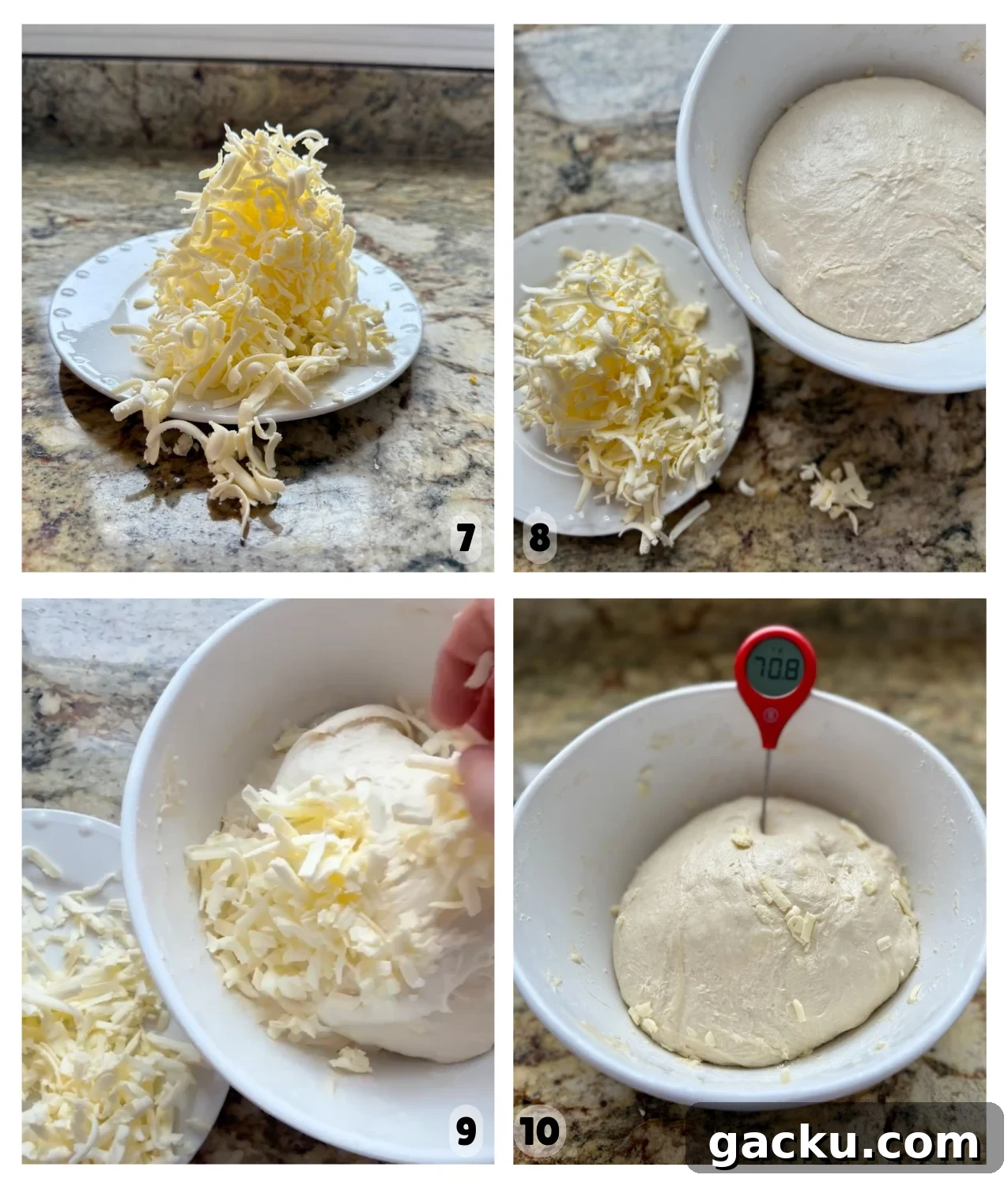
Step 3: Stretch & Folds. Over about 1½ hours perform four sets of stretch-and-folds, spacing them roughly 30 minutes apart. During the second and third sets, grate cold butter and add half the butter during the second set and the remainder during the third. These folded-in flakes create laminated pockets for a flaky crumb.
Step 4: After the final folds, let the dough rise another 6–7 hours at 70–72°F until it has risen about 70% and shows scattered bubbles.
Note: Temperature is critical. Keep the dough between 70–72°F so it rises while the butter stays chilled. Avoid temperatures above 75°F to prevent the butter from softening too much.
Make the Almond Filling
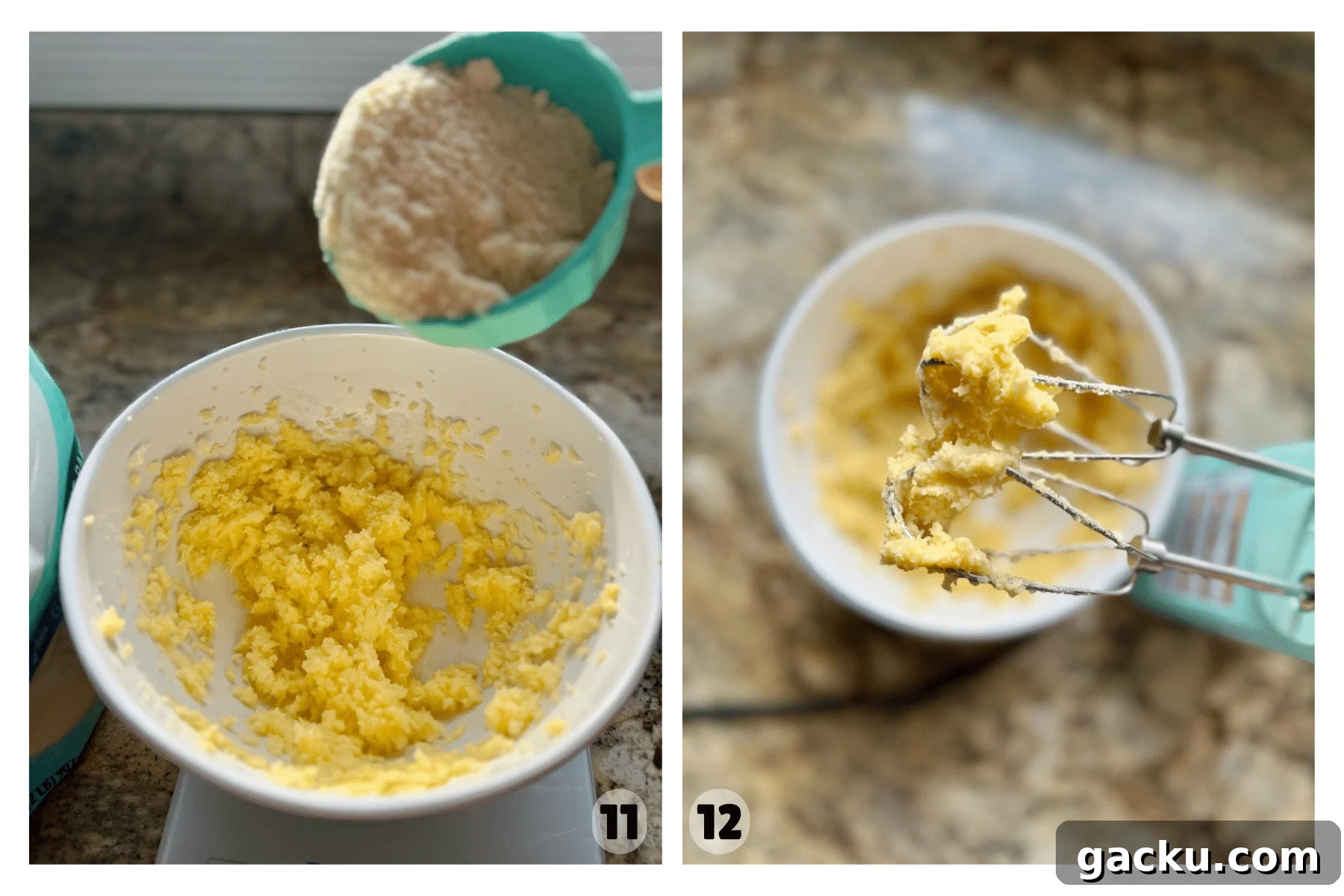
Step 5: Mix the Frangipane. Beat softened butter until creamy, add sugar and mix until light. Stir in egg yolk and almond extract, then add almond flour, all-purpose flour and salt. Beat to a thick, smooth paste, then refrigerate until shaping.
Shape the Loaf and Cold Proof
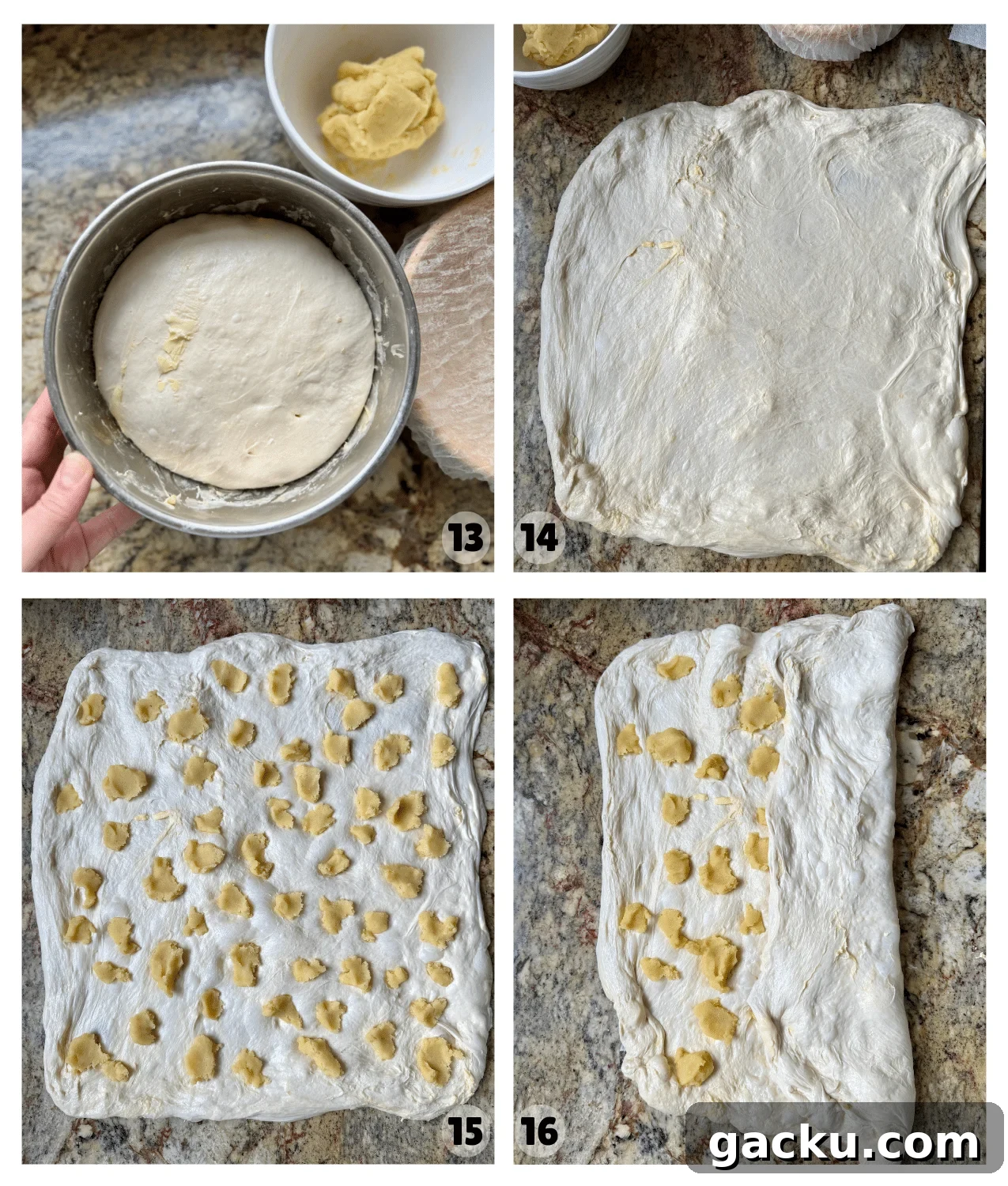
Step 6: Laminate and Add Filling. Turn the risen dough onto a counter and gently stretch it into a 14×16-inch rectangle. Break the chilled frangipane into small chunks and distribute about two-thirds over the dough. Fold the dough over itself twice, add the remaining filling, then roll the dough up and place it seam-side up in a prepared banneton.
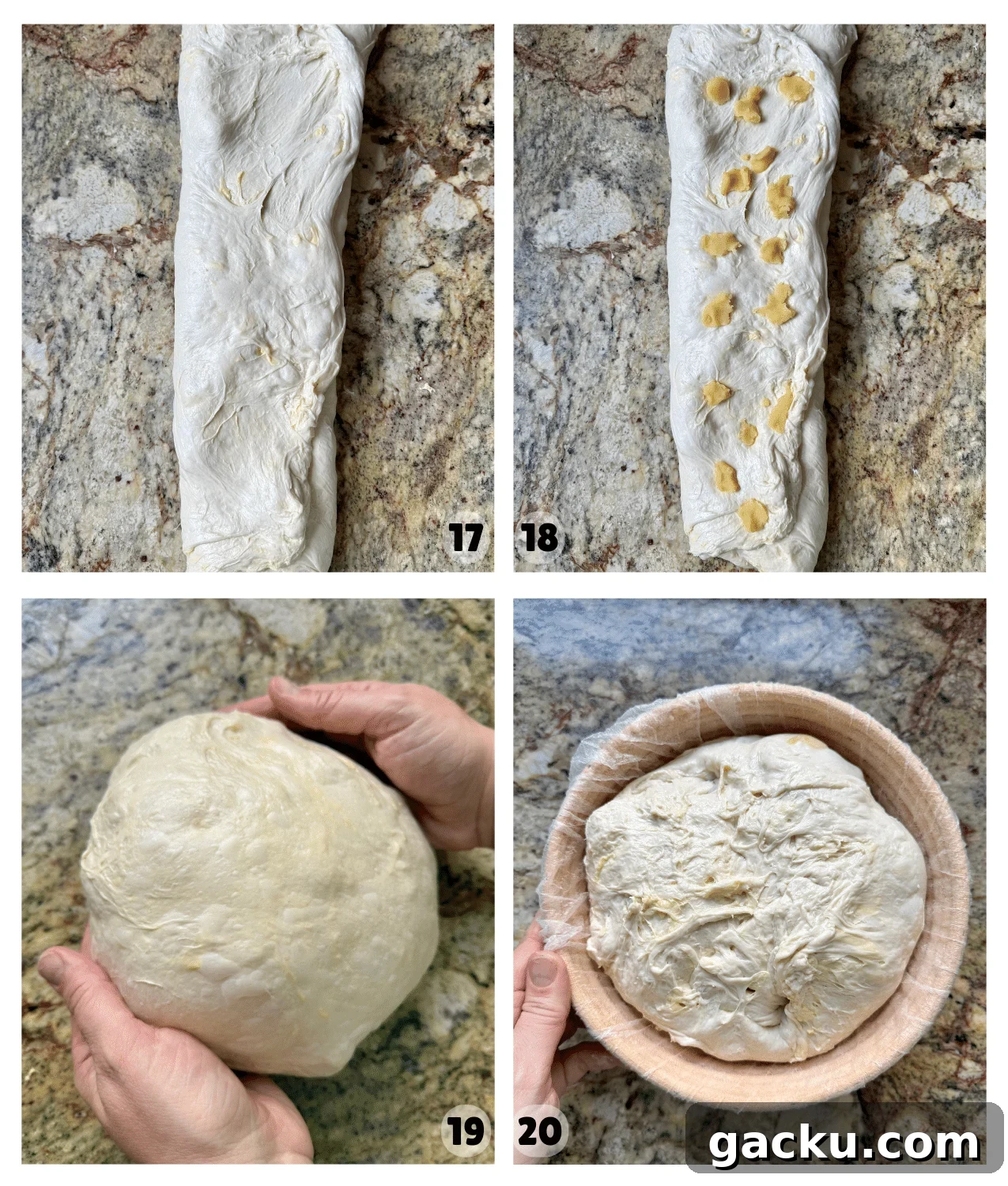
Step 7: Cold Proof. Cover and refrigerate overnight or up to 12–18 hours. If baking sooner, proof on the counter for a few hours, then chill the dough briefly before baking to firm the butter for easier scoring.
Score and Bake
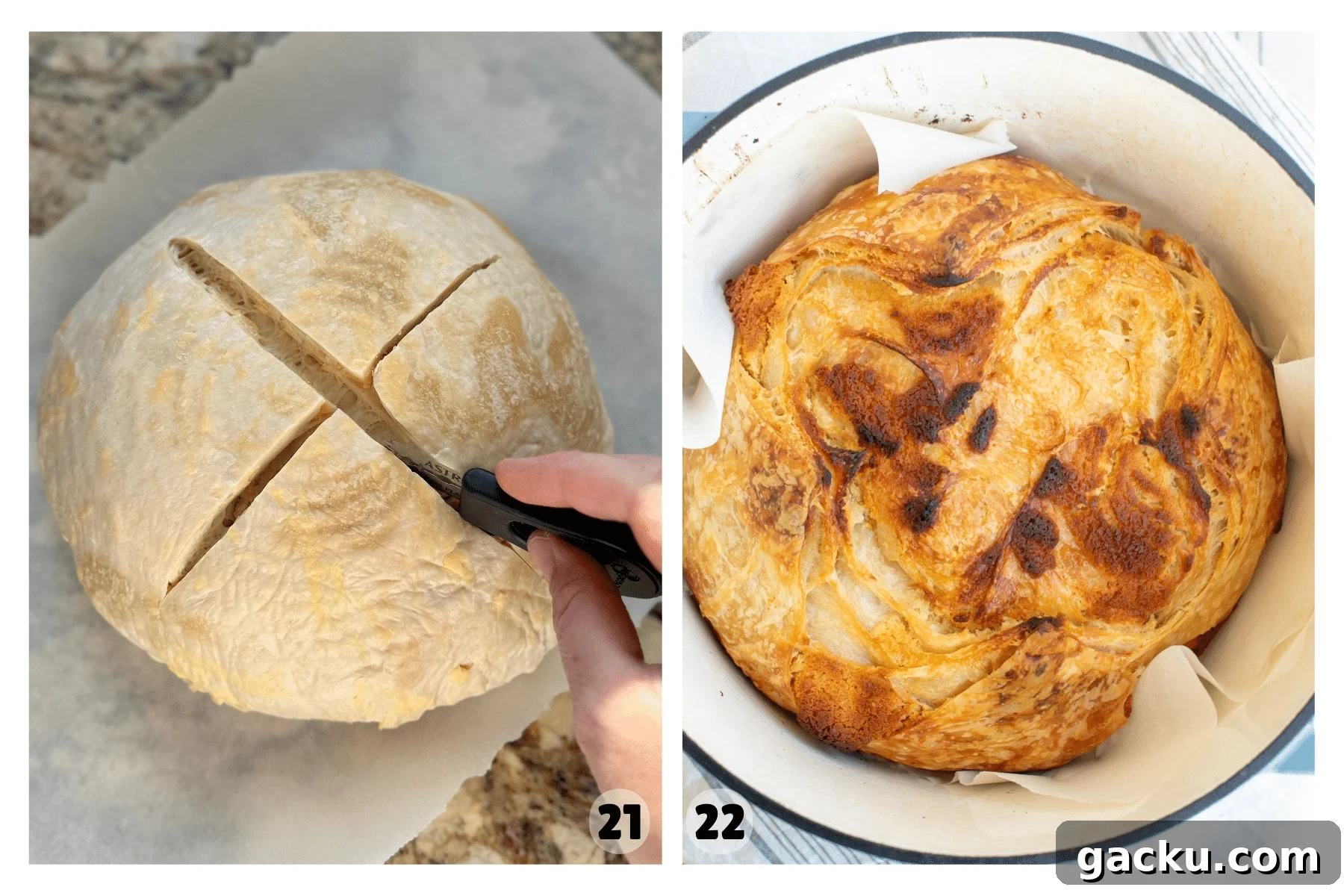
Step 8: Bake. Preheat a Dutch oven to 450°F for 20 minutes. Turn the chilled loaf onto parchment, score it with a sharp blade at a shallow angle, then transfer the loaf (on the parchment) into the preheated Dutch oven. Lower the oven to 425°F and bake covered for 25 minutes, then uncover and bake another 20 minutes until deep brown and the internal temperature reaches 195–200°F. Cool on a rack before slicing.
Note: A small amount of butter may escape during baking—this can create a delicious crisp crust. Using parchment helps protect the Dutch oven.
How to Store Leftovers
Once cooled, slice the loaf and freeze slices in a sealed bag for later. The bread toasts well straight from frozen or defrosts nicely for later enjoyment.
Amy’s Recipe Tips
- Adding inclusions changes the loaf’s crumb—expect a different appearance than a plain artisan loaf, but an excellent flavor.
- Temperature control is essential: keep the dough cool enough for the butter to remain in flakes but warm enough for the dough to rise. Maintain about 70–72°F and use cooler water or place the dough briefly in the fridge if needed.
- Add the butter during the stretch-and-folds so it disperses evenly; avoid laminating the butter at the end of bulk fermentation to reduce leakage.
- Allow the dough to reach about 70% rise before shaping. Because the dough is kept cooler, this rise takes longer but reduces butter leakage during baking.
Frequently Asked Questions
The author hasn’t tried mixing frangipane into the dough during stretch-and-folds. Lamination produces ribbons of filling throughout the loaf and is the recommended method.
Some butter leakage is normal with this style of enriched sourdough. Proper proofing reduces leakage: under-proofed dough tends to leak more. Ensure the dough reaches about 70% rise at the recommended temperature before shaping and use parchment to protect your baking vessel.
It comes close in aroma, flavor and texture, but it’s still a sourdough loaf rather than a laminated croissant. It captures the essence of an almond croissant with less effort.

Sourdough Recipes You’ll Love
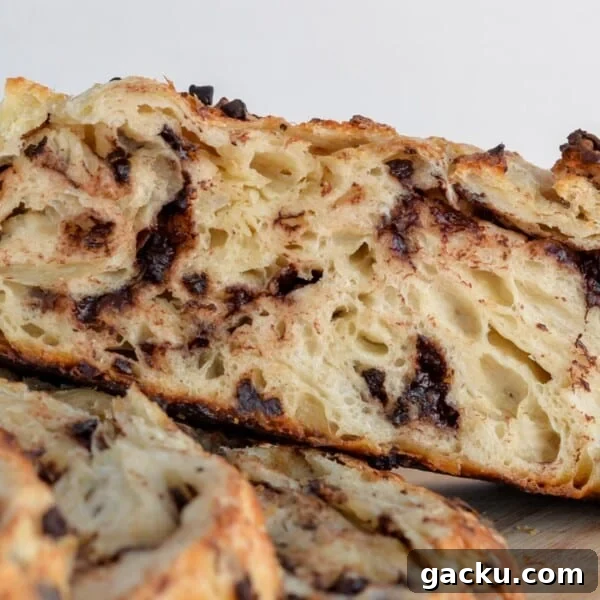
Chocolate Chip Sourdough Croissant Bread

Buttery Italian Herbs and Cheese Sourdough Croissant Bread
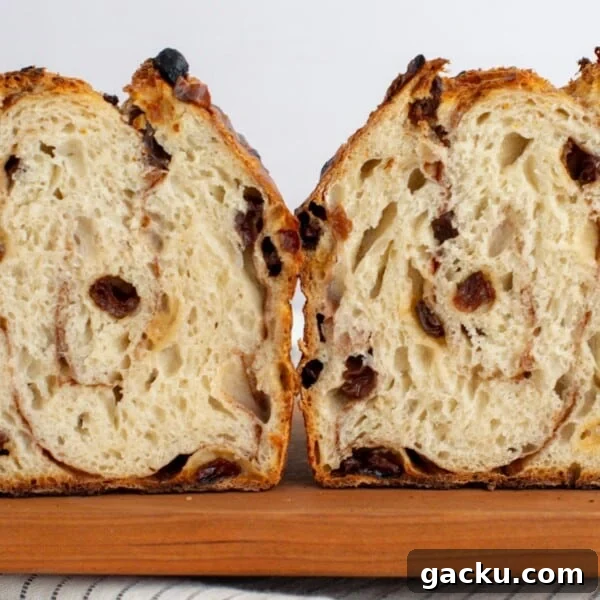
Sourdough Cinnamon Raisin Bagel Bread

Sourdough Deep Dish Pizza
If you try this Almond Croissant Sourdough Loaf or any recipe from the site, leave a star rating and share how it went in the comments. Happy baking!

Almond Croissant Sourdough Loaf
Rate Recipe
Print Recipe
Equipment
- kitchen scale
- Dutch oven
- grater
- banneton or bowl
- basic sourdough tools
Ingredients
Levain (1:10:10 ratio, 10–12 hours peak at 78–80ºF)
- 6 g sourdough starter, ripe and active
- 60 g all-purpose or bread flour
- 60 g water
Almond Croissant Sourdough Bread
- 120 g levain, ripe and active
- 340 g water
- 10 g salt
- 25 g granulated sugar
- 500 g bread flour
- 113 g unsalted butter (for laminating), grated and kept cold
Almond (Frangipane) Filling
- 55 g unsalted butter, softened
- 75 g granulated sugar
- 1 large egg yolk
- 8 g almond extract
- 2 g salt
- 75 g almond flour
- 15 g all-purpose flour
Instructions
Mix Levain
- Mix ripe starter with flour and water. Cover loosely and let sit 10–12 hours at 78–80°F until doubled and bubbly. (If you have a ripe, active starter, it can replace the levain.)
Almond Croissant Sourdough Loaf (keep dough temperature 70–72ºF)
- Mix Dough: Combine levain and water, then add salt, sugar and bread flour. Mix to a wet, sticky dough. Cover and rest 30 minutes.
- Stretch & Folds: Perform a series of stretch-and-folds over 1½ hours. During the second fold, grate cold butter and add half to the dough; keep the rest chilled for the third fold. Continue to fold until the dough feels cohesive and elastic.
- Bulk Rise: Cover and let rise 6–7 hours at 70–72°F until the dough is about 70% risen and shows bubbles.
- Make Frangipane: Beat softened butter until light, add sugar and beat 1–2 minutes. Mix in egg yolk and almond extract. Stir in almond flour, all-purpose flour and salt until a smooth paste forms. Chill until shaping.
- Laminate & Shape: On a lightly floured counter, stretch the dough into a 14×16-inch rectangle. Break chilled frangipane into small pieces and spread about two-thirds over the dough. Fold the dough over itself, spread the remaining filling, then roll up and place in a prepared banneton seam-side up.
- Cold Proof: Cover and refrigerate overnight or 12–18 hours. If baking sooner, proof a few hours at room temperature and chill briefly before baking.
- Preheat: Preheat a Dutch oven to 450°F for 20 minutes with lid in place.
- Score & Bake: Turn the chilled loaf onto parchment, score at a shallow angle, transfer to the hot Dutch oven, lower oven to 425°F and bake covered 25 minutes, then uncovered 20 minutes more until internal temperature hits 195–200°F. Cool on a rack.
Notes
Levain: A ripe, active starter can be used instead of building a levain if desired.
Butter: Unsalted butter is recommended, but salted is fine. Some butter may leak while baking—proper incorporation and proofing minimize excess leakage. Use parchment to protect the Dutch oven.
Almond Filling: For extra almond flavor, add 3–4 tablespoons almond paste or flaked almonds when laminating.
Nutrition
Calories: 262 kcal, Carbohydrates: 34 g, Protein: 6 g, Fat: 12 g, Saturated Fat: 6 g, Sugar: 5 g
Nutrition information is an approximation.
Like this? Leave a comment below!