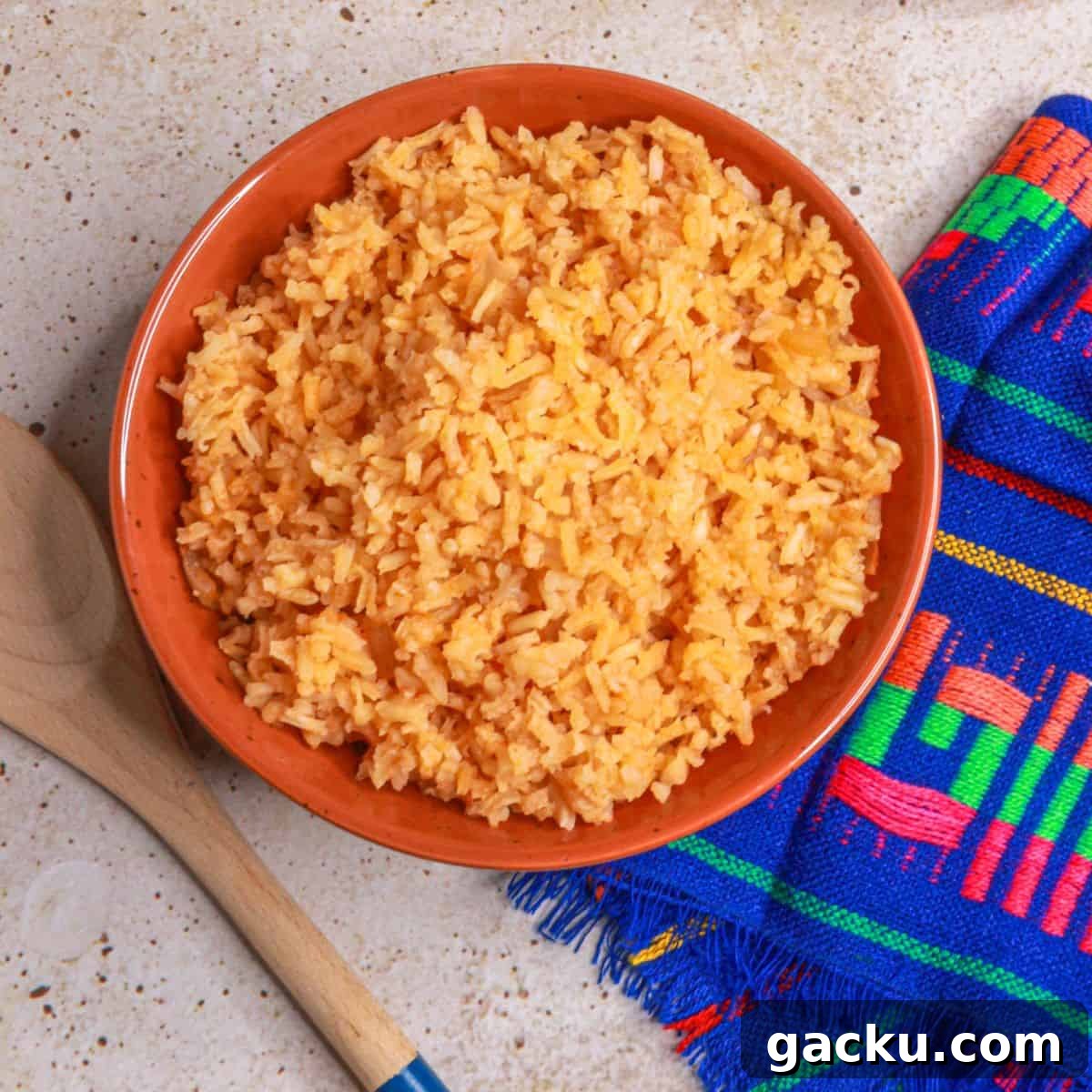
A reliable recipe with clear tips and step-by-step instructions to help you make flavorful, perfectly fluffy Arroz Rojo (Mexican Red Rice).
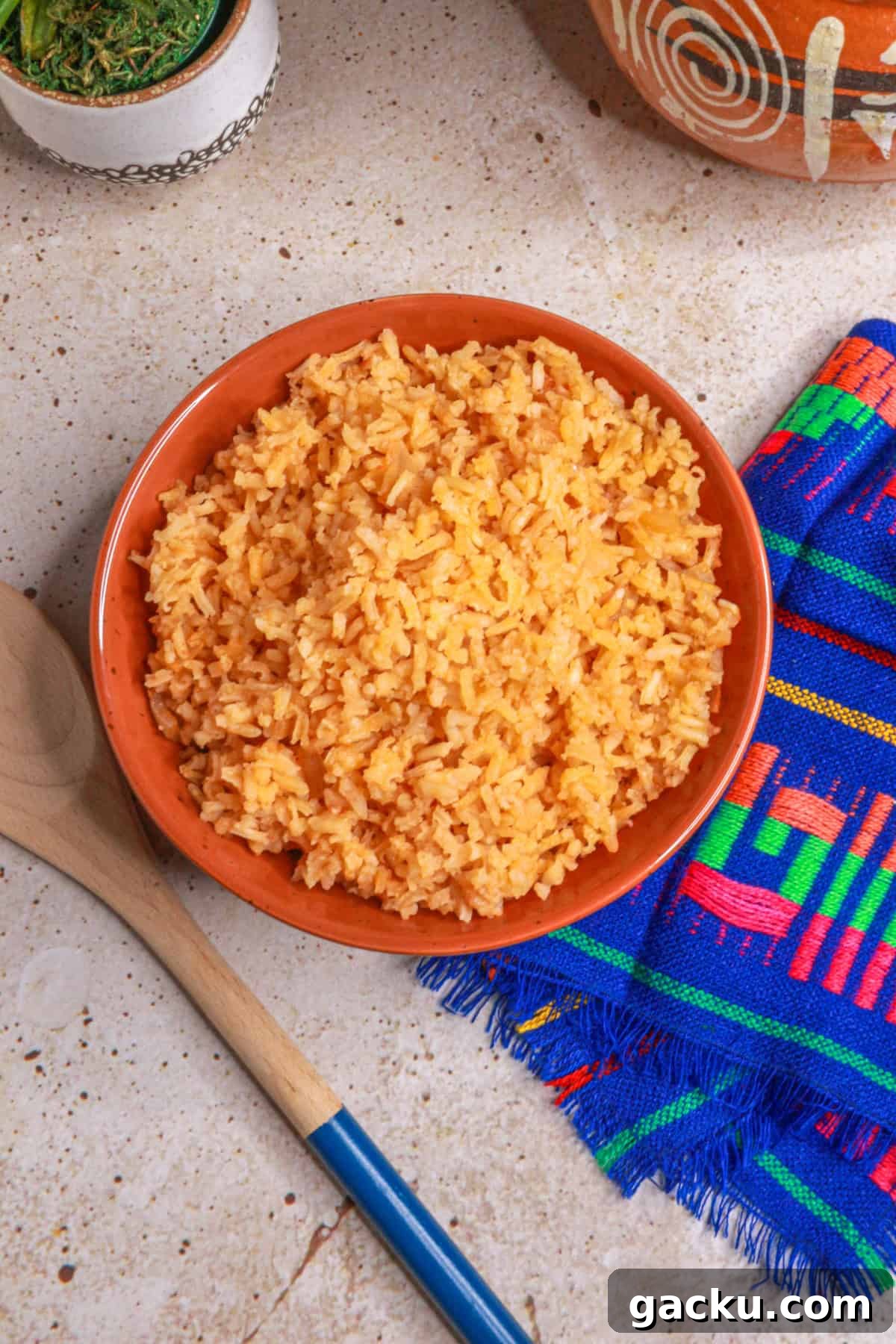
Arroz Rojo, or Mexican red rice, is a classic and widely loved side dish in Mexican cuisine. It pairs well with so many meals that it often becomes my go-to accompaniment. This version is based on my mother’s tried-and-true method — she makes it often and consistently gets fluffy, flavorful results.
Below you’ll find detailed steps and practical tips learned from my mom to help you avoid mushy rice and produce a fluffy, well-seasoned Arroz Rojo. The technique differs from some recipes you may have tried, but it works: we add liquid in stages and minimize stirring so the rice cooks evenly without breaking apart. Read the tips and steps before starting to cook for best results.
Special Tips for Making Arroz Rojo
- This recipe uses chicken broth (or vegetable broth) instead of bouillon. Broth gives more flavor and nutrients without the additives found in many bouillon powders.
- Do not add all the water at once. Adding liquid in three smaller portions gives you control over texture and is key to achieving fluffy rice.
- Do not over-stir. Stir only when indicated. Excessive stirring breaks grains and creates sticky, mushy rice.
- When you do stir, use a fork to gently combine — it helps keep the grains separated.
- Watch the rice closely during the staged liquid additions. Once the water evaporates the rice can stick and burn quickly.
- If using low-sodium broth or tomato sauce, taste the combined liquid before the long cook. It should be slightly salty; if not, add a pinch of salt and stir gently with a fork.
Ingredients & Substitutions
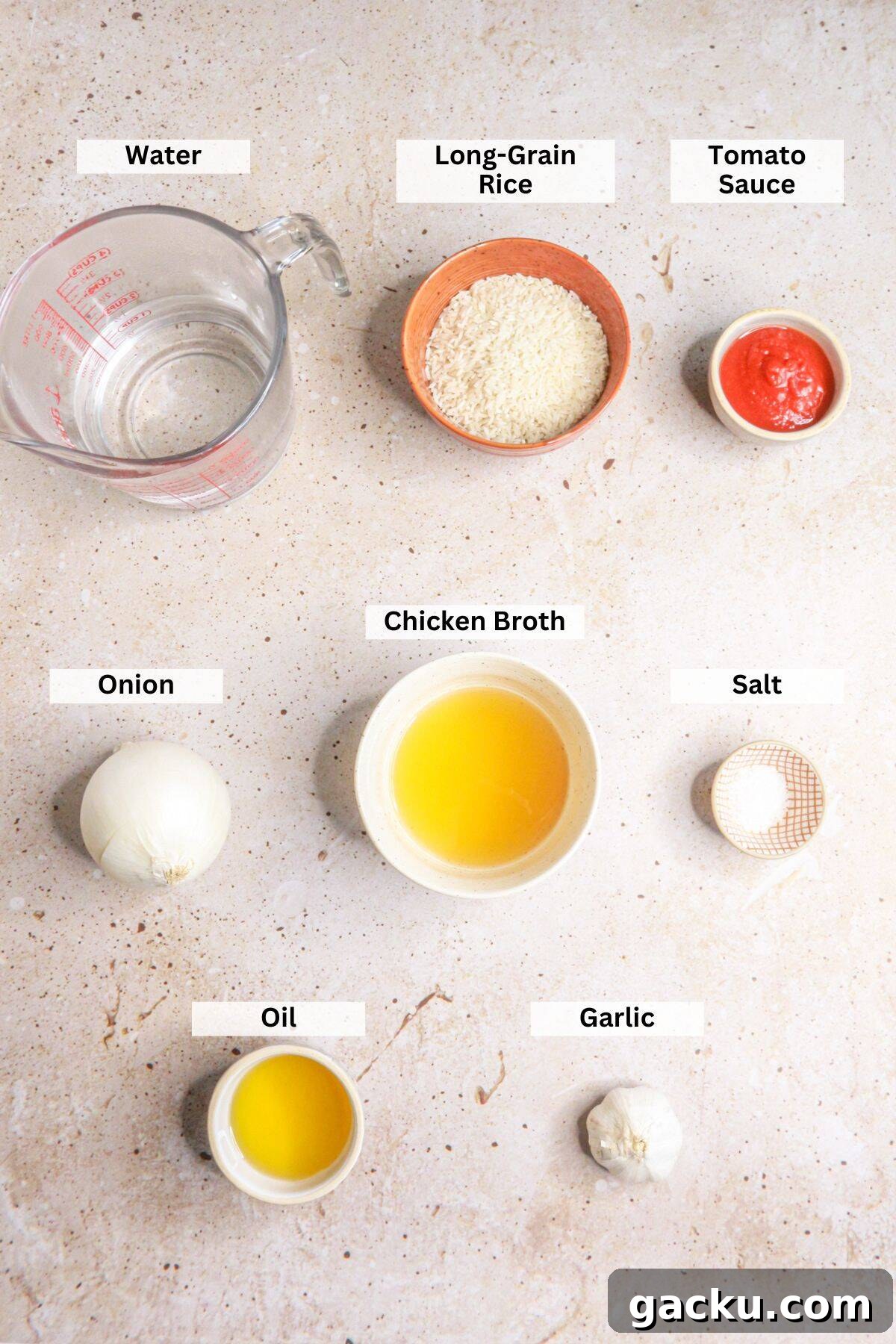
This Arroz Rojo uses simple pantry staples. The full ingredient list and quantities are in the recipe card below. You can substitute vegetable broth for chicken broth to make a vegetarian version.
How to Make Arroz Rojo (Mexican Red Rice)
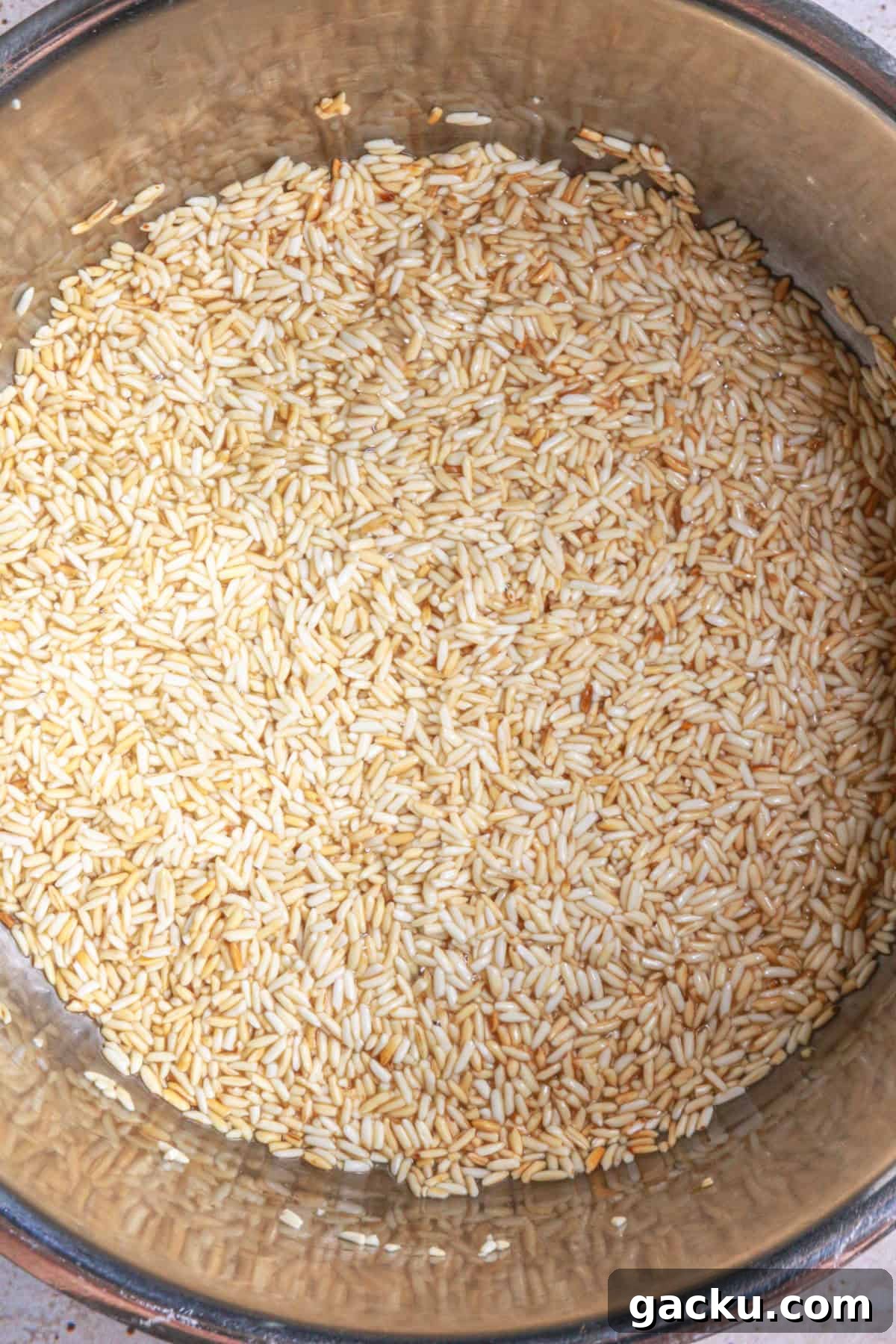
- Sauté the rice: Heat 1/4 cup oil in a medium saucepan over medium heat. Add 1 cup long-grain white rice and sauté, stirring occasionally, until the rice turns golden brown, about 5–7 minutes. Watch carefully so it doesn’t burn.
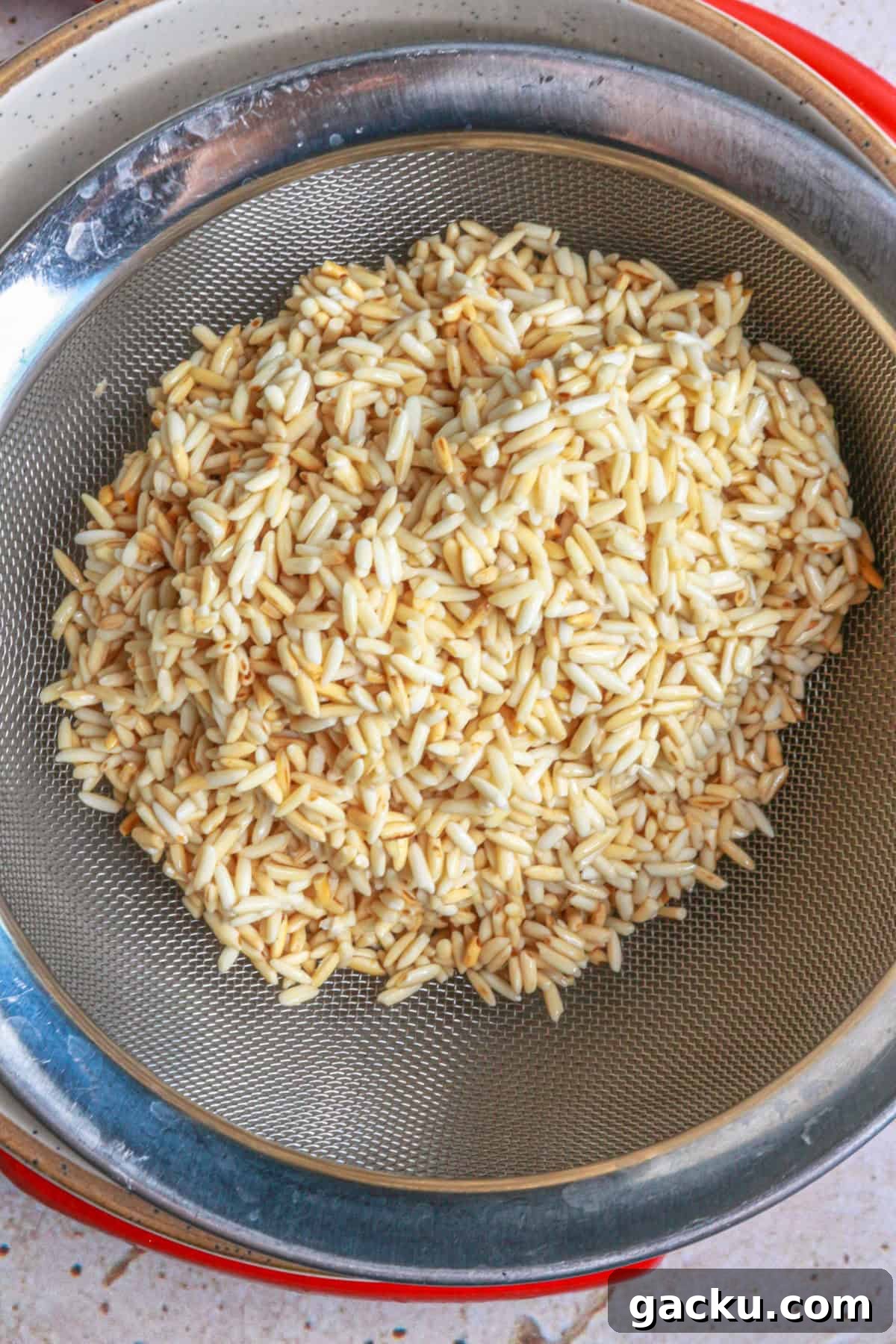
- Drain excess oil: Pour the rice and oil into a fine mesh sieve set over a heatproof bowl or container and let the oil drain away.
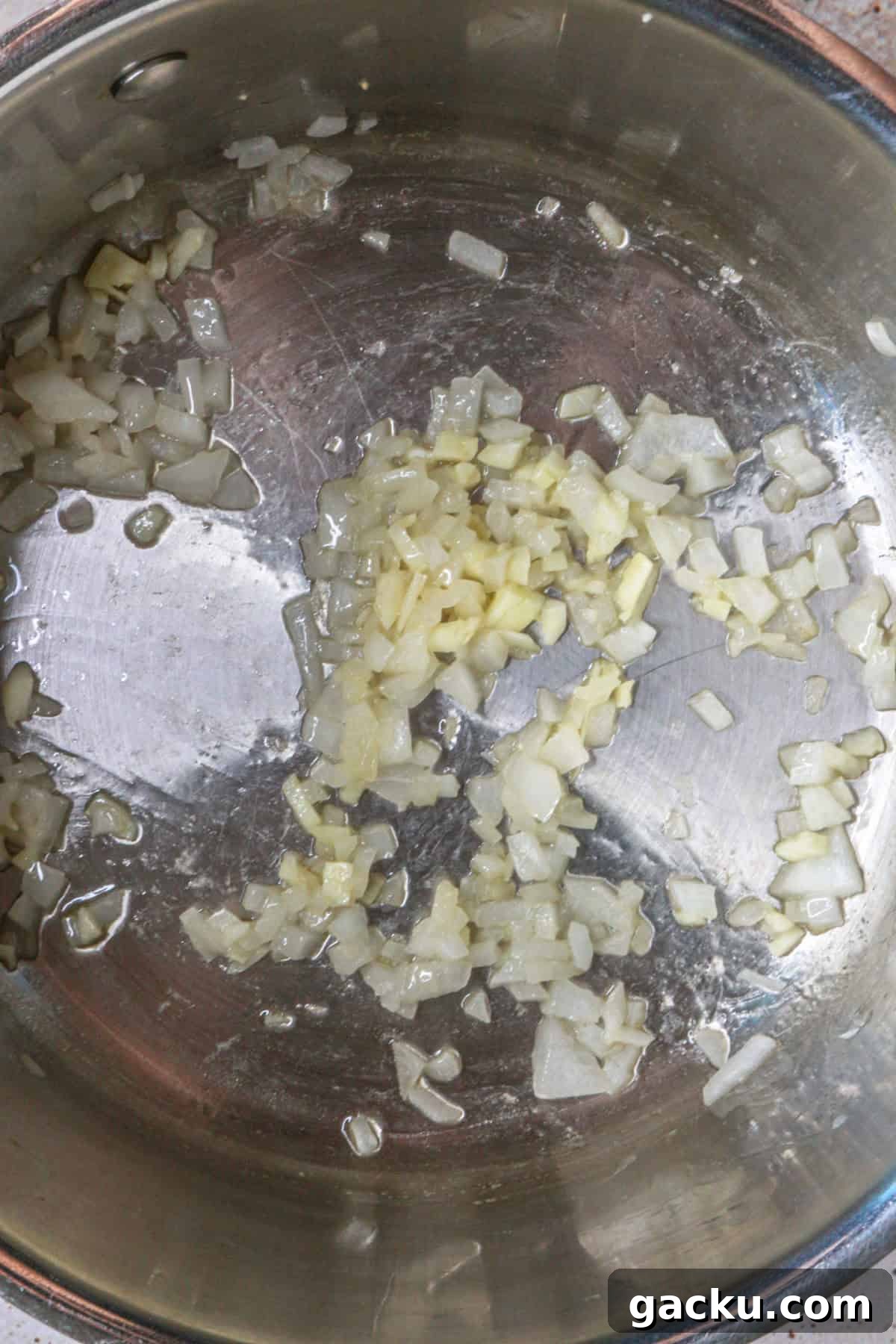
- Sauté aromatics: In the saucepan used for the rice, there will be a bit of oil remaining. Add 1/4 cup diced onion and 1 medium diced garlic clove and sauté until softened and fragrant, about 3 minutes.
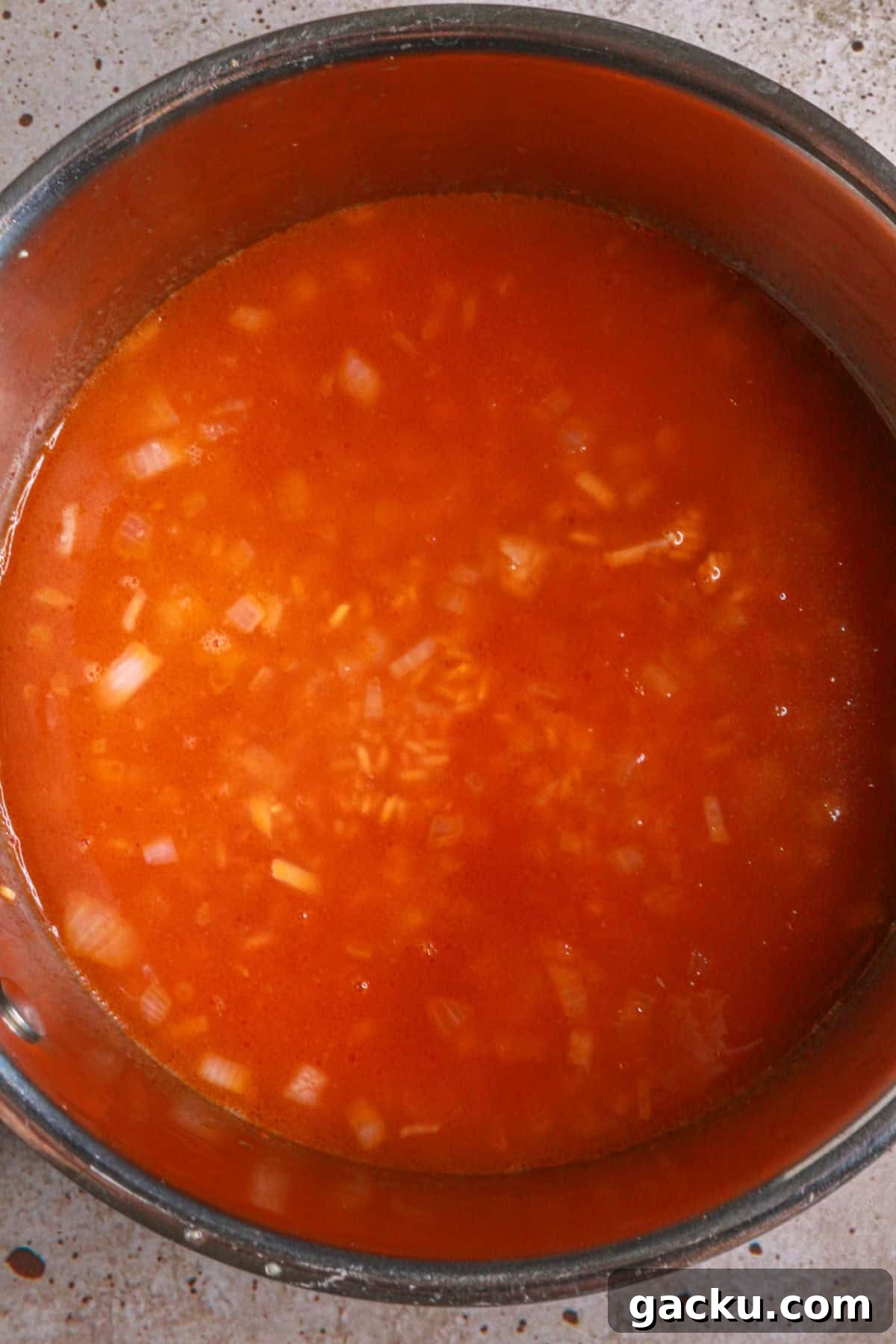
- Add rice and first liquids: Return the drained rice to the pan. Add 1 cup hot water, 1/2 cup hot chicken or vegetable broth, 1/3 cup tomato sauce, and 1 teaspoon salt. Using only a fork, gently stir just until combined. This is the only time you should stir during cooking. Bring to a simmer, lower heat to medium-low, and cover.
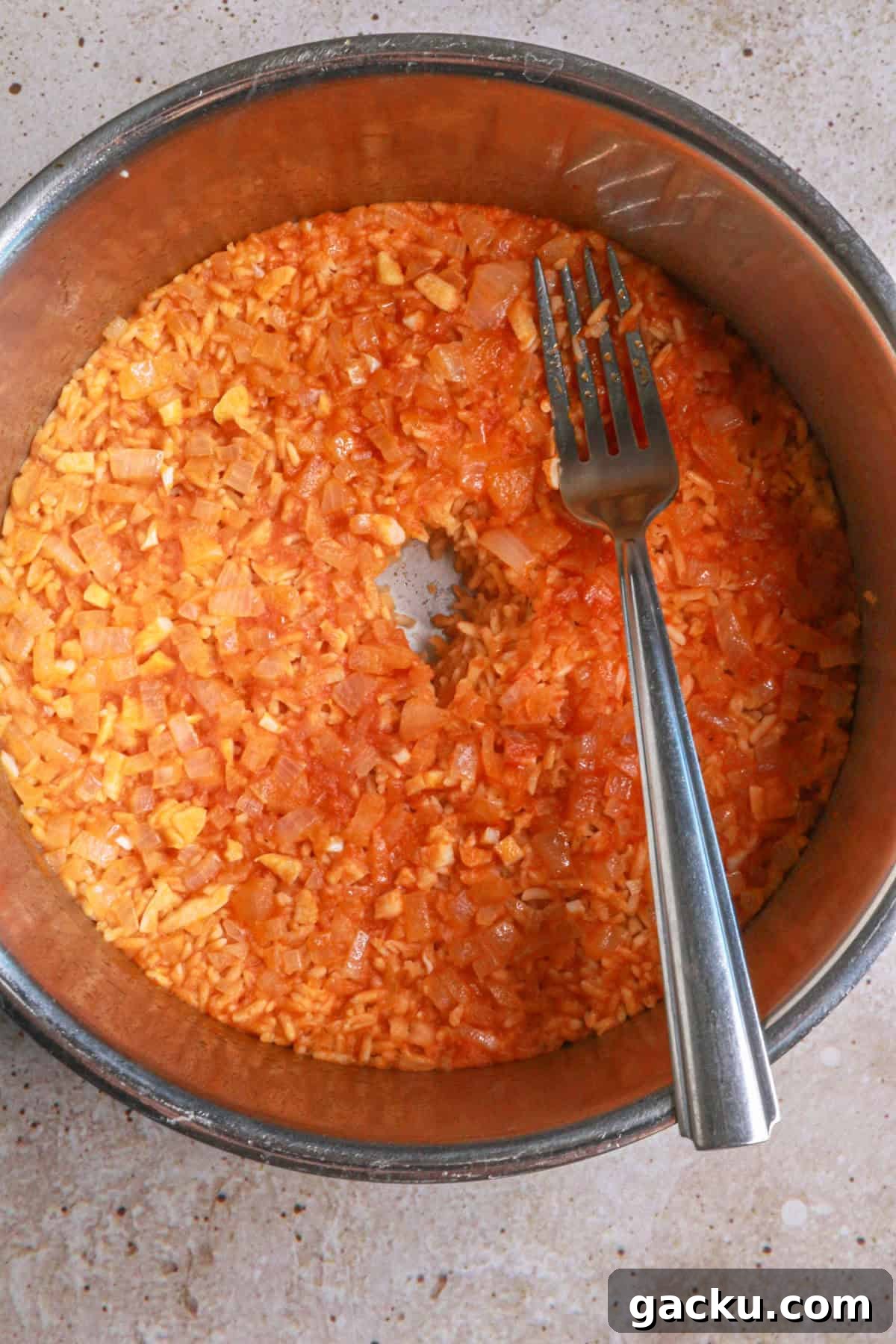
- Cook and add water in stages: After about 10–12 minutes, use a fork to make a small well in the center down to the bottom. If the water is gone, add 1/2 cup hot water and cover again. If there is still visible water, wait a minute or two and check again before adding more.
- About 5 minutes after that, check again by making a small well. If the pot is dry, add another 1/2 cup hot water and cover. The final addition should evaporate more quickly (2–3 minutes), so stay nearby to prevent burning.
- When the water has fully evaporated, remove the pan from heat and let the rice rest, covered, for 10 minutes. Carefully fluff with a fork and avoid over-mixing. Serve warm.
These staged liquid additions and the light, careful handling will give you fluffy, separated grains and a nicely seasoned red rice. The more you make it, the easier the timing becomes.
Recommended for This Recipe
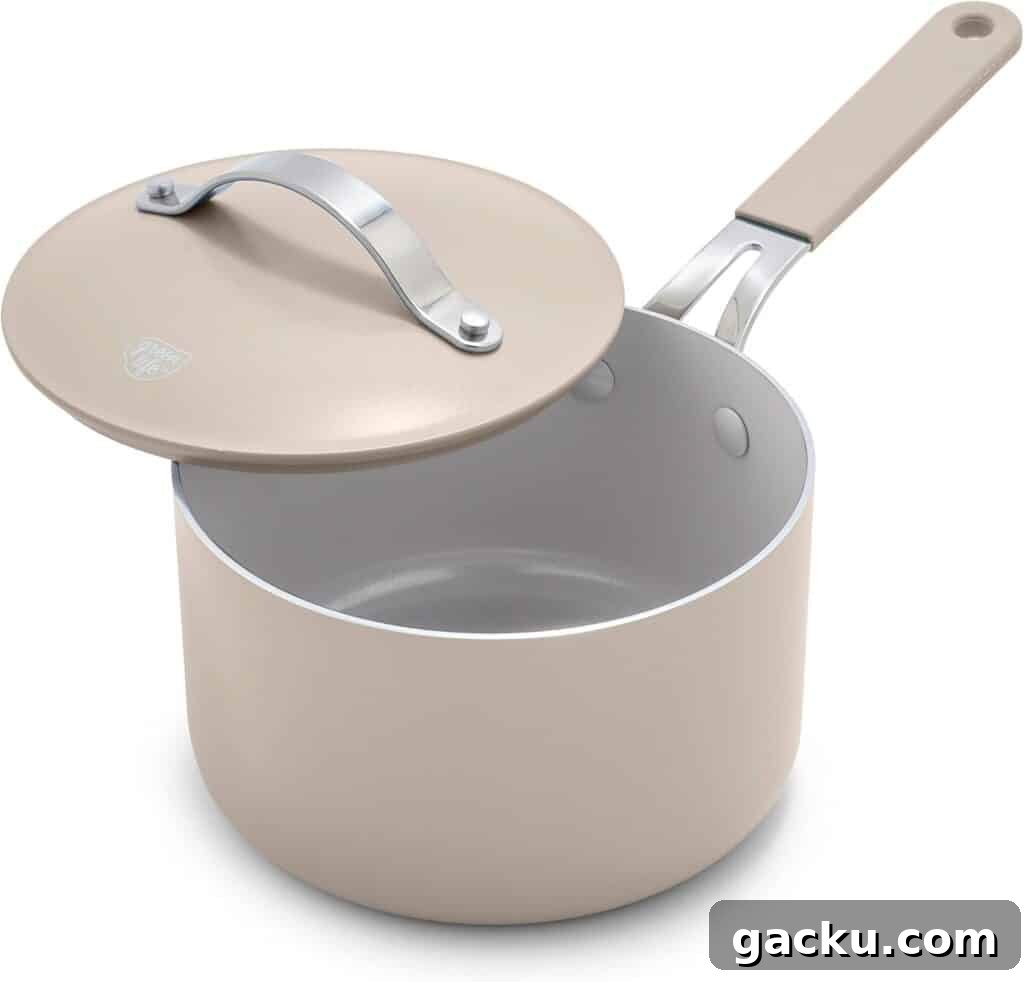
Saucepan
A nonstick ceramic or stainless steel medium saucepan with a tight-fitting lid works well to achieve even cooking without burning.
Storing and Reheating
Store leftovers in an airtight container in the refrigerator for up to 4 days. To reheat, sprinkle a little water over the rice, cover, and warm in the microwave or on the stovetop until heated through to prevent drying out. You can also freeze cooled rice in a freezer-safe container for 2–3 months.
If you try this recipe, please leave a comment and rating. I hope you enjoy it!
Recipe
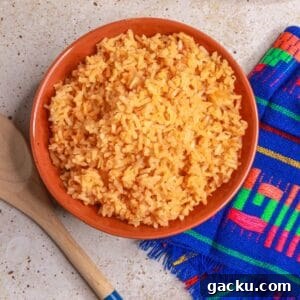
Arroz Rojo (Mexican Red Rice)
A reliable recipe with tips and detailed steps to help you make flavorful, perfectly fluffy Arroz Rojo (Mexican Red Rice).
Equipment
- Medium saucepan with lid
- Wooden spoon
- Fine mesh sieve
- Fork
Ingredients
- 1 cup long grain white rice
- 1/4 cup olive oil
- 1/4 cup diced onion
- 1 medium diced garlic clove
- 2 cups hot water, divided
- 1/2 cup hot chicken broth or vegetable broth
- 1/3 cup tomato sauce
- 1 teaspoon salt
Instructions
- In a medium saucepan, heat the oil over medium heat. Add the rice.
- Using a wooden spoon, sauté the rice until golden brown, about 5–7 minutes. Do not let it burn.
- Pour the rice and excess oil into a fine mesh sieve over a heatproof bowl to drain.
- Add the diced onion and garlic to the saucepan and sauté in the remaining oil until soft, about 3 minutes.
- Return the drained rice to the pan. Add 1 cup hot water, 1/2 cup hot broth, 1/3 cup tomato sauce, and 1 teaspoon salt. Gently stir with a fork just until combined. Bring to a simmer, reduce heat to medium-low, and cover.
- After 10–12 minutes, make a small well with a fork to check for liquid. If the pan is dry, add 1/2 cup hot water and cover. If there is still water, wait another minute or two before adding more.
- About 5 minutes later, check again; if dry, add the final 1/2 cup hot water and cover. The last addition should evaporate in 2–3 minutes—watch carefully to prevent burning.
- When the water is gone, remove from heat and let rest, covered, for 10 minutes. Fluff gently with a fork and serve.
Notes
- Using broth instead of bouillon yields better flavor and avoids additives.
- Adding water in stages and minimizing stirring are the keys to fluffy rice.
- When stirring, use a fork and only stir when instructed to avoid breaking the grains.
- If your broth or tomato sauce is low in salt, taste the cooking liquid after the first addition and adjust seasoning before the long cook.