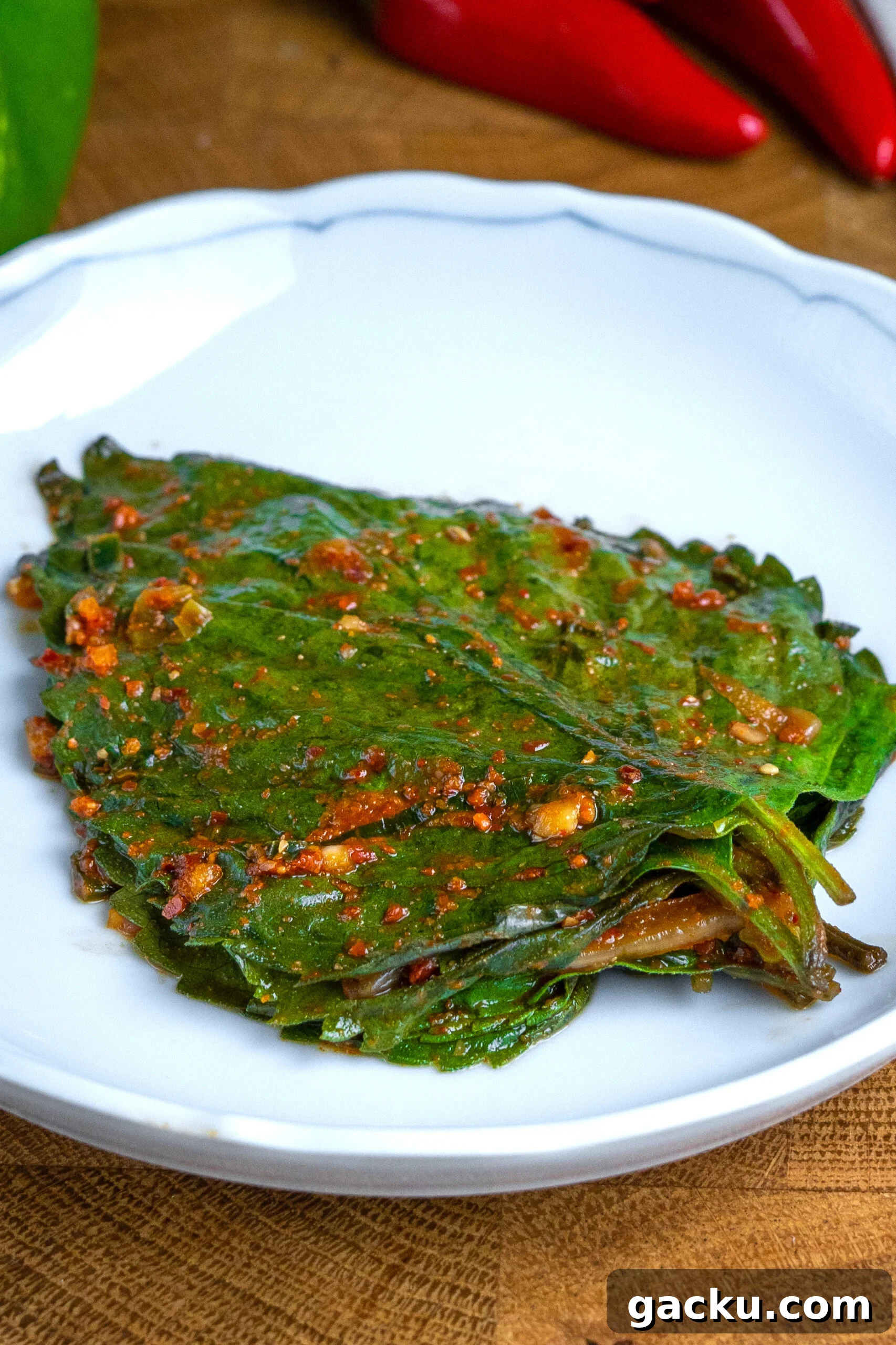
Perilla leaves (kkaennip) are my favorite herb now, but I didn’t always love them. They belong to the mint family and have a bold, distinctive aroma and flavor that’s hard to compare to anything else.
I actually hated kkaennip as a child. The flavor is intense and unfamiliar, so this dish isn’t for everyone. If you enjoy bold, uncommon flavors, you’ll probably appreciate it; otherwise you might not. I’ll admit it takes a bit of a sophisticated palate to truly enjoy perilla.
In my early twenties I finally began to love perilla leaves. My taste buds changed, I grew more curious about food, and I wanted to appreciate something my mother loved. The result was that I slowly learned to enjoy the herb’s unique, delicious profile.
If you haven’t tried perilla before, give it at least one try. Most people react strongly one way or the other—you’ll either love it or dislike it. Some people are neutral; my husband, for example, doesn’t hate it but wouldn’t reach for it often.
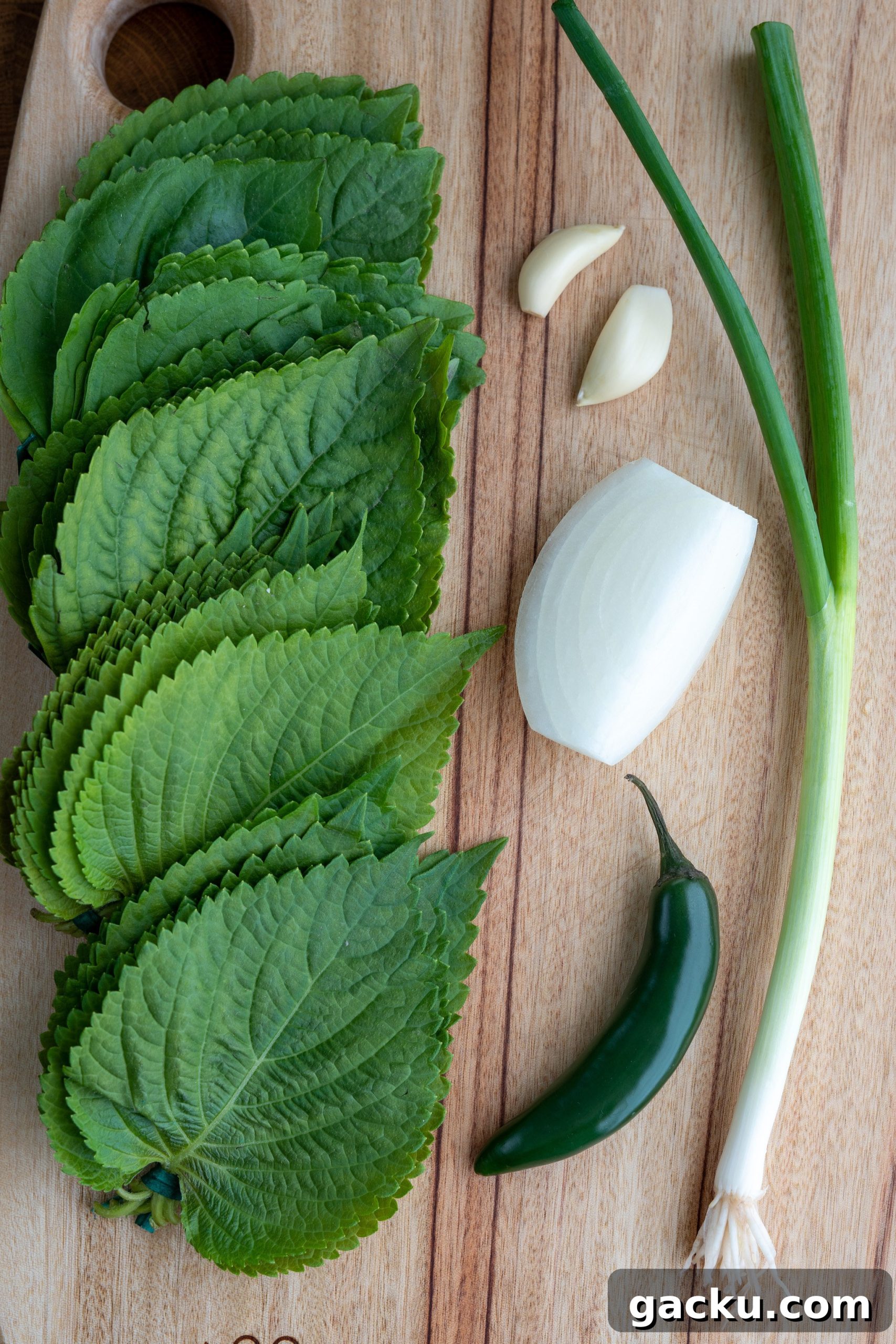
Ingredients:
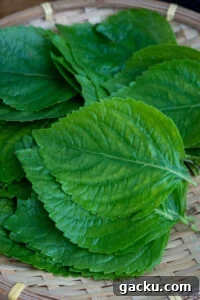
- Perilla leaves – essential. Try a local Asian market; Korean markets are most likely to carry them.
- Onion – yellow or white, very thinly sliced.
- Green onion – thinly chopped.
- Serrano pepper – optional but recommended for flavor. Remove seeds and veins if you want minimal heat.
- Gochugaru – Korean red pepper flakes. Use the proper ingredient for authentic flavor.
- Fish sauce – traditional fish sauce or a vegan alternative.
- Soy sauce – any regular soy sauce works. For raw-seasoned dishes, naturally brewed soy sauce is a good choice.
- Plum syrup – commonly found in Korean markets. Substitute your preferred sweetener if needed.
- Garlic – use the amount specified; don’t overdo it.
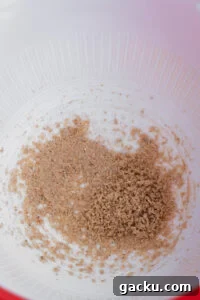
- Toasted sesame seeds – crushed into a fine powder (often labeled roasted sesame seeds).
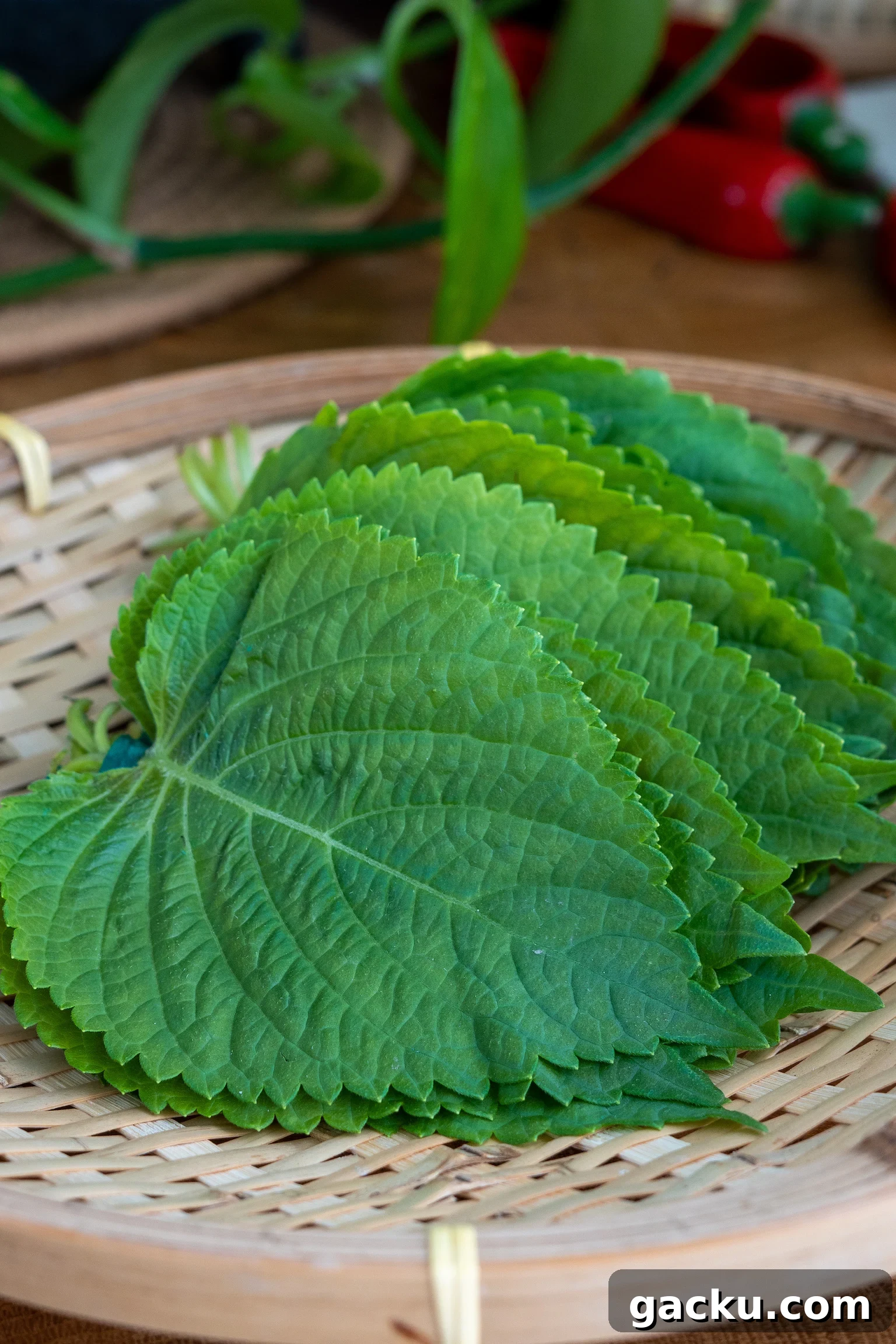
What are perilla leaves & how to eat them
Perilla is often compared to Japanese shiso, but they are not the same. Shiso tends to be milder and more grassy with bitter notes. Perilla is closer to a mix of basil and mint in aroma, but still unique. Its flavor is distinctive and, for many, very enjoyable.
- Kkaennip kimchi is sometimes called a “rice thief” because it pairs so well with steamed rice and savory dishes. It’s a common banchan (side dish) but equally satisfying eaten simply with rice.
- Perilla leaves are excellent in Korean BBQ wraps (ssam). A favorite combination is lettuce, perilla leaf, radish paper, grilled meat, ssamjang, jalapeño, and raw garlic—a powerful, layered bite of flavor.
- Chiffonade perilla as a garnish for soups, noodle dishes, or stir-fries like tteokbokki and soondae bokkeum.
- Deep-fry perilla leaves for twigim (Korean-style tempura).
- Perilla also works well in jeon: leaves stuffed with a thin layer of meat, dipped in egg, and pan-fried until golden.
- Perilla seed powder and leaves are used in hearty soups like gamjatang (pork neck bone soup) for added depth and aroma.
How to store
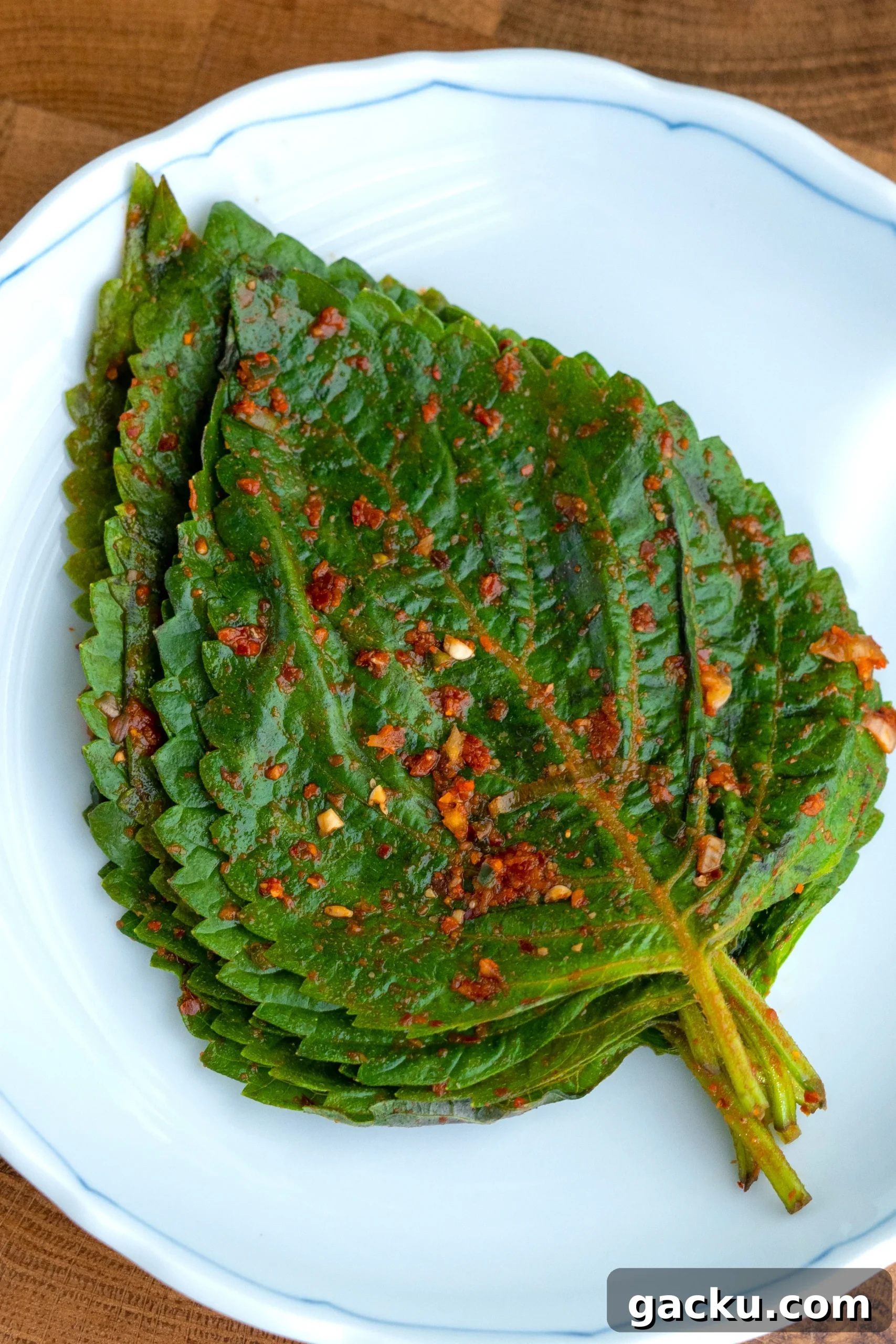
You can eat perilla kimchi immediately, but the flavor improves after a day or two in the refrigerator. Store it in an airtight container for up to two weeks; the leaves will naturally wilt over time, which is normal.
Perilla Leaf Kimchi
Ingredients
- 50 perilla leaves
- 2 oz onion, thinly sliced
- 2 garlic cloves
- 1 green onion, chopped
- 1 serrano pepper, optional
- 2 tbsp gochugaru
- 1.5 tbsp fish sauce
- 1 tbsp soy sauce
- 2 tsp plum syrup
- 1 tbsp crushed toasted sesame seeds
Instructions
-
Trim any brown ends from the perilla stems but keep as much stem length as possible to make the leaves easy to pick up. Wash the leaves and shake off excess water.

-
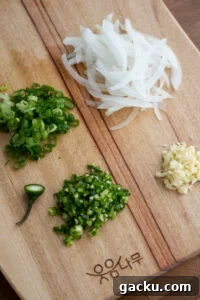
Prepare the vegetables: mince the garlic, thinly slice the onion, chop the green onion, and finely mince the serrano pepper if using.
-
Grind the toasted sesame seeds into a fine powder.
-
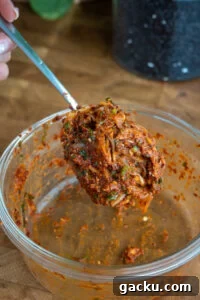
Make the seasoning paste by mixing the chopped vegetables, crushed sesame seeds, gochugaru, fish sauce, soy sauce, and plum syrup. It should form a thick paste.
-
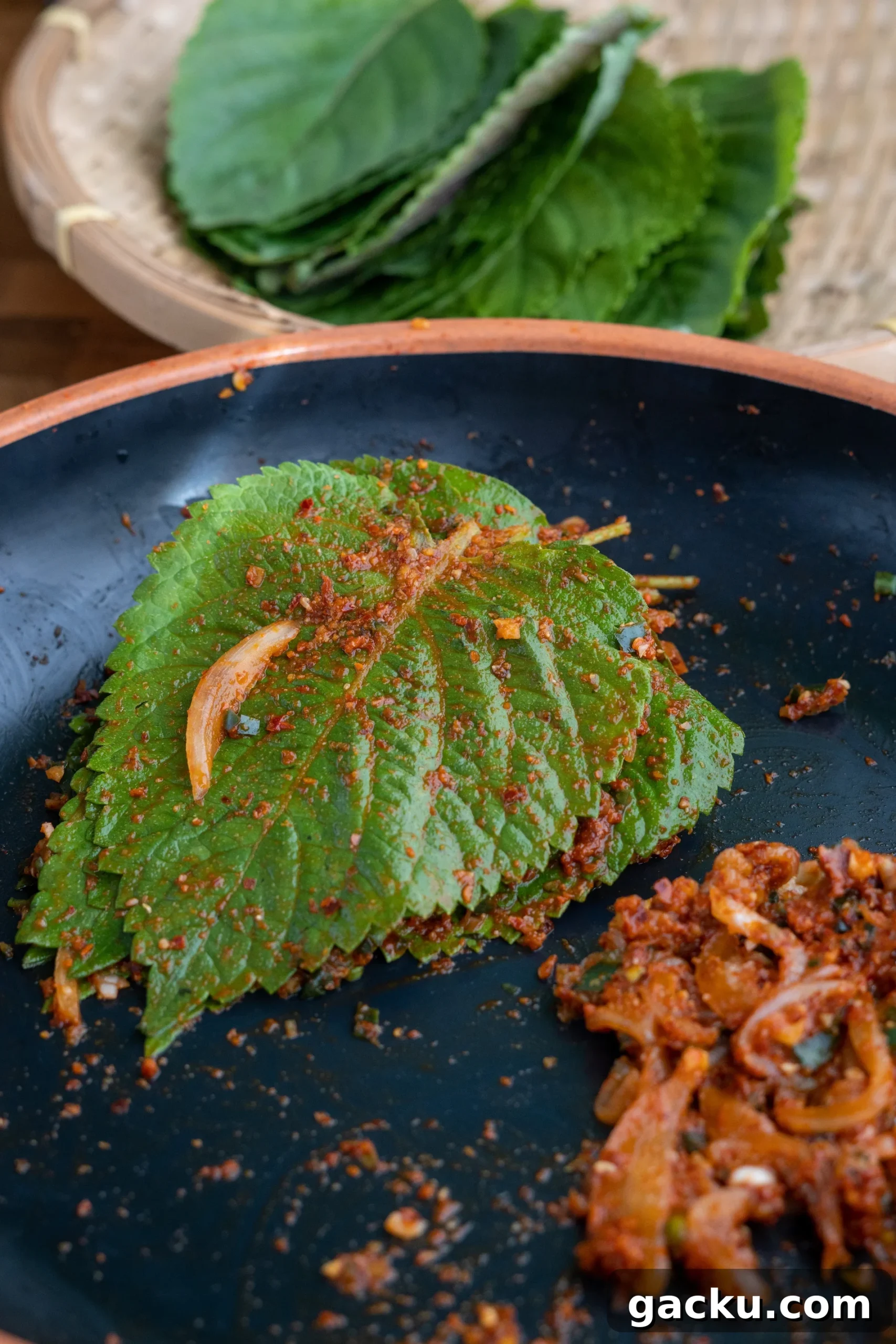
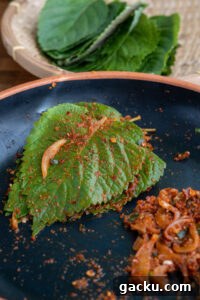
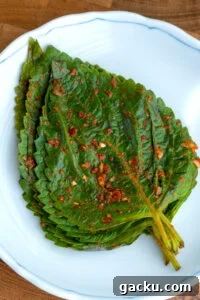
Spread a thin layer of the paste onto each perilla leaf and stack them neatly with stems aligned. You don’t need a lot of paste per leaf.
-
You can eat the kimchi right away, but it improves after a day or two in the refrigerator. It will keep for a couple of weeks in an airtight container.
Nutrition information is automatically calculated and should be considered approximate.
Additional Info
Like this recipe? Leave a comment below!