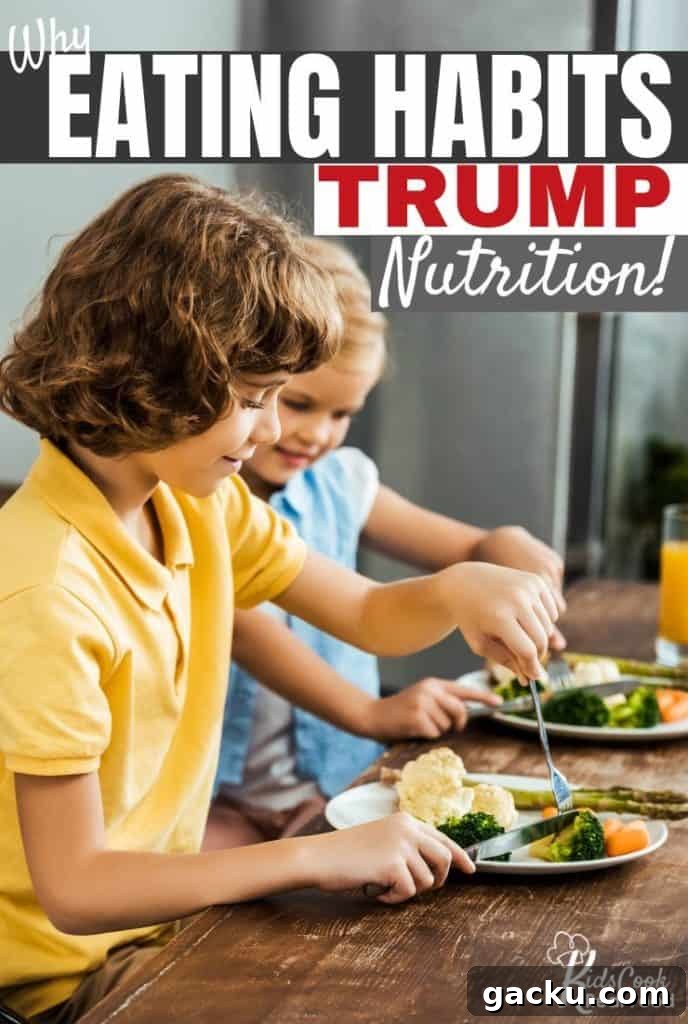
Dina Rose, PhD, joins us to discuss feeding children in healthy, sustainable ways. She isn’t automatically opposed to a lollipop at the pediatrician’s office, but she does object to using food to soothe emotions — and she would take it away from a crying child. In this interview Dina explains why emotional eating in childhood matters and offers practical, evidence-informed guidance for families.
Key takeaways from the conversation include:
- Healthy eating is about more than ingredients: it’s also about why, when, where and how much children eat.
- Many parents who know they shouldn’t bribe children with food or pressure them to clear plates still do it. Dina outlines how to shift those habits without guilt.
- Dina uses a memorable metaphor for sugar: it’s like the USDA’s overlooked relative tucked away in the attic. Her point is that sugar deserves more attention in public and household discussions.
- Rather than talking about “balance,” Dina suggests focusing on three clear habits: variety, proportion and moderation. She defines each one clearly so parents can use them in everyday decisions.
- If MyPlate were redesigned, Dina says a small treat would rightly have a place on it to reflect realistic, sustainable eating habits.
- How and when we present foods shapes children’s taste preferences and teaching foods in clear categories helps build lasting habits.
- We shouldn’t automatically feed children every time they say they’re hungry; responding to hunger cues and not fear is crucial for healthy appetite development.
- Dina offers a structured approach for picky eaters that doesn’t center on forcing them to eat but on teaching habits and exploration.
Click here to watch about building eating habits on YouTube.
Building Eating Habits Video Time Stamps
- 0:24 – Introduction: Dina Rose is a sociologist, parent educator and feeding expert helping parents raise children who develop healthy eating habits.
- 1:17 – Dina explains what led her to study how children eat and form food-related habits.
- 3:03 – As a sociologist, Dina observed that habits matter more than focusing narrowly on nutrients when shaping a child’s relationship with food.
- 3:14 – One immediate concern was the habit of making children finish everything on their plate.
- 3:39 – Dina describes the “habits approach”: teach behaviors and patterns first; nutrition will follow. Focusing only on nutrients can unintentionally teach poor habits.
- 5:32 – Examples of how parents inadvertently create unhealthy relationships with food.
- 6:00 – Parents often assume children dislike healthy foods and focus on simply getting nutrients into them.
- 6:58 – Even when parents understand they shouldn’t bribe or pressure their children, social expectations and the desire to be a “good parent” lead to those behaviors.
- 7:43 – Healthy eating includes what you eat, how much, why you eat and how well you notice hunger and fullness cues.
Healthy eating isn’t just about eating healthy food! It’s not just what you eat — it’s about why, when, where, how much. -Dina Rose, PhD
- 8:32 – Dina describes how she reacted when a pediatrician offered her daughter a lollipop and emphasizes that we should avoid responding to emotions with food.
I’m not against the lollipop at the doctor’s; I’m against dealing with emotion with food. -Dina Rose, PhD
I believe…
- kids can have a healthy relationship with food
- dinner tables don’t have to be stressful
Make a difference at your family dinner table with a strategy-filled challenge designed to help you feel empowered to serve healthy food without stress. This free resource offers practical steps to end power struggles and create more peaceful mealtimes.
No More Picky Eating for Us!
Three Habits for Healthy Eating
- 9:33 – Dina’s book frames three core habits: proportion, variety and moderation.
- 10:01 – She discovered proportionality, variety and moderation as underlying principles when researching the history of the food pyramid and worked to make them practical for families.
- 11:35 – These three principles simplify goals and provide a clear roadmap for daily food decisions.
- 11:57 – Terms like “balance” and “moderation” are often vague; Dina prefers concrete habits that are easier for families to apply consistently.
What Is Proportion?
- 12:31 – Proportion means offering healthy foods more frequently than less healthy options. It’s about ratios rather than demonizing specific foods.
- 12:51 – Dina critiques elements of the MyPlate icon and explains how proportion can be implemented practically at mealtimes.
- 13:41 – The “at least” diet (e.g., calling chicken nuggets “at least protein”) keeps parents wishing for better choices; proportion encourages gradual improvement.
Proportion encourages us to move in the healthier direction. -Dina Rose, PhD
What Is Variety?
- 14:27 – Variety isn’t only about introducing new foods; it means offering different foods across meals and snacks so a child’s diet isn’t monotonous.
- 14:53 – Remember breakfast, lunch and snacks: constantly offering the same narrow selection (often wheat and cheese) reinforces limited taste exposure.
- 16:04 – The rotation rule: start with what your family already eats and rotate items so you don’t repeat the same meal two days in a row.
Kids don’t need plastic knives. They need real skills.
Teach safe technique, focus, and confidence with age-appropriate cooking skills for children ages 2–12.
What Is Moderation?
- 16:30 – Moderation is used specifically to describe portion sizes tied to hunger and satiety, not a vague moral judgment about foods.
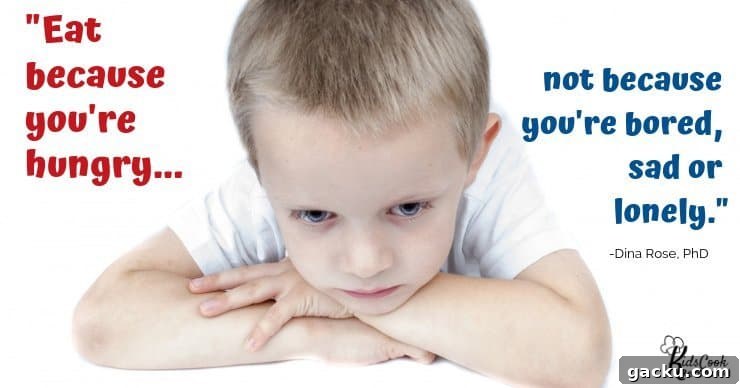
- 17:32 – To use the proportion principle effectively, a basic understanding of nutrition helps. You don’t need detailed knowledge of every vitamin—most people already know enough to shift toward healthier choices.
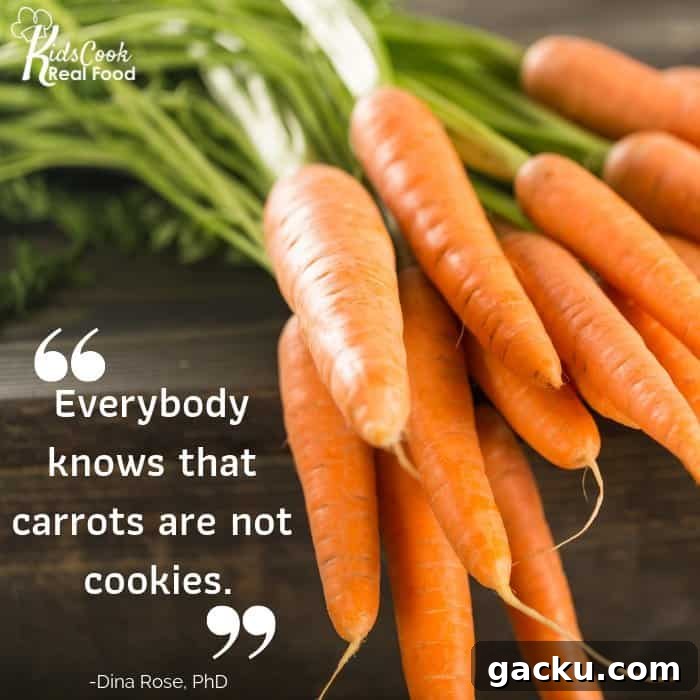
- 18:58 – Simple comparisons—baked versus fried chicken, vegetables versus cookies—are often clear. Packaged foods are trickier and can mislead consumers; food manufacturers exploit that confusion.
- 20:00 – Parents commonly label foods as healthy or junk. Foods that fall in the middle are often lumped into “healthy,” but a better approach is to be cautious with questionable products and treat them more like occasional items.
Processed foods train your kids’ taste buds toward junky food. -Dina Rose, PhD
“I just want my kids to eat what I make!”
This free 5-day challenge offers practical strategies to reduce mealtime battles and help kids gain confidence with food.
Join the Challenge!
- 21:41 – Dina suggests a simple experiment to compare foods and judge them on health-related criteria.
- 22:51 – The idea that children prefer bland foods is a myth. “Kid food” is typically very sweet or salty; natural foods like cantaloupe can’t compete with over-sweetened snacks.
- 24:01 – We discuss language families use around food, such as “healthy,” “growing” or “fun” foods, and how word choice matters.
- 24:48 – Dina argues provocatively that a donut can be preferable to a muffin in some contexts; she explains the reasoning during the interview.
- 26:36 – Treating foods as “bad” creates guilt. A healthier approach separates everyday habits from occasional treats without moralizing food choices.
- 28:53 – It’s fine to enjoy a special treat you genuinely like; avoid mindless eating just because sweets are available and decide in advance how many treats are appropriate each day.
Eat the candy that you love, not the candy you have. -Dina Rose, PhD
“Mooooom, I’m hungry!!”
Help your kids gain independence by teaching them to prepare simple snacks. This downloadable resource gives 10 snack ideas kids can make themselves.
Get the Snacks Now!
- 30:30 – Many parents decide on treats ad hoc. Setting clear, shared boundaries about treats reduces arguing and repeated requests.
- 32:24 – If a child sneaks treats, either a behavioral issue needs addressing or the child feels deprived; clear rules and predictable availability help prevent sneaking.
Trust and honesty are more important life lessons than whether you have an extra piece of candy. -Dina Rose, PhD
- 33:15 – The host shares common phrases used at home to manage eating; Dina weighs in on what works and what undermines habits.
- 34:50 – Dessert strategies: Dina often served dessert as a planned, third course and sometimes offered fruit or plain yogurt so children learn dessert doesn’t have to be extra sweet.
Eating dinner is not a gateway to dessert. -Dina Rose, PhD
- 36:27 – Eating a healthy dinner doesn’t “earn” a dessert; dessert should not be used as a reward and should remain a small portion.
- 37:00 – Children should be offered the same dessert as others even if they didn’t finish their dinner, to avoid teaching that withholding food secures a reward.
- 38:18 – Teach children the phrases “I’m hungry” and “I’m full.” Young children need help learning what those sensations feel like so they don’t use hunger claims to get treats.
- 39:51 – Dina recommends using “eating zones” to help children recognize hunger and fullness. Short-term hunger is a normal part of building appetite and not something to fear.
Short-term hunger is not life threatening, and we don’t want to teach kids to be afraid of being hungry! -Dina Rose, PhD
- 41:28 – For picky eaters, begin with eating zones and the rotation rule; use food exploration rather than pressure. More on picky eating is available on the site.
- 44:32 – Dina talks about her book and how the habits approach translates into everyday family life.
Resources We Mention
- Dina Rose’s book: It’s Not About the Broccoli
- Related videos and articles on feeding practices and how taste preferences develop
- Information about the No More Picky Eating Challenge and other free resources to help families