Juicy, sweet-tart fresh pomegranates are a seasonal treat, but removing the seeds can feel intimidating. It’s easier than it looks, and well worth the effort. Once you try this method a time or two, you’ll be able to add bright, juicy pomegranate seeds to salads, cocktails, entrees, and grazing boards.
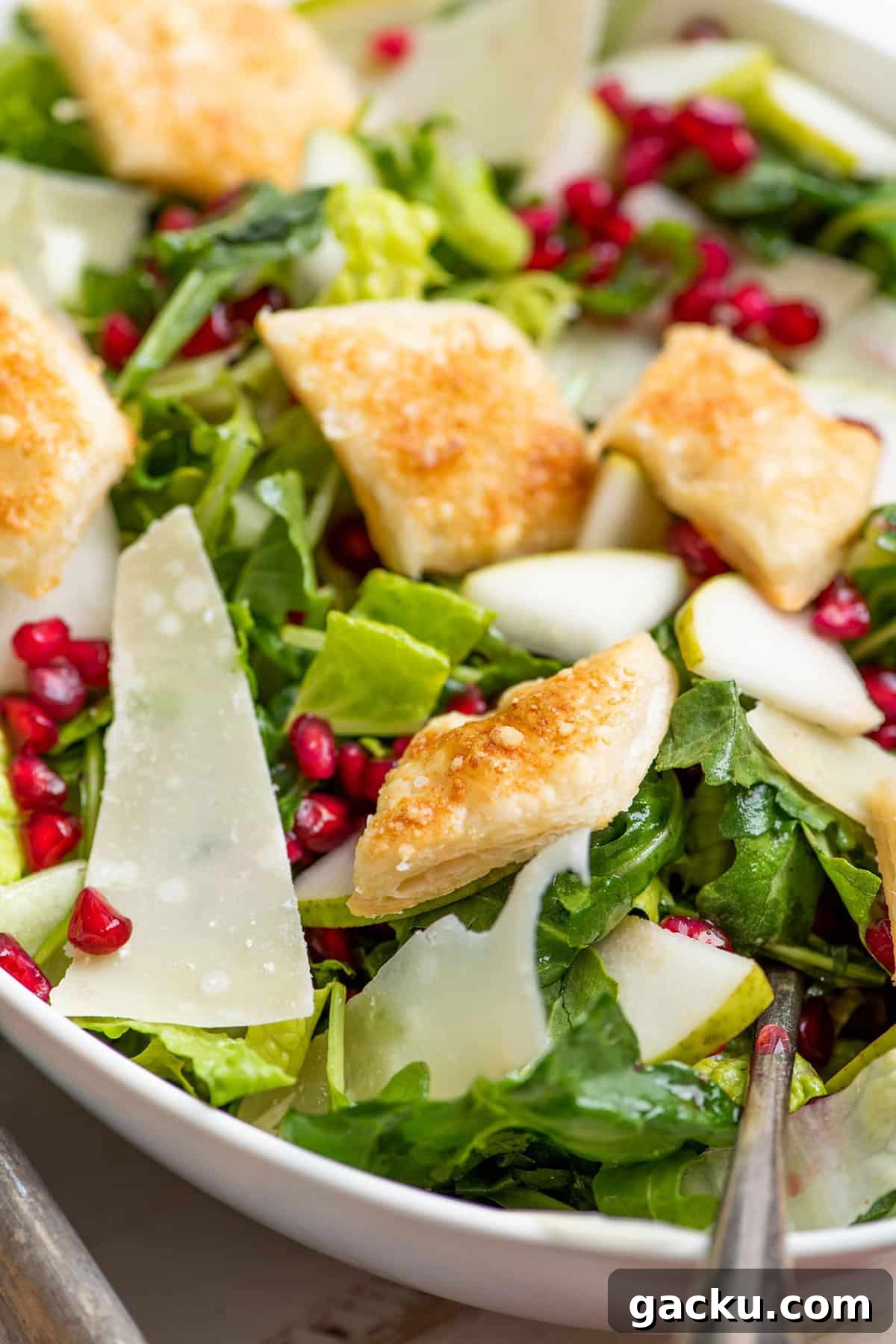
Try them in salads like Brussels Sprouts, Apple and Pomegranate Seed Slaw or Green Salad with Pomegranate Seeds, Parmesan, and Pears for a burst of color and flavor.
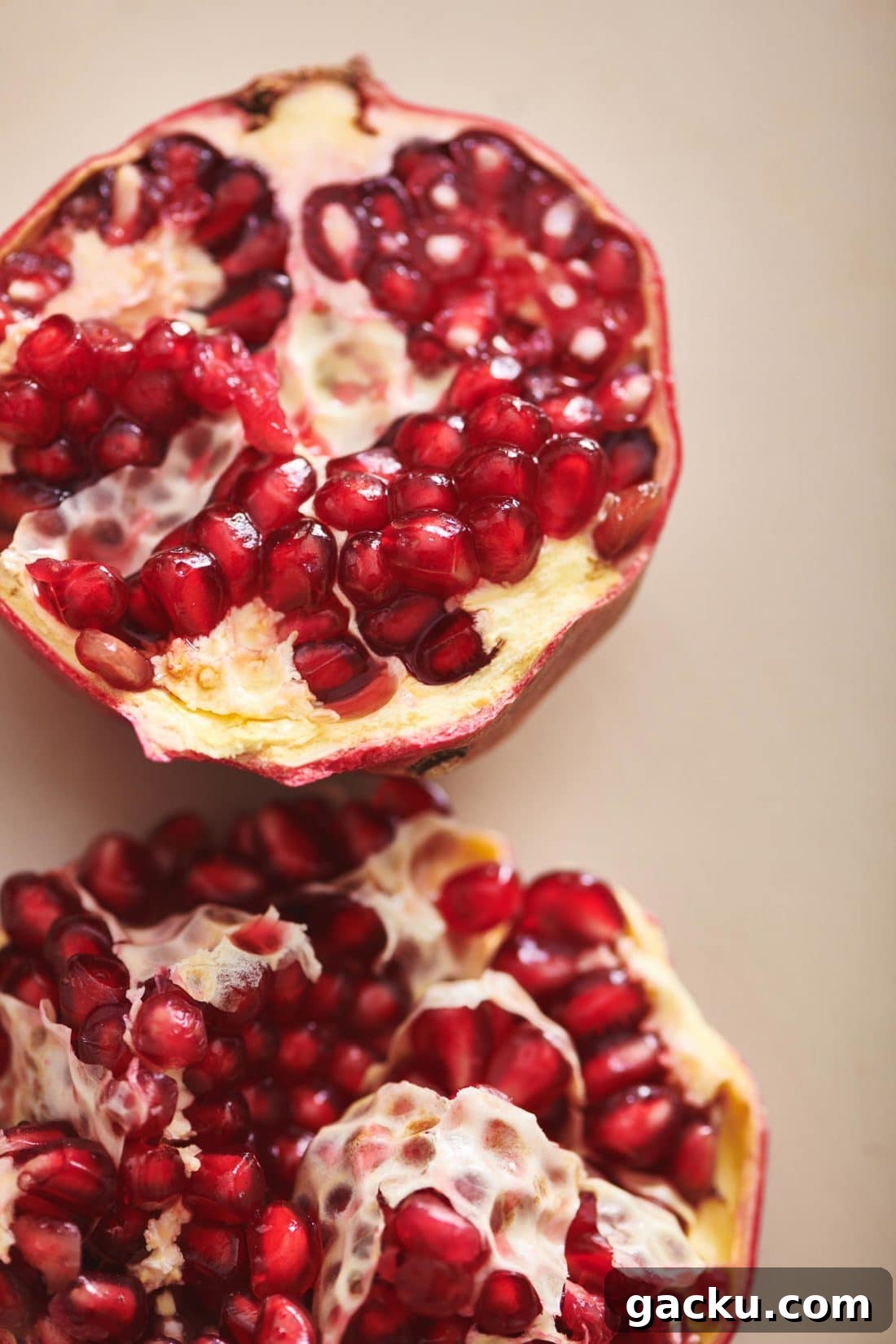
Tips for Preventing Pomegranate Stains
Wear an apron or an older shirt to protect your clothing. Use a plastic (not wooden) cutting board to avoid staining the surface. If you’re concerned about your hands, disposable or kitchen gloves will keep them from temporarily staining from the juice.
How to Seed Pomegranates
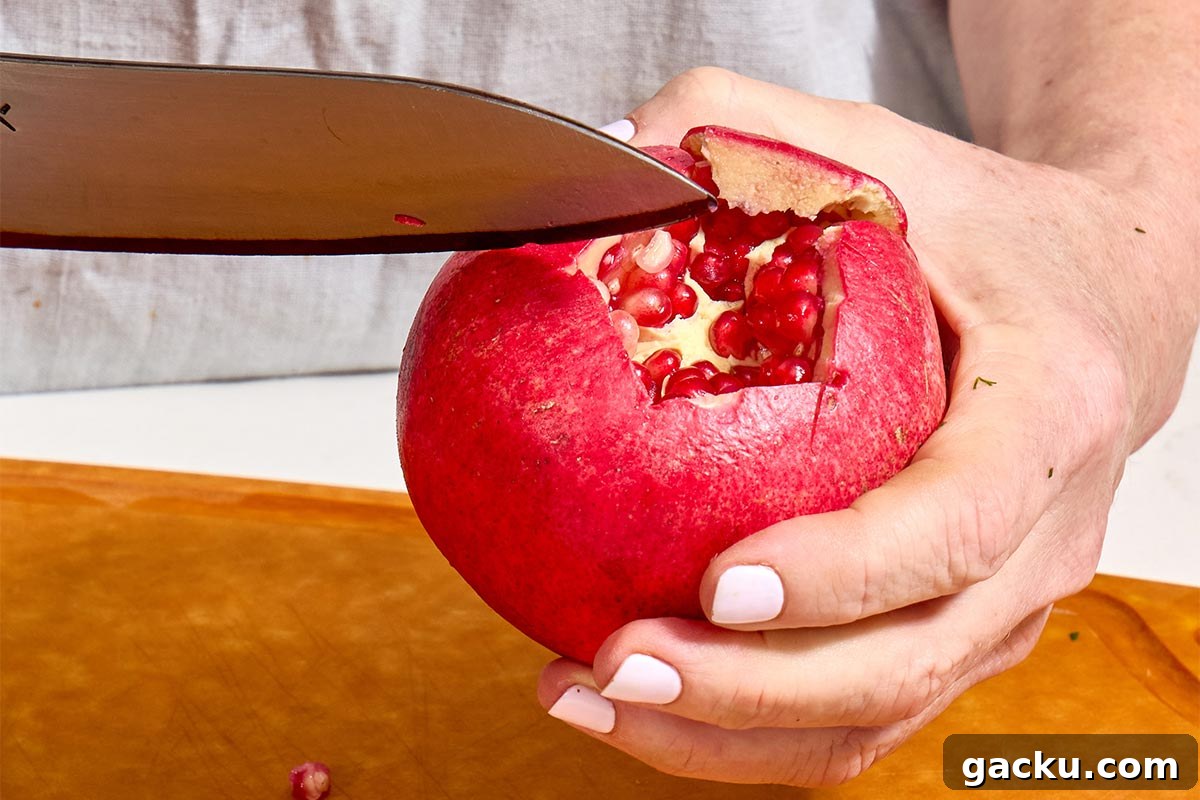
- Open the pomegranate: Cut a thin slice from the bottom so the fruit can stand steady. Then, angle your knife around the crown (the blossom end) and cut off the top, creating a small concavity.
- Cut slits in the skin: Along one of the vertical ridges, slice through the red skin from top to bottom without cutting into the seeds. Repeat at equal intervals until you have six sections.
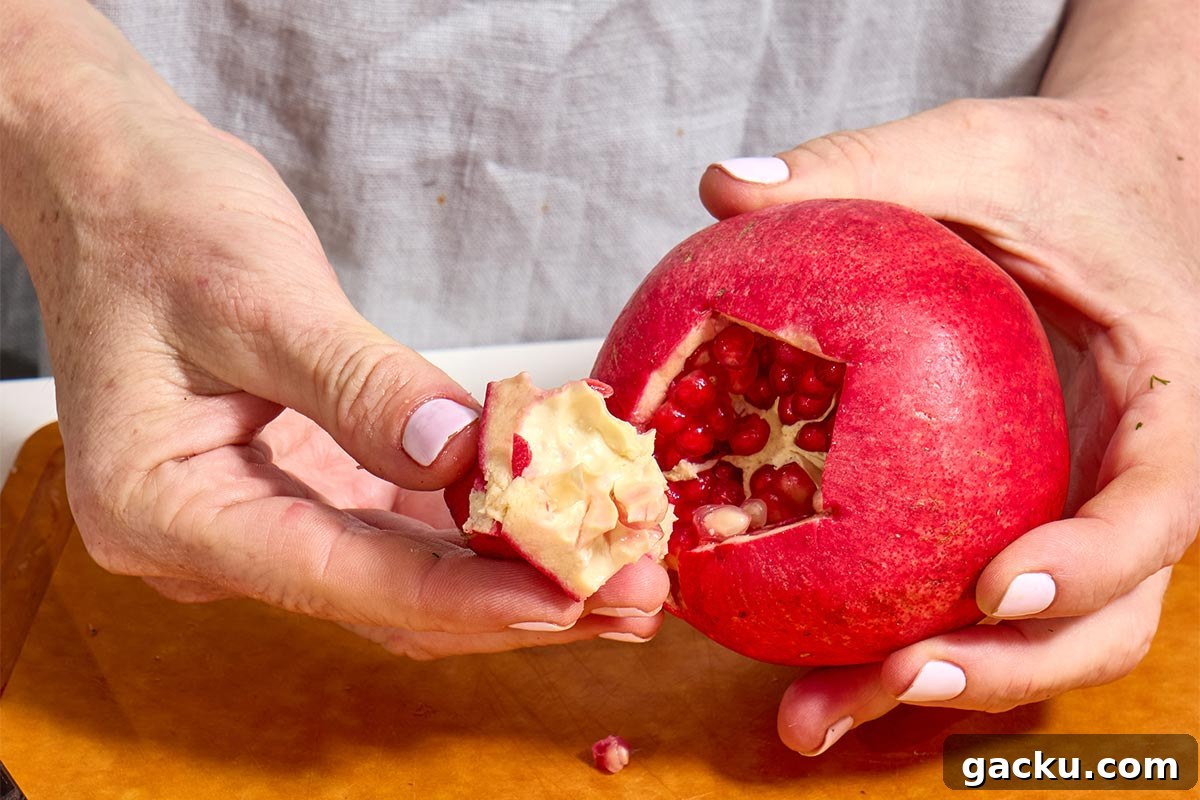
- Pry open the pomegranate: Insert your fingers into the top concavity and gently pry the fruit open. It should separate into six wedge-like sections.
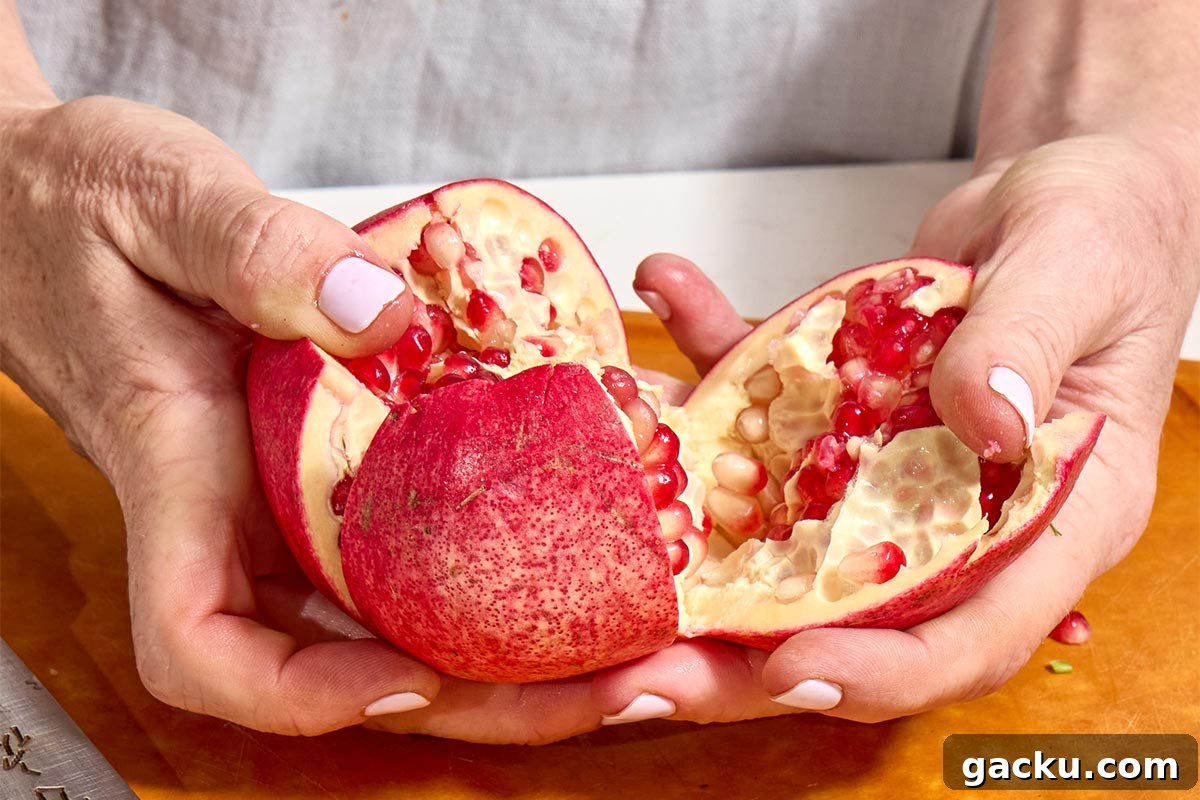
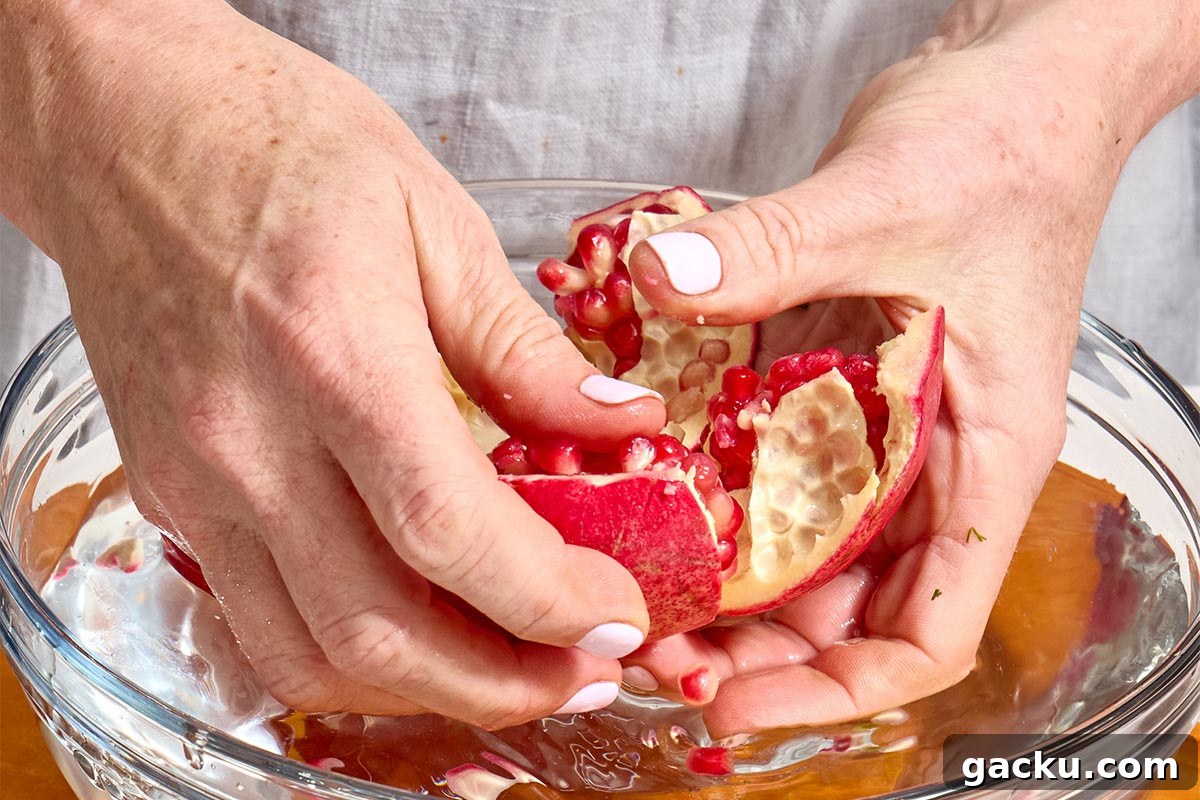
- Remove the seeds: Fill a large bowl most of the way with cold water. Working over the bowl, gently loosen the arils from each section so they fall into the water. You can also submerge the sections and rub them with your fingers to release the seeds.
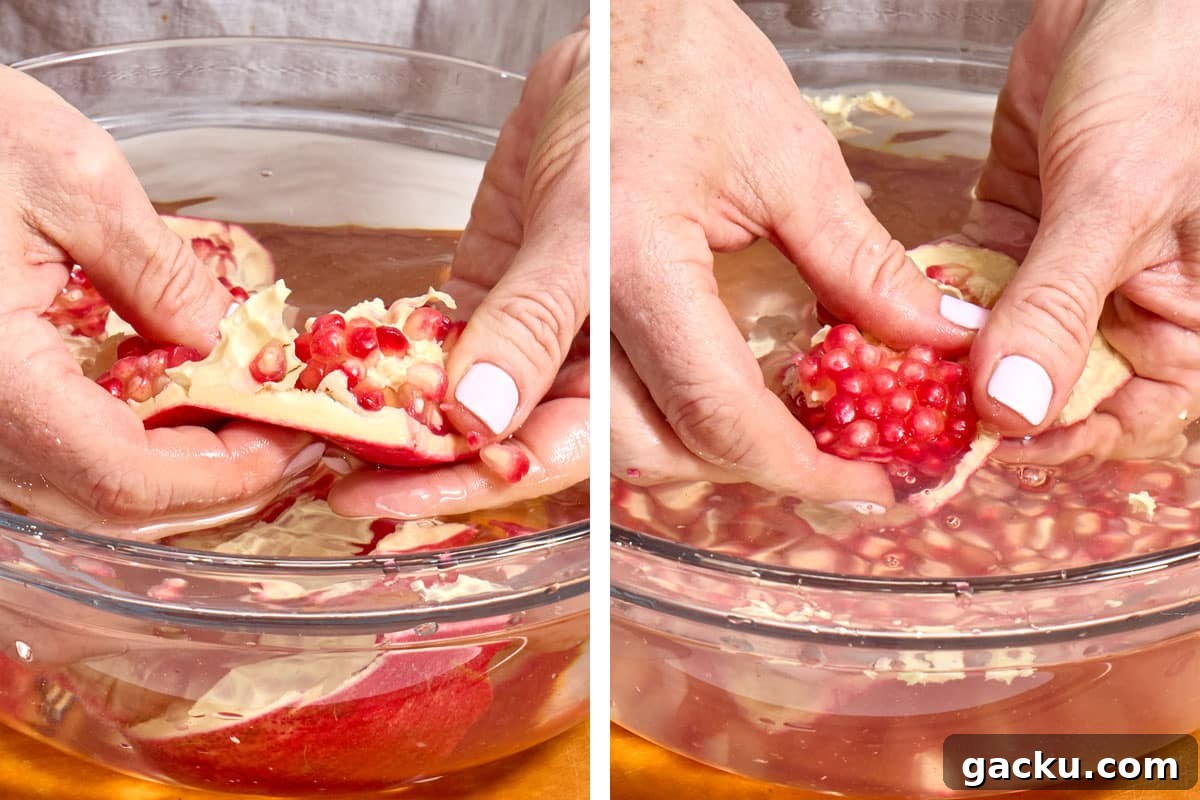
- Strain the seeds: The arils will sink to the bottom while the white membranes float. Skim off the membranes, then drain the seeds in a colander or strainer.
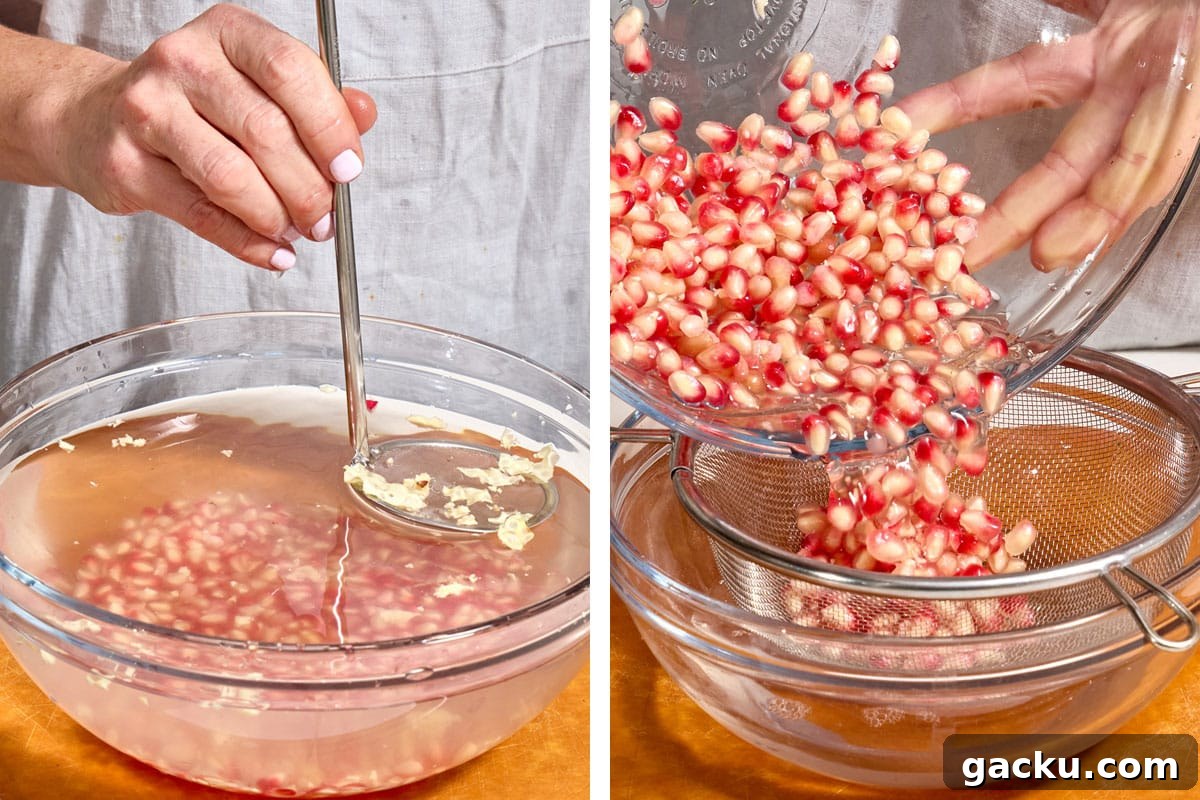
- Pick out any remaining fragments of white membrane, pat the arils dry if needed, and enjoy.
FAQs
Arils are the red, juicy flesh that surrounds the pomegranate seed. Colloquially they’re often called “seeds,” though the actual seed sits inside the aril.
Some varieties have pale arils—white or pale pink—and can still be sweet and perfectly edible. If seeds taste bitter or lack flavor, the fruit may not be fully ripe. Pale arils aren’t unsafe to eat, but they may be less juicy or sweet.
Storing Pomegranate Seeds
Store arils in an airtight container in the refrigerator for up to five days. Discard them if they turn brown, mushy, or slimy. You can freeze seeds for up to three months. Fresh pomegranate juice is best consumed within one week.
More Pomegranate Recipes
Thanksgiving Salad
Arugula, Orange, and Pomegranate Salad
Frozen Pomegranate and Citrus Cocktail

How to Seed Pomegranates
Equipment
-
Knife
Ingredients
- 1 fresh pomegranate
Instructions
-
Cut off a thin slice of the bottom so the fruit can stand securely. Cut around the crown at a slight angle and remove the top.
-
Slice from top to bottom along a vertical ridge, cutting through the skin but not the seeds. Repeat five more times to create six sections.
-
Pry the pomegranate open with your fingers so it separates into six segments.
-
Fill a large bowl most of the way with cold water. Gently free the arils from each section over the bowl or submerge sections and rub them to release the seeds.
-
The seeds will sink and the white membranes will float. Skim off the membranes and drain the seeds in a colander or strainer.
-
Remove any remaining membrane pieces, pat the arils dry if needed, and enjoy.
Notes
- Store arils in an airtight container in the fridge for up to five days. Discard if they become brown, mushy, or slimy.
- Freeze seeds for up to three months.
- Fresh pomegranate juice is best consumed within one week.
Like this recipe? Rate and comment below!