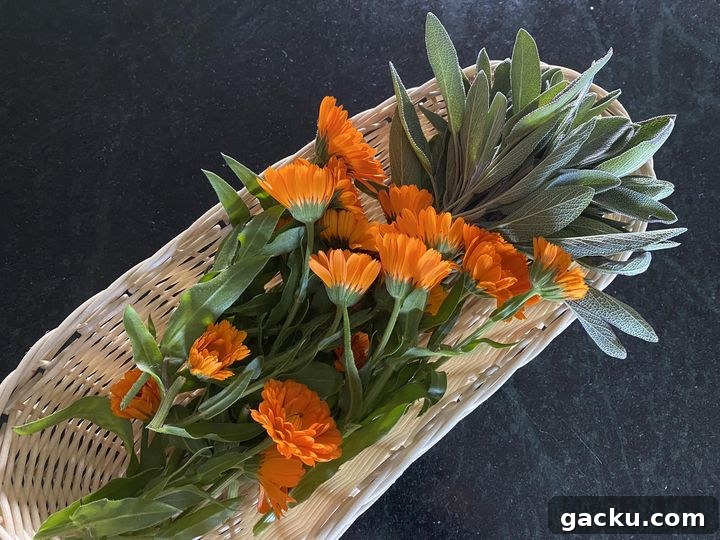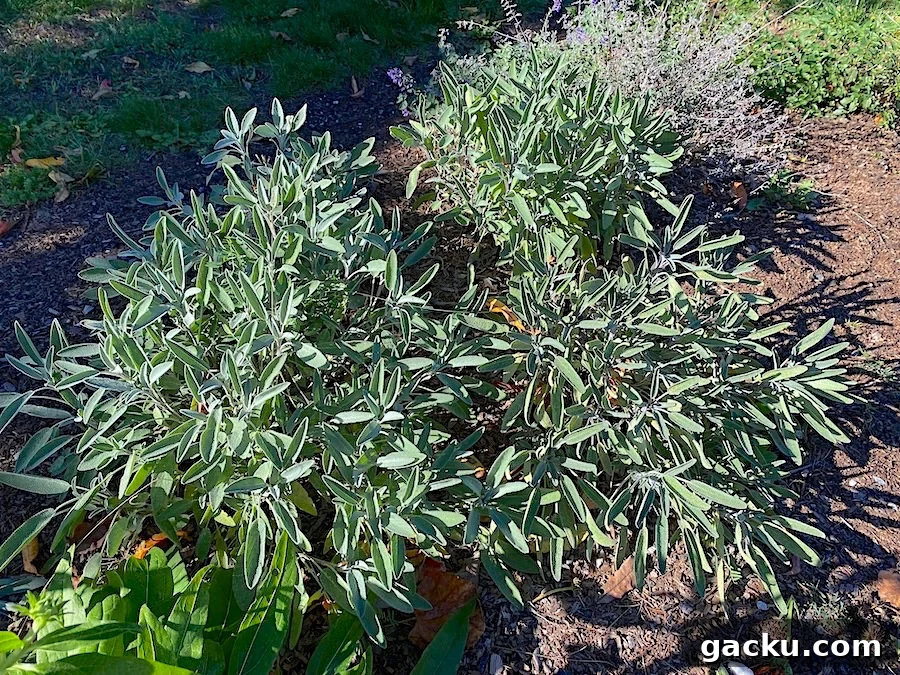
This summer I planted more herbs in both my medicinal and culinary gardens than in previous years. Below are some late-season photos. As you can see, I’m still harvesting calendula blossoms 🙂
Several honey bees buzzed through the garden collecting pollen while I clipped the blossoms. It’s surprising that calendula is still producing and that bees are still actively foraging.
Please click on images to enlarge.
Drying Herbs
I use two main drying methods for the herbs I grow and forage: hanging bunches on a line and spreading delicate leaves on trays. Tender herbs dry quickly on trays, while heartier varieties do well hung in small bunches. For some items—like calendula blossoms, red clover, and garlic scapes—I rely on my dehydrator to finish the job because they can take a long time to dry completely by air alone. Trays work well for delicate blooms and leaves, and hanging works well for robust stems such as oregano and sage.
Storing Dried Herbs
Once fully dry, store herbs in glass jars with tight-fitting lids and label each jar with the herb name and the date. Keep jars in a cool, dark place to preserve color, flavor, and potency. Properly dried and stored herbs can retain their quality for many months when kept away from light, heat, and moisture.
Wildcrafting
This summer I was able to wildcraft large amounts of red clover from my yard and a neighbor’s, drying a total of five quarts of blossoms. I also foraged and dried roughly a gallon of nettle leaves and about a half-gallon of mullein leaves. Foraging responsibly—taking only what you need and leaving plenty for pollinators and wildlife—helps sustain plant populations and supports the ecosystem.
If you enjoyed this post, you may also like Drying Calendula Two Methods, Drying Paprika, and What to do with Garlic Scapes.
Do you grow a medicinal or culinary herb garden? Share your experiences in the comments below.