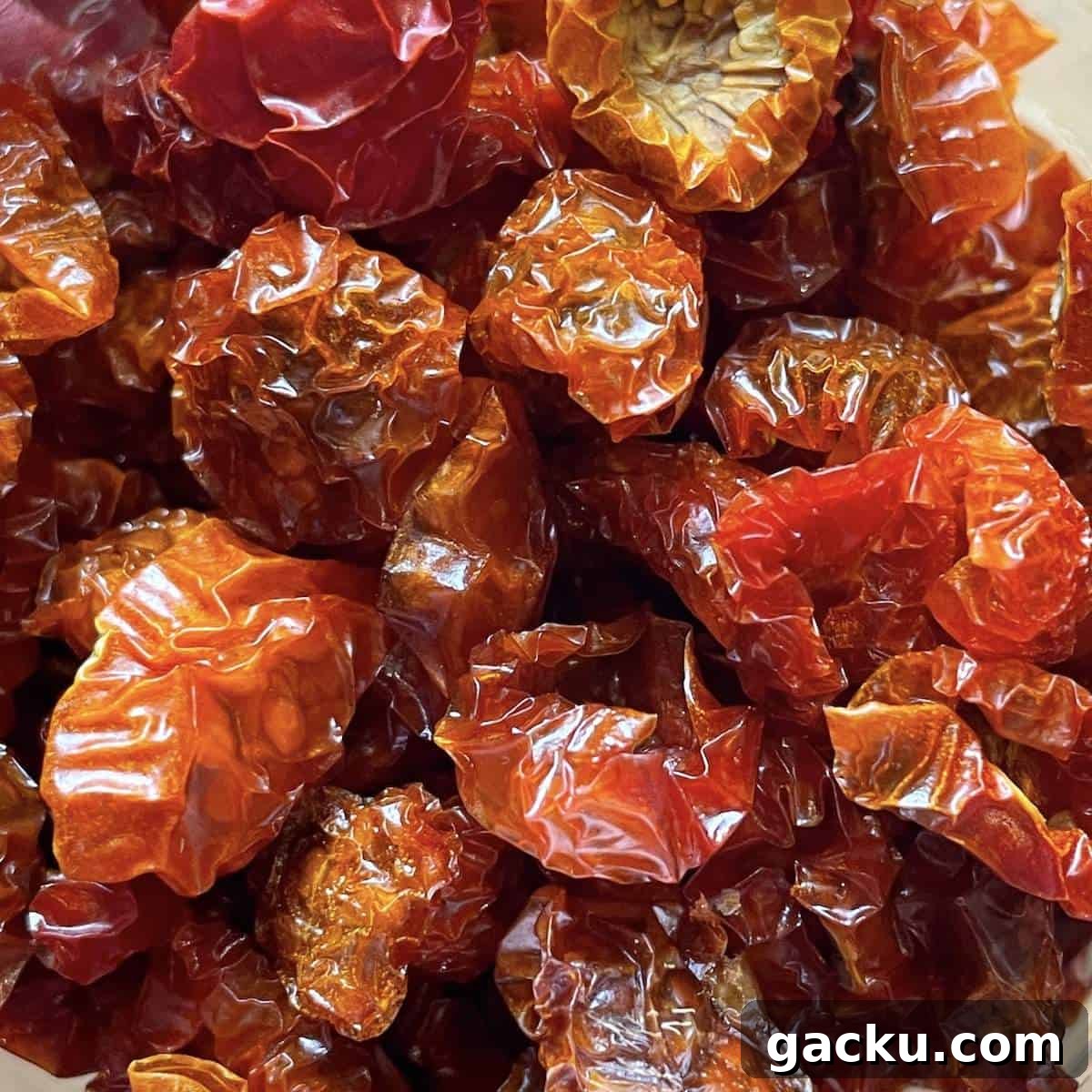
Dehydrated cherry tomatoes are an easy, reliable way to preserve one of the most prolific summer crops. Drying tomatoes lets you enjoy the bright, concentrated flavor of homegrown fruit well into the winter months.
Cherry and grape tomato varieties are some of the most rewarding plants to grow. They produce heavily and often, so you’ll frequently end up with more fruit than you can eat fresh. After making sauces, salsas, salads, pasta dishes, or simply snacking and sharing with friends and neighbors, drying the extras is a perfect way to extend that bounty.
You don’t need a garden to take advantage of peak-season tomatoes—farmers markets and grocery stores often have excellent, inexpensive tomatoes during the summer. Choose locally grown or heirloom varieties for the best flavor when dried.
Dehydrated cherry tomatoes are similar to sun-dried tomatoes in taste and texture. If you can’t sun-dry due to pests or humidity, a food dehydrator or low oven will produce consistent, delicious results.
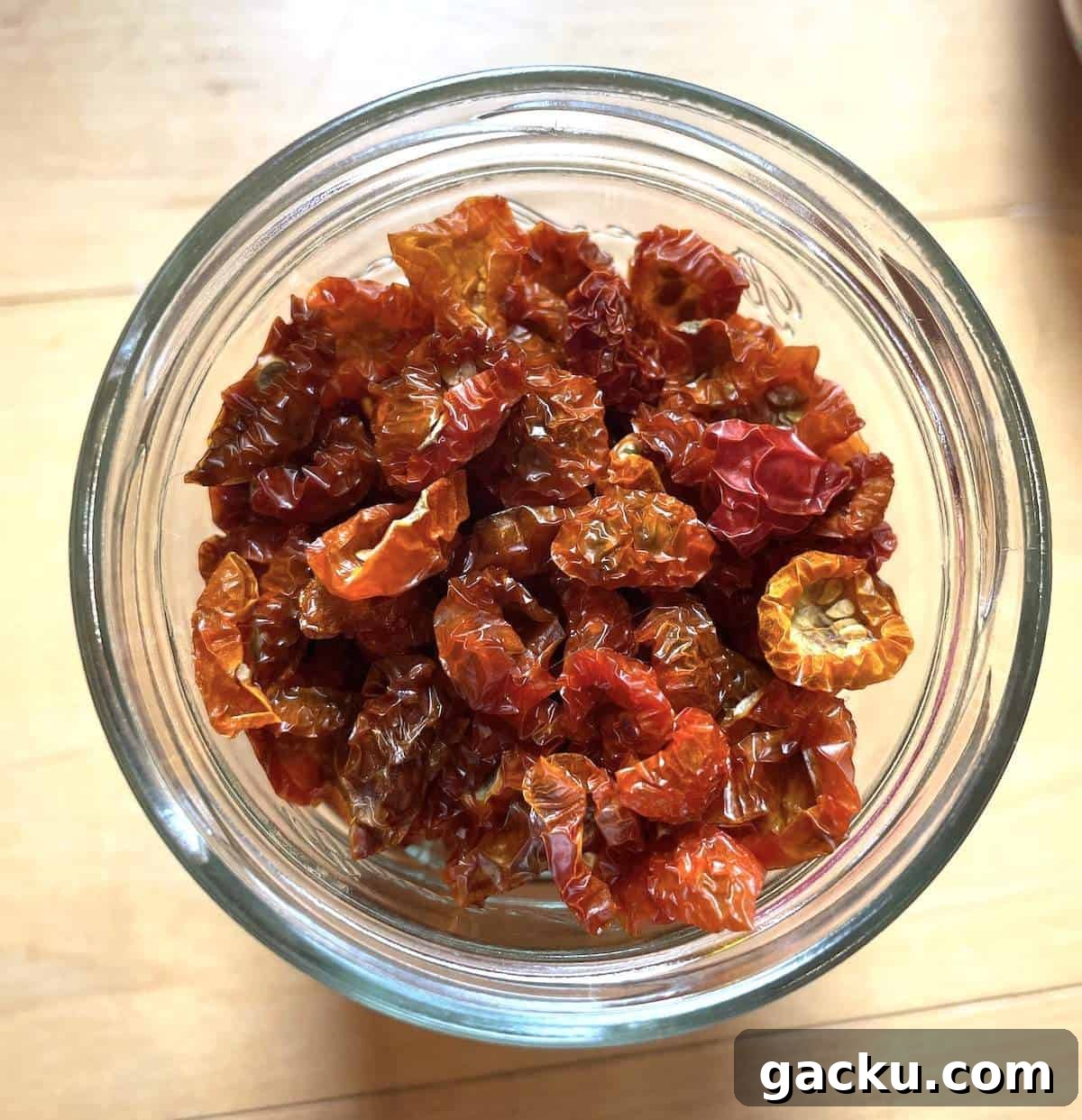
Dried cherry tomatoes are versatile: rehydrate them in oil for a pesto-like spread with basil and garlic, blend with cream cheese for a savory dip, or grind them into tomato powder to boost sauces and soups.
Table of Contents
- 🍅 Ingredients Needed
- 🍽 Equipment Needed
- 👩🌾 How to Dehydrate Cherry Tomatoes
- ☀️ How to Sun Dry Tomatoes
- 🍅 How to Condition Dried Tomatoes
- 🫙 How to Store Dried Tomatoes
- ⏲ How Long Can You Store Dehydrated Cherry Tomatoes?
- 🍅 Uses for Dehydrated Cherry Tomatoes
- 🙋♀️ Frequently Asked Questions
- 🧂 How Do You Make Tomato Powder?
- 🍅 What Can You Use Tomato Powder For?
- ♨️ How Do You Dehydrate Large Tomatoes?
- ✏️ Helpful Tips
- 🍓 More Things to Dehydrate
🍅 Ingredients Needed
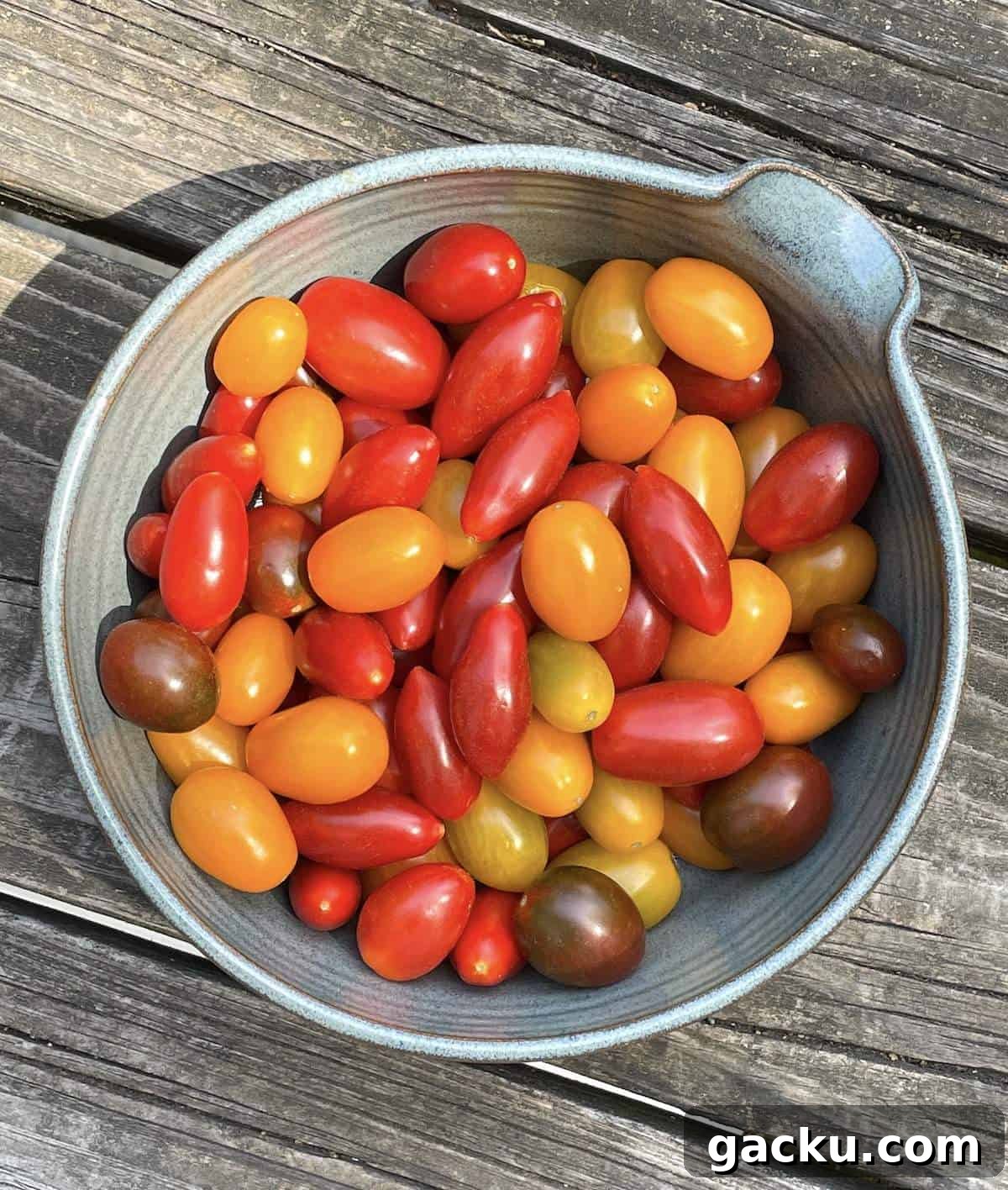
- Cherry or grape tomatoes – Small varieties like Sun Gold, Sweet 100, Juliet, and similar produce the best concentrated flavor when dried. Less flavorful varieties won’t improve much with drying, so start with tasty fruit.
- Water – For washing.
- Optional: salt – A light sprinkle can enhance flavor before drying or when rehydrating.
🍽 Equipment Needed
- Food dehydrator – Gives the most consistent results and temperature control.
- Or: Oven – Use the lowest setting and prop the door to allow moisture to escape.
- Knife and cutting board
- Mason jars or airtight containers
- Food-safe desiccant packs (optional) – Help maintain dryness in long-term storage.

👩🌾 How to Dehydrate Cherry Tomatoes
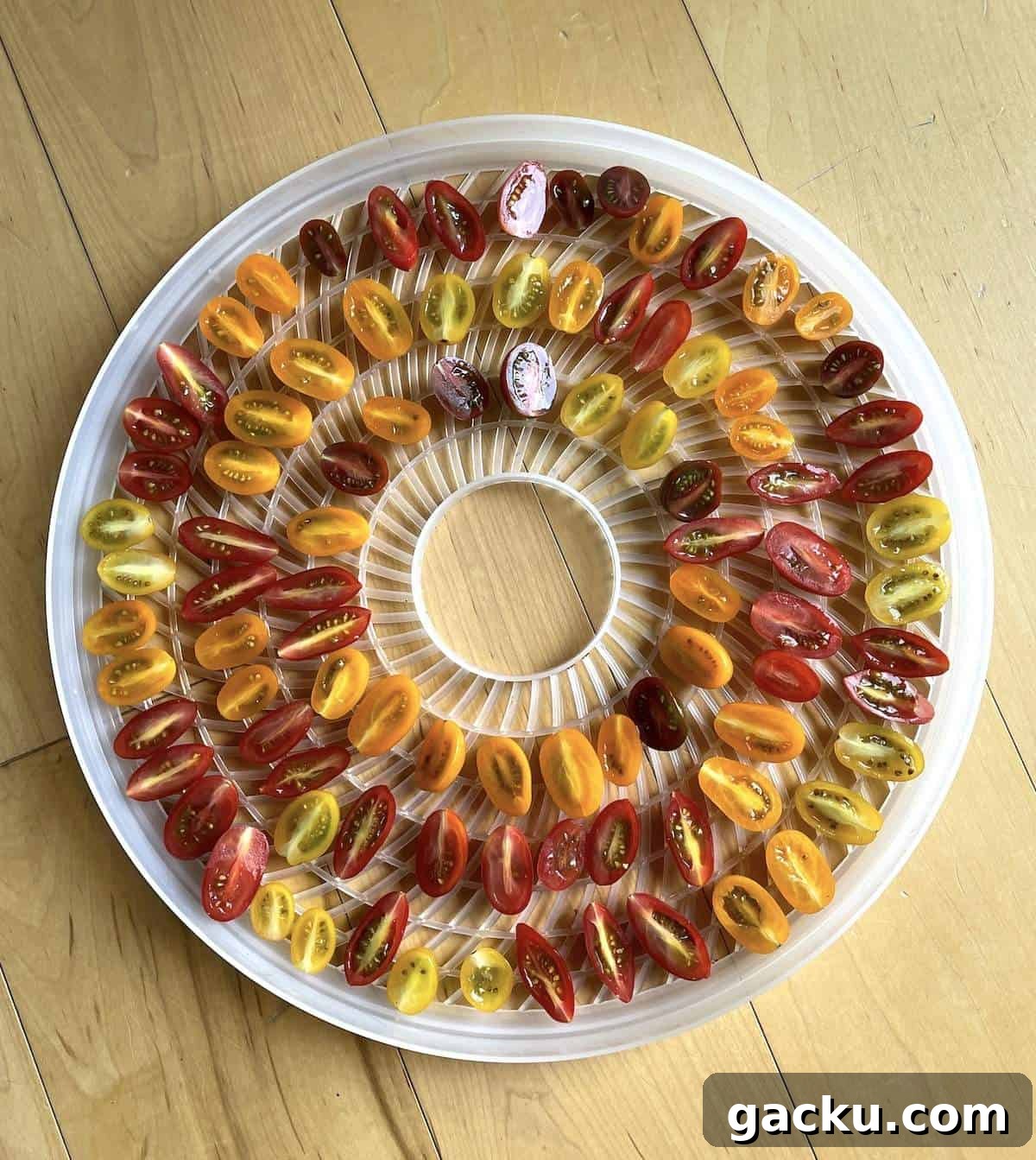
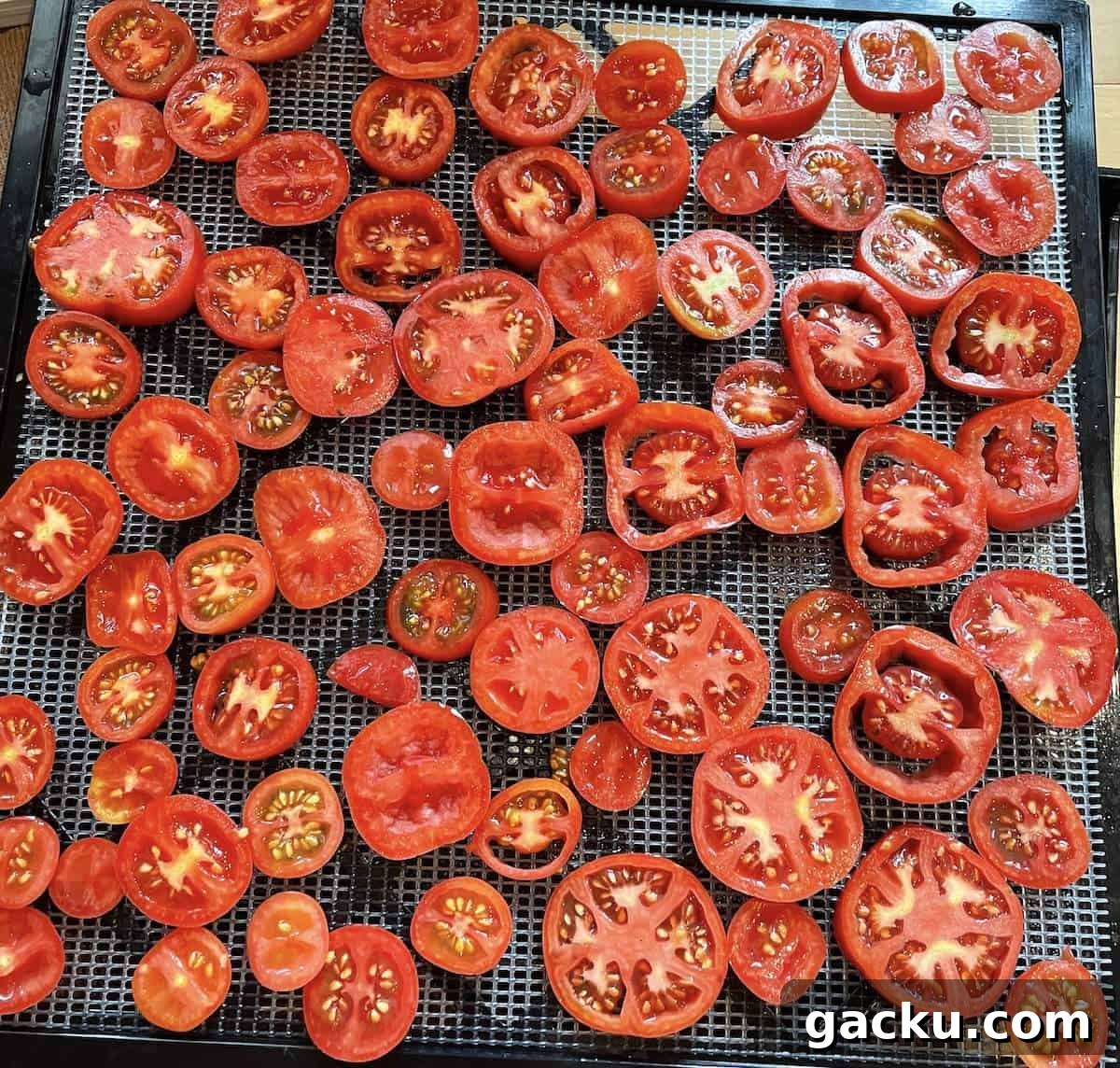
Start by washing the tomatoes and drying them lightly in a colander or with a towel. They don’t need to be bone-dry, but handling and slicing are easier when they’re mostly dry. Slice each tomato in half; for oblong types slice along the long axis to expose more flesh.
♨️ Dehydrator Instructions
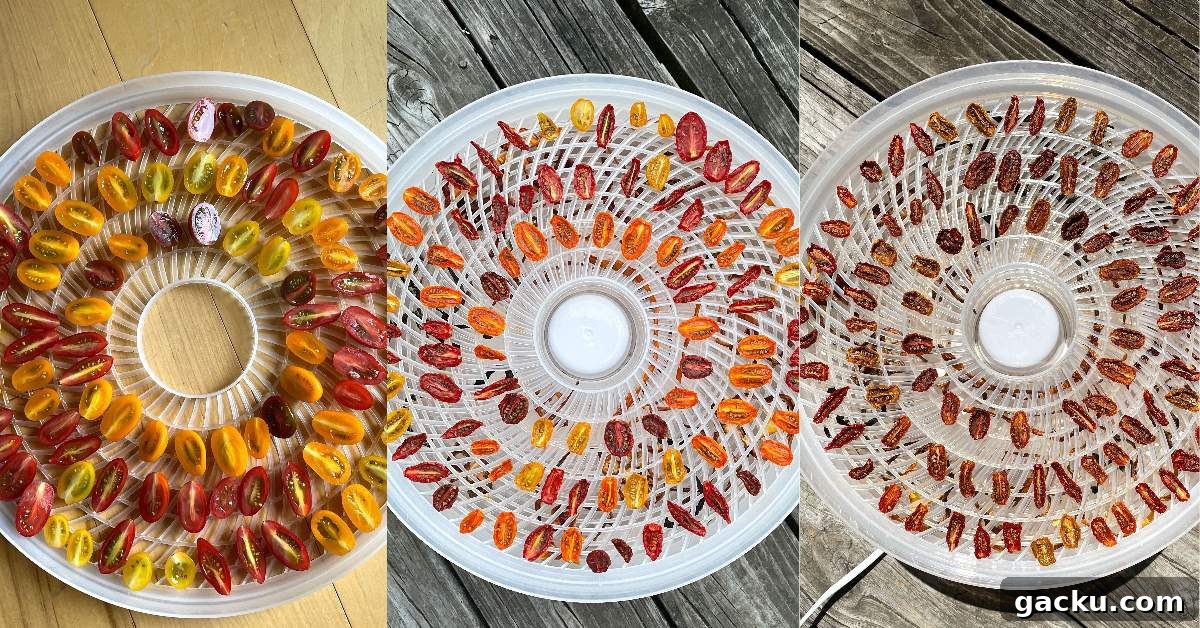
- Arrange tomato halves cut-side up in a single layer on dehydrator trays so air can circulate.
- Slide trays into the dehydrator and set temperature to 125°F.
- Dry for 8–18 hours depending on tomato size and variety; rotate trays about halfway through for even drying. If your unit runs hot, drying time will be shorter.
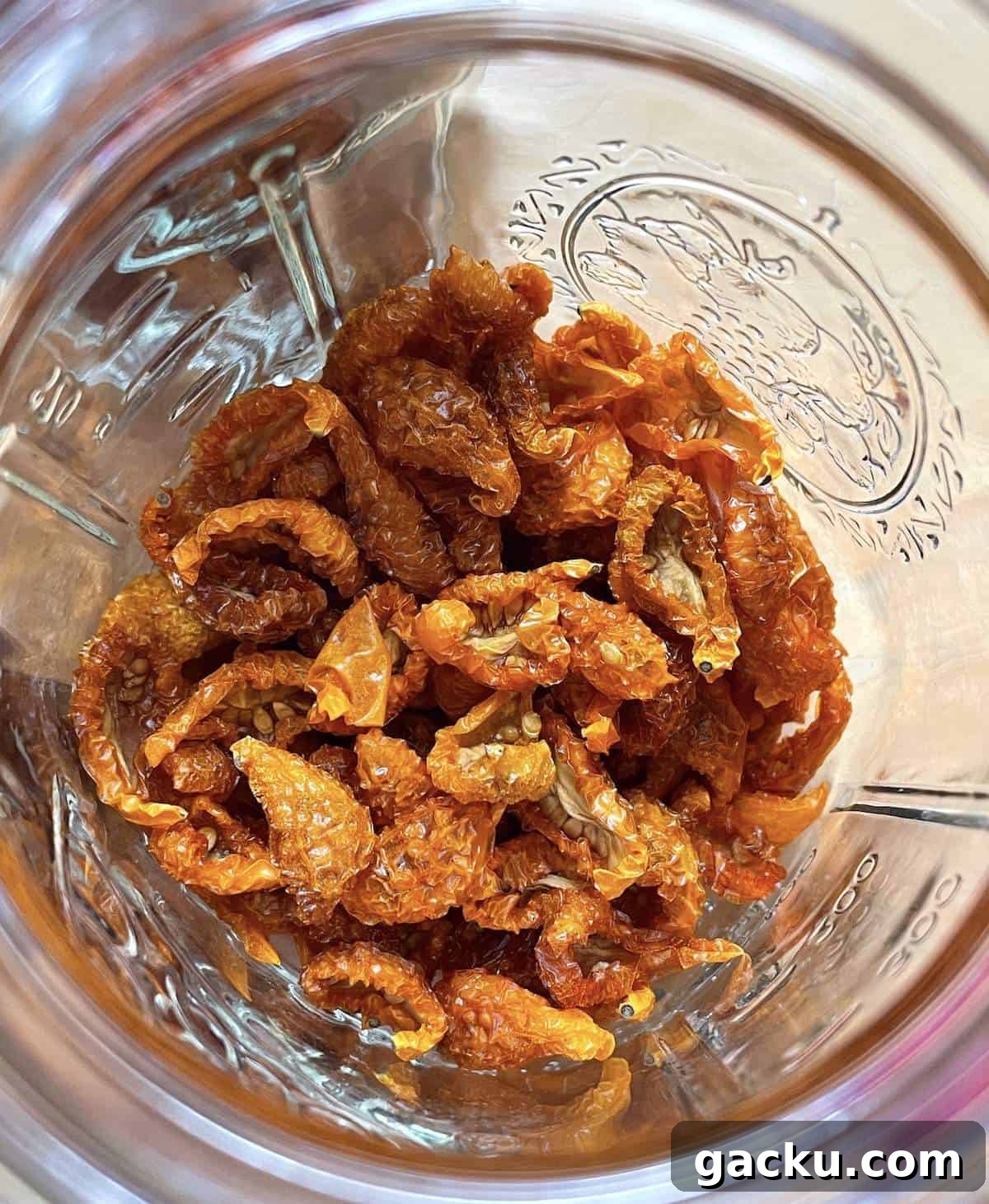
- Remove when tomatoes are shriveled, dry to the touch, and no longer tacky.
- Condition the dried tomatoes (instructions below) before storing long-term.
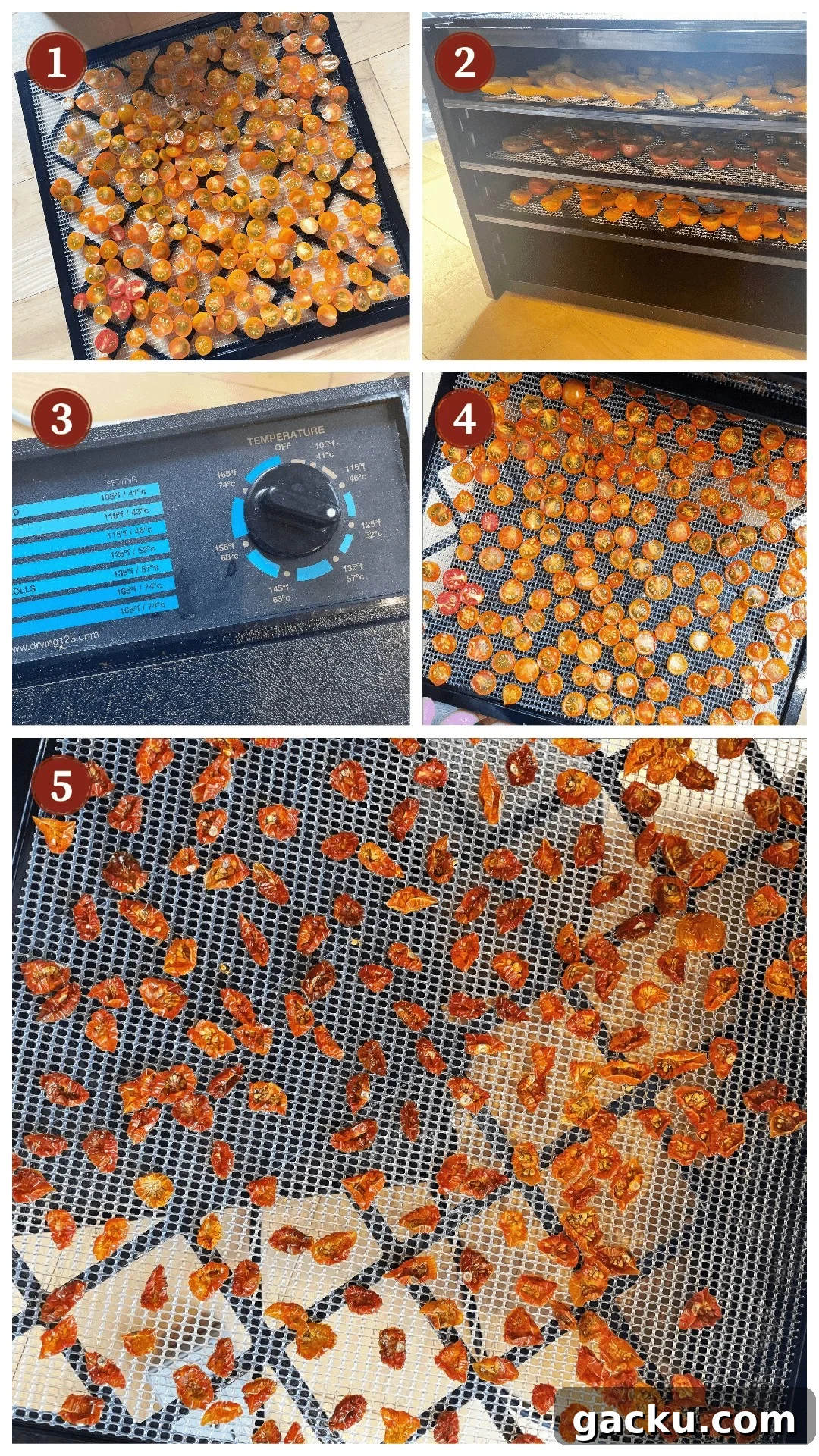
♨️ Oven Instructions
- Preheat the oven to its lowest setting, around 170–175°F.
- Place tomato halves cut-side up on a parchment-lined baking sheet in a single layer.
- Bake with the oven door cracked for airflow for 4–8 hours, checking after about 2 hours. Prop the door open with a rubber spatula or non-conductive trivet and rotate the pan halfway through.
- Remove when tomatoes are shriveled, dry, and not sticky.
- Condition before transferring to long-term storage.
☀️ How to Sun Dry Tomatoes
Sun-drying yields rich, deep flavor but requires hot, low-humidity weather (ideally below 60% humidity and daytime temps above 90°F) and protection from animals and insects. If your climate is humid or pests are a problem, use a dehydrator or oven instead.
🗒 Instructions
- Slice tomatoes and place cut-side up on screens or trays. Lightly salt if desired.
- Elevate trays so air circulates underneath; use blocks or boards for multi-tray setups.
- Cover with a cheesecloth tent to keep bugs off without touching the fruit.
- Leave in sun all day and bring trays in at night to avoid dew and animals. Drying time can range from 4 days to two weeks.
- Sun-dried tomatoes should be chewy and dry rather than crisp; store more cautiously (refrigerate or freeze) because sun-drying can be uneven.
🍅 How to Condition Dried Tomatoes
What is conditioning?
Conditioning evens out moisture among pieces before long-term storage, reducing the risk of mold.
Why condition dehydrated food?
Not all pieces dry at the same rate. Variations in size, moisture content, and airflow in the dryer can leave some pieces slightly moister than others. Conditioning identifies and corrects that.
Conditioning steps
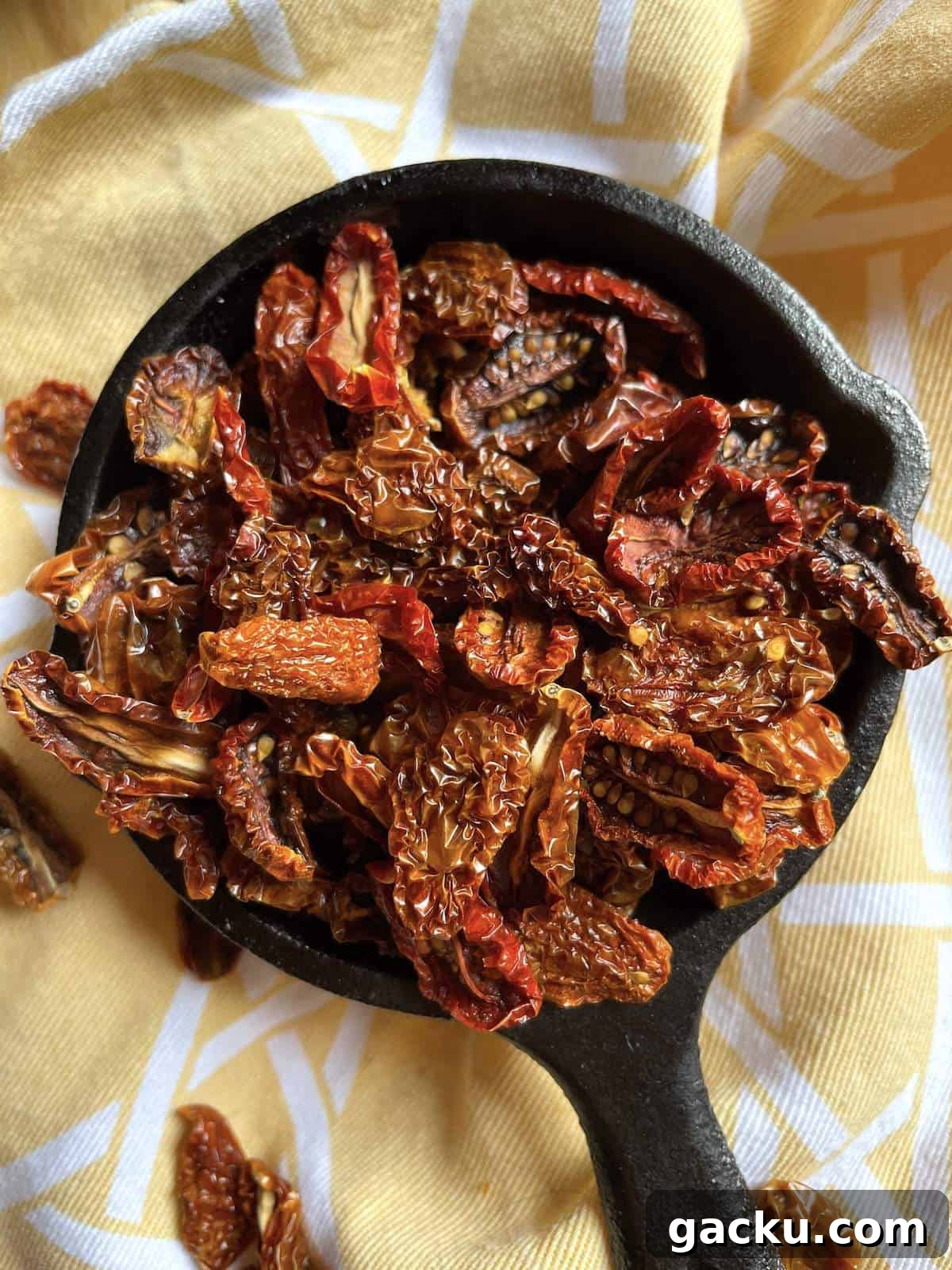
- Ensure tomatoes are dry (they should be shriveled and not tacky).
- Place dried tomatoes in a clean, airtight container with a little headspace.
- For seven days, shake the jar daily and check for moisture beads. If you see moisture but no mold, return tomatoes to the dehydrator to finish drying. If you see mold, discard the batch.
- If no moisture appears after seven days, vacuum-seal or add a desiccant pack and store the jar in a cool, dark pantry.
🫙 How to Store Dried Tomatoes
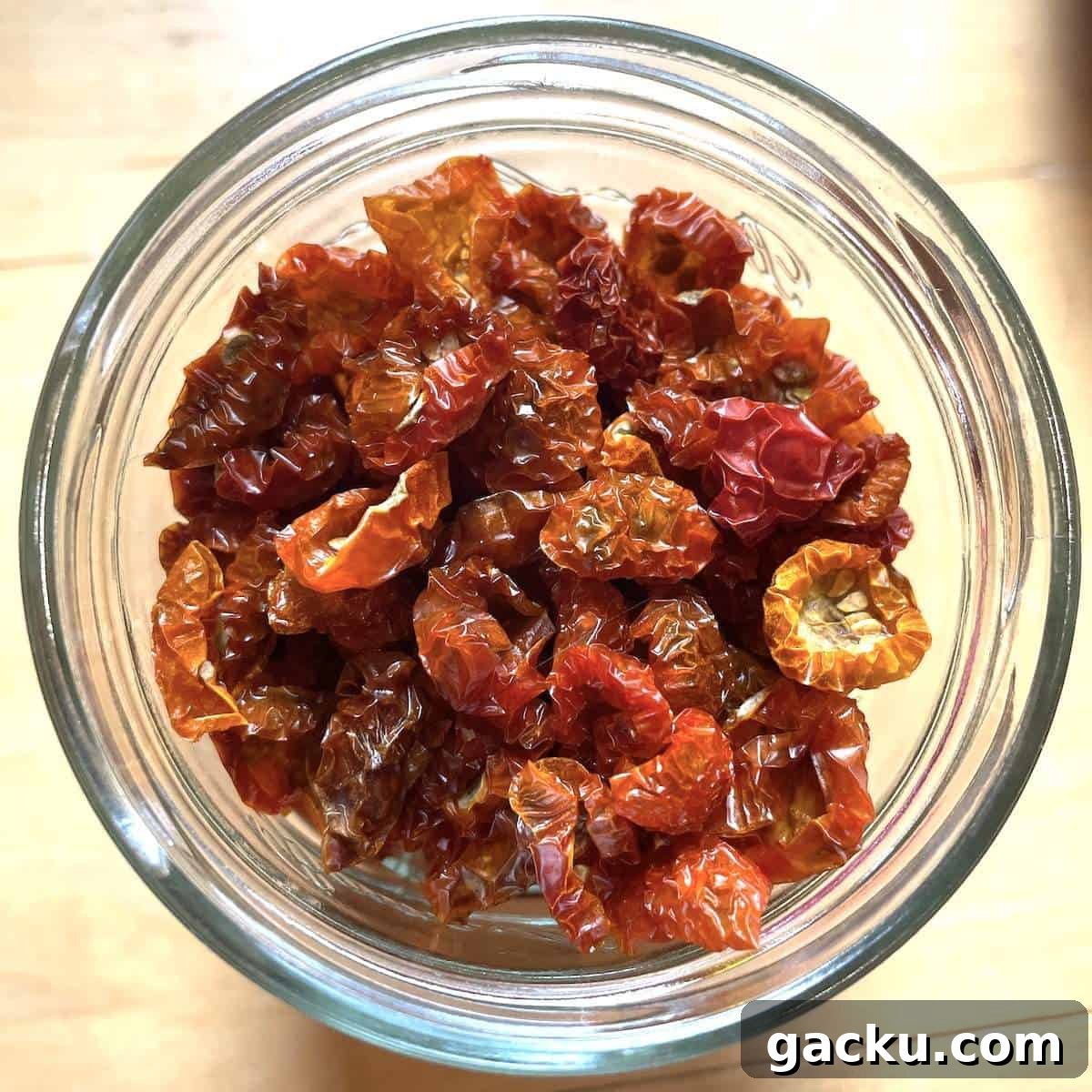
Store in airtight glass jars with food-safe desiccant packs or vacuum-sealed Mylar bags. Keep them out of direct sunlight in a cool, dry place. Tomatoes stored this way maintain quality for months.
⏲ How Long Can You Store Dehydrated Cherry Tomatoes?
Properly dried, conditioned, and stored tomatoes are shelf-stable for about 8–12 months. They may remain safe longer, but flavor and texture decline over time.
🍅 Uses for Dehydrated Cherry Tomatoes
Try these ways to use dried tomatoes:
- Rehydrate in olive oil and blend with garlic, basil, and vinegar for a sun-dried tomato pesto.
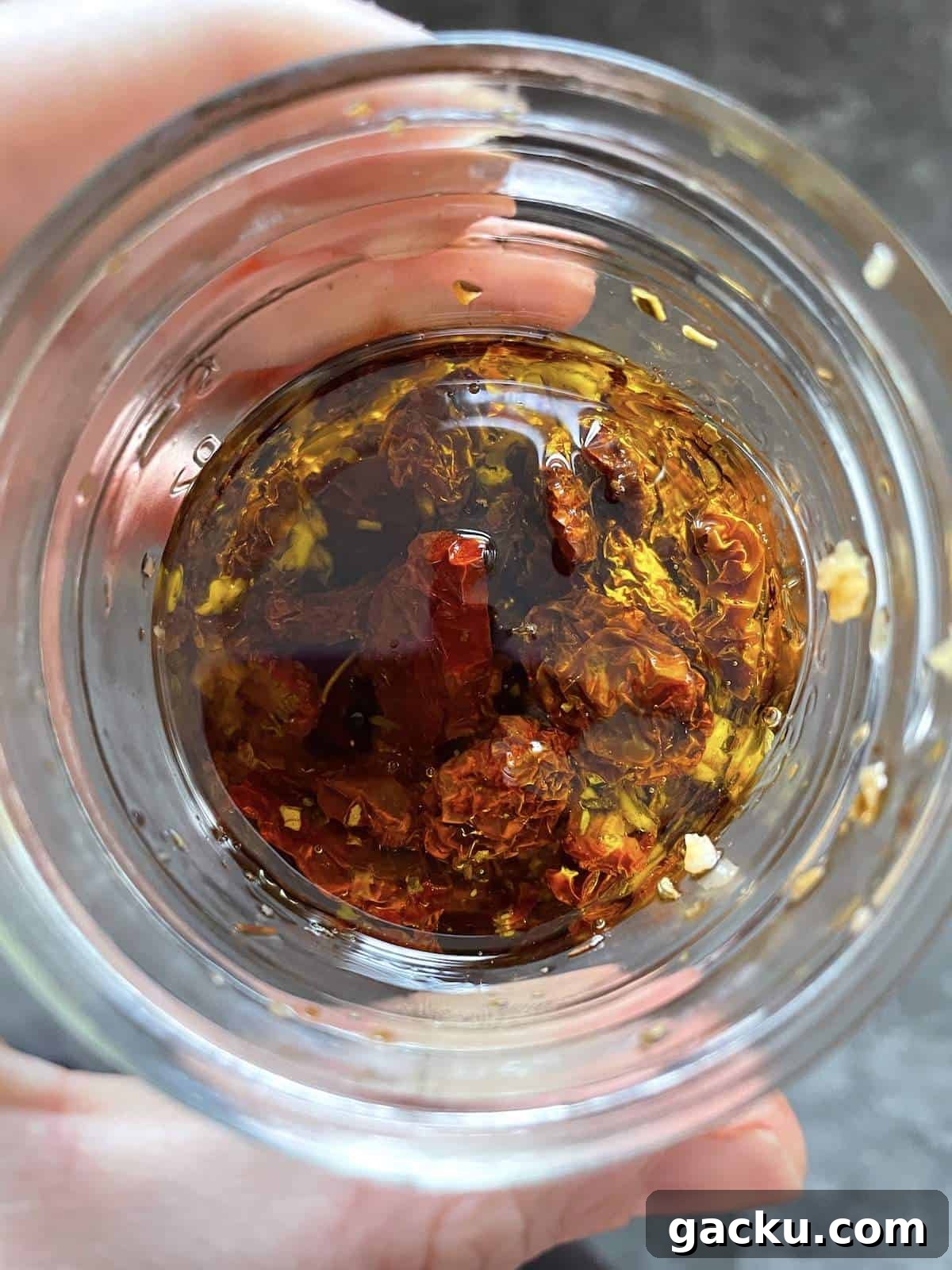
- Soak in oil and store in the fridge for an oil-packed tomato condiment (use quickly and refrigerate).
- Chop into salads, mix into pasta, or stir into scrambled eggs.
- Blend into dips, hummus, or aioli after rehydrating in oil.
- Grind into tomato powder to add concentrated tomato flavor to sauces, soups, and baked goods.
- Snack on them as you would dried fruit for a savory bite.
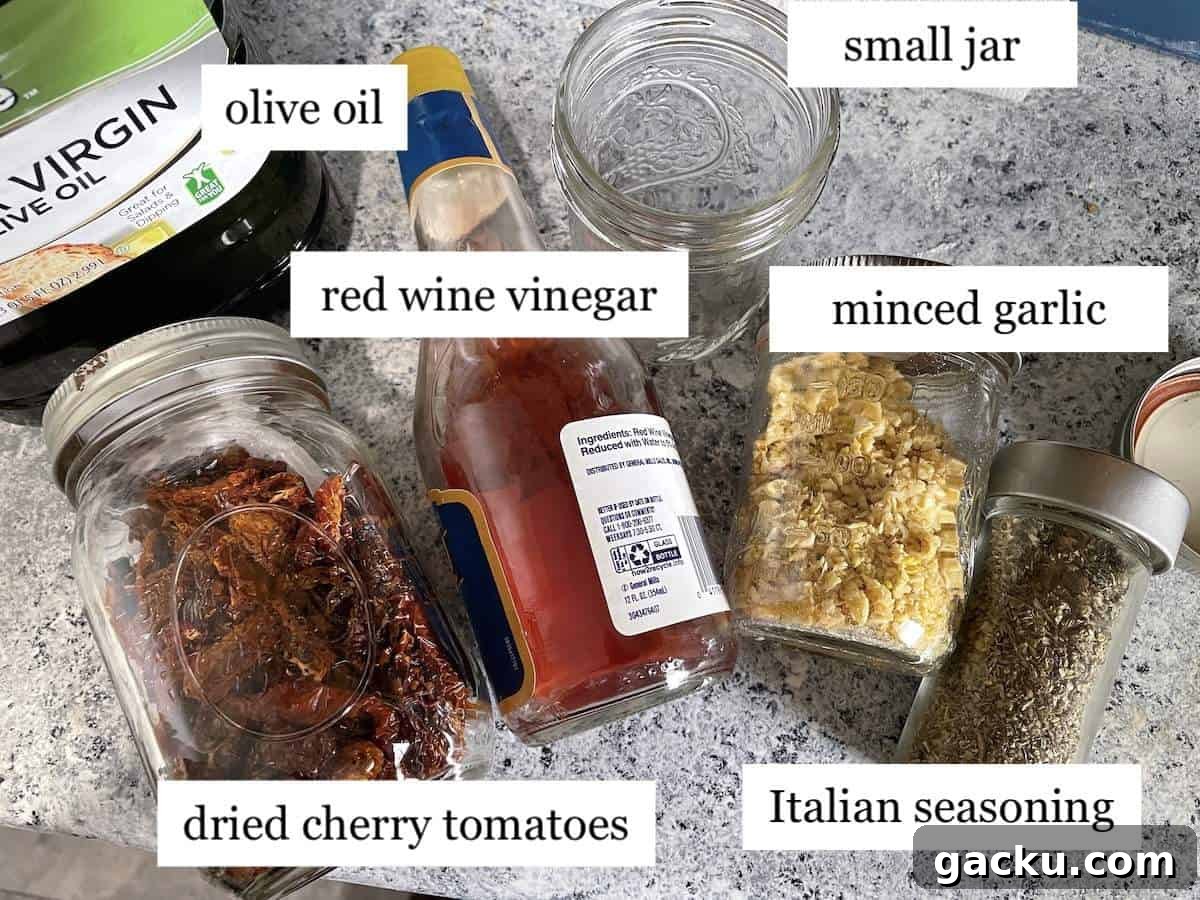
If tomatoes are very tough after drying, blanch briefly before packing in oil to soften them. Always refrigerate oil-packed tomatoes and use within a few weeks.
🙋♀️ Frequently Asked Questions
When properly conditioned and stored in an airtight container, dehydrated tomatoes should keep for 8–12 months.
🧂 How Do You Make Tomato Powder?
Make tomato powder by drying whole pieces or, for a low-waste option, drying and grinding tomato skins left from sauce-making. Dry skins at 125°F until crisp, condition them, then grind to a fine powder using a spice grinder or high-powered blender.
🍅 What Can You Use Tomato Powder For?
Tomato powder boosts sauces, soups, dips, mayonnaise, eggs, and casseroles—an easy way to add tomato flavor and nutrition without extra liquid.
♨️ How Do You Dehydrate Large Tomatoes?
Slice larger tomatoes such as Roma or paste varieties thinly and dehydrate until they are crisp like a chip. Larger fruit takes longer than cherry tomatoes, so monitor progress and rotate trays for even drying.
✏️ Helpful Tips
- Rotate trays midway through drying to ensure even exposure to heat and airflow.
- Avoid case hardening by drying at moderate temperatures—if the exterior sets too quickly, moisture can become trapped inside, risking spoilage.
- Check stored tomatoes periodically—shake jars and look for signs of moisture or mold during the conditioning week and afterwards.
🍓 More Things to Dehydrate
- Dehydrated Strawberries
- Homemade Cornmeal
- Dehydrated Watermelon
- Dried Honeysuckle Blossoms
Have you tried this method? Please rate it and leave a comment below—I’d love to hear how your dried tomatoes turned out.