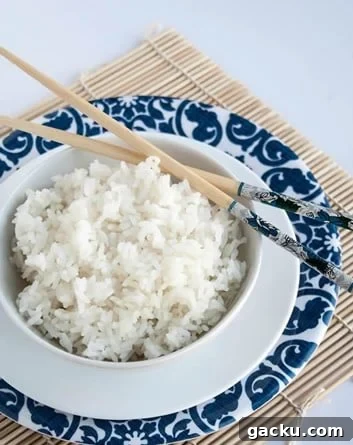
I thought I’d start the New Year with rice.
My dad loved rice and served it with nearly every meal unless the dish called for a different starch like pasta. He bought rice in large sacks from the Asian market and stored it in a big plastic bucket with a lid. A small white cup was always his rice scoop — the only “measuring” tool he used to make what he called Perfect White Rice.
You can make a lovely pot of white rice with almost no measuring tools. You don’t need measuring cups and spoons like in baking. Baking depends on exact proportions, which I enjoy, but cooking—especially a simple pot of rice—is more forgiving. You taste, adjust and work in the moment. Using my dad’s informal method feels a little rebellious to my type-A baking instincts, but it’s satisfying and reliable.
Following the standard 2:1 water-to-rice ratio printed on many packages often gives me rice that’s too wet and sticky. For everyday long-grain white rice (not instant or quick rice) I returned to my father’s approach. This is also intended for stovetop cooking rather than a rice cooker.
I use Carolina White Rice as my everyday choice, but you can use your preferred long-grain white rice. I recommend cooking a large pot even if you don’t need that much right away—cooked rice stores well in the refrigerator for a few days or in the freezer for longer. Reheat with a splash of water in the microwave to recreate steam and return it to fluffy consistency.
Here are the simple steps. They’re easy and dependable.
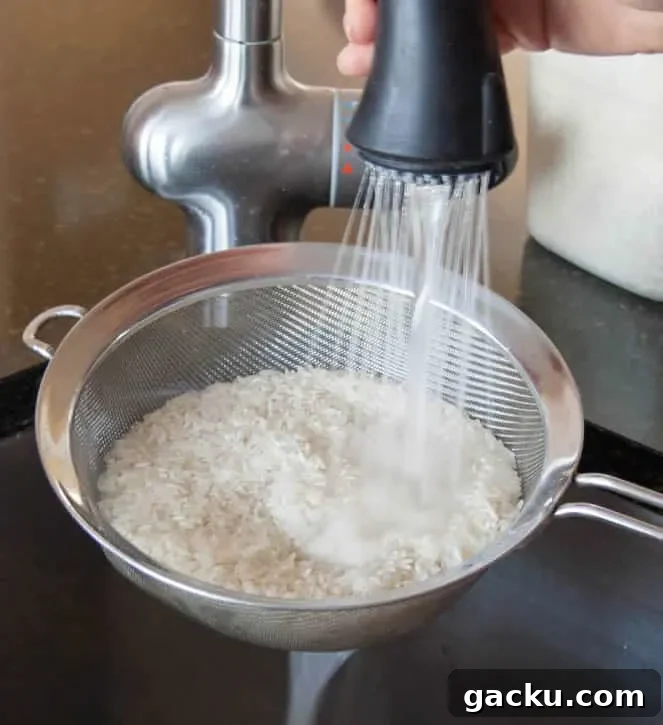
First, rinse the rice. Place the amount you plan to cook in a fine mesh strainer and rinse under running water until it runs clear. This removes surface starch and reduces stickiness. I usually make at least 2–3 cups uncooked to yield a generous pot.
Choose a pot sized to the amount of rice. If you’re making a small portion, use a smaller saucepan, but again, making more is practical since leftovers store well. I generally use a large saucepan for about 3 cups uncooked, though I rarely measure precisely — I aim to fill the strainer about halfway or a little more.
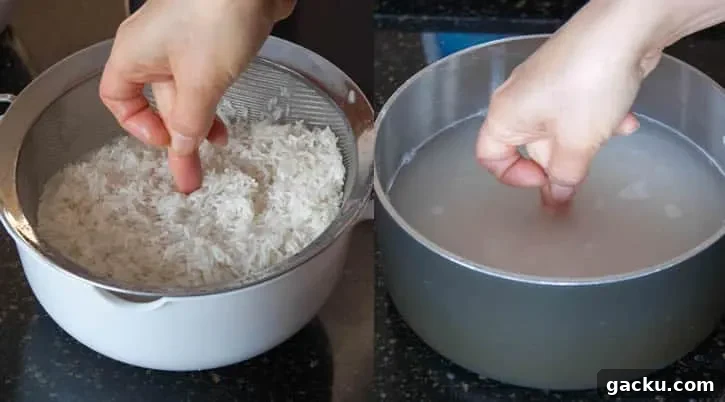
After rinsing, return the rice to the saucepan and add water until it’s about an inch above the rice. The “knuckle method” measures that inch: place the tip of your middle finger gently on top of the level rice and add water until it reaches the first knuckle on the inside of your finger. Level the rice before measuring so the water sits evenly; you can shake the pot or smooth it with your hand. Adjust amount slightly if needed — it doesn’t have to be exact.
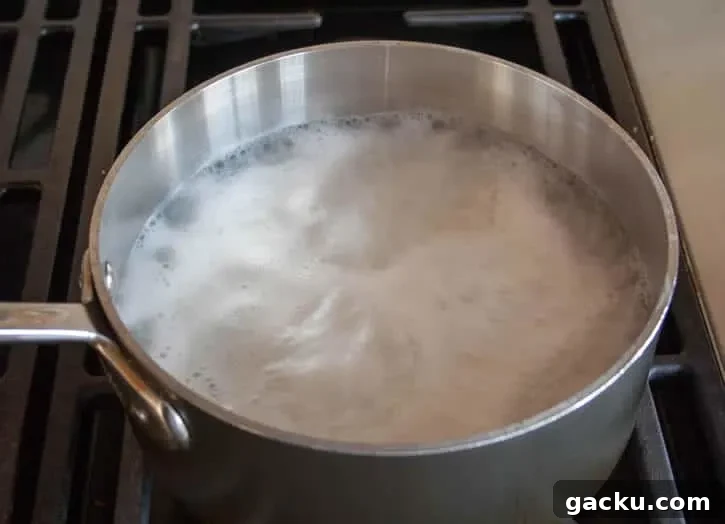
Bring the pot to a boil uncovered over medium to medium-high heat. Use moderate heat — you want the water to boil without scorching the rice. Heavy-bottomed pots are preferable because they distribute heat evenly and reduce the chance of burning. If you have an electric stove, heat adjustments are slower, so be mindful of that.
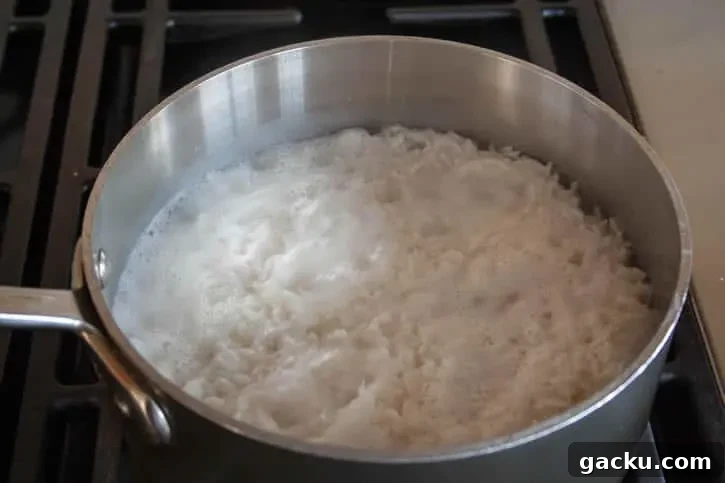
When most of the water has boiled down to just below the rice level and you see bubbles breaking the surface of the rice, cover the pot tightly and reduce the heat to a low simmer. Set a timer for 15 minutes and do not lift the lid. After 15 minutes, remove the pot from the heat but keep it covered and let it rest for another 5 minutes without uncovering. That 20-minute hands-off window lets steam finish cooking the rice and prevents moisture from escaping.
If your rice begins to boil over before you cover it, remove the lid and reduce heat until excess water evaporates, then resume the process. This rarely happens when you follow the method above, but adjust if needed.
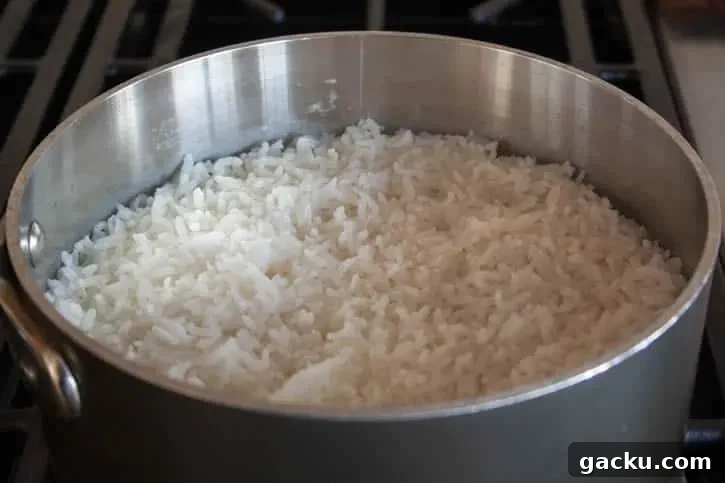
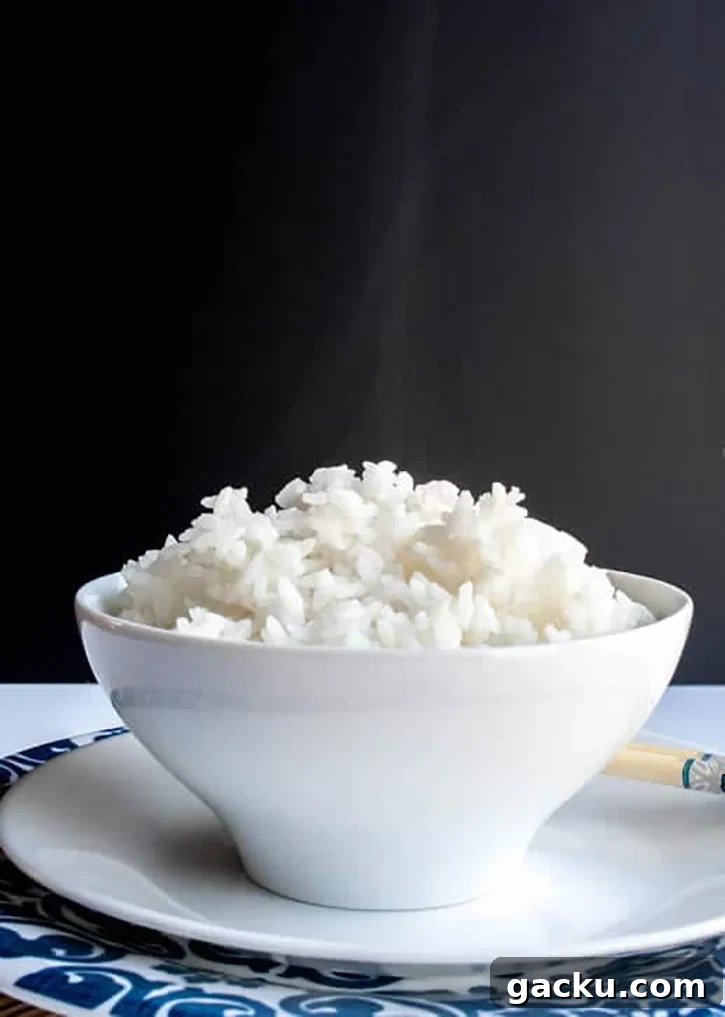
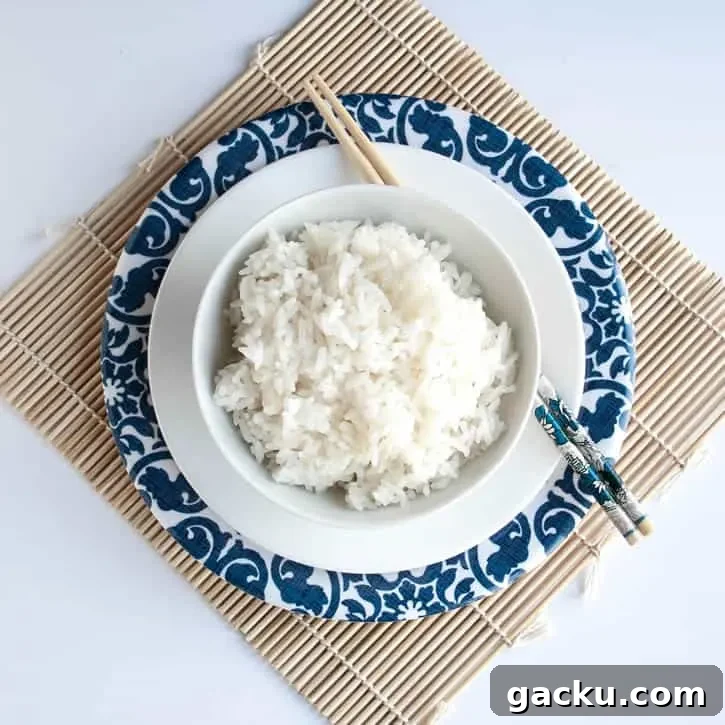
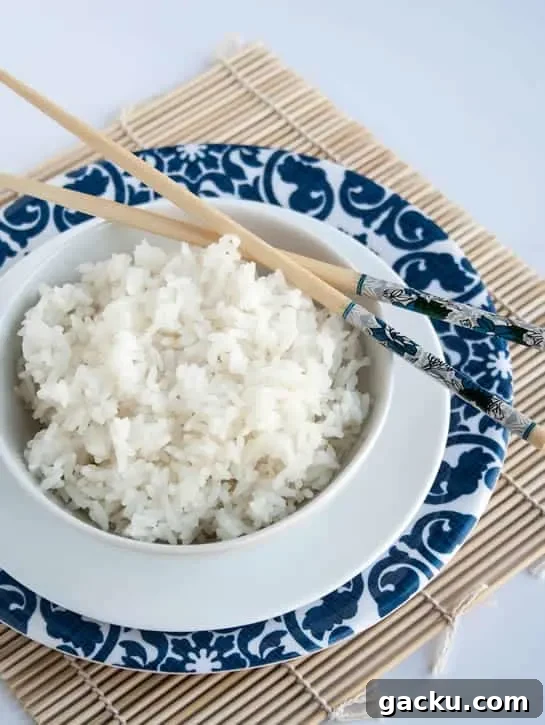
After the resting period, lift the lid to reveal tender, properly steamed rice. The grains should be cooked through and slightly clinging to each other—not as separated as instant rice, but not gluey either. Fluff the rice gently with a fork and serve.
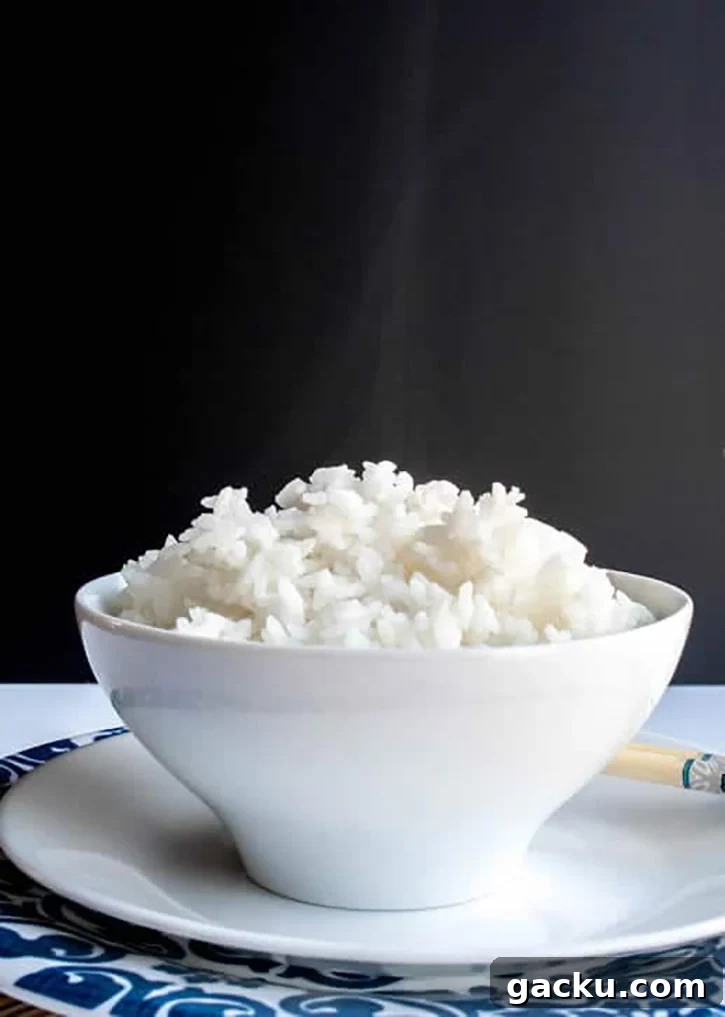
Perfect white rice every time.
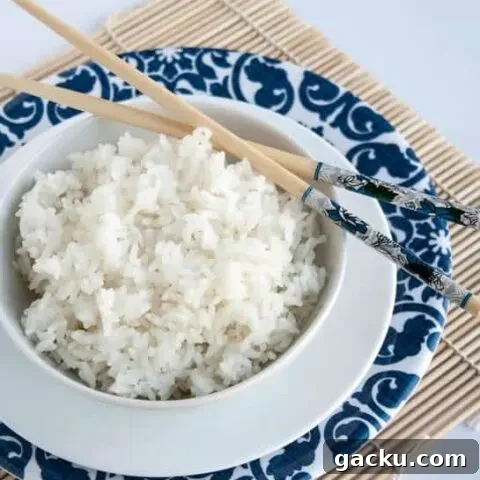
Perfect White Rice
Perfect White Rice. How to make perfect fluffy white rice with no measuring cups using the knuckle method.
Ingredients
- long grain white rice
- water
Instructions
- Place desired quantity of rice into a fine mesh sieve and rinse until the water runs clear.
- Pour rinsed rice into a heavy-bottomed saucepan and cover with about an inch of water measured with the knuckle method: place the tip of your middle finger on top of the rice and add water until it reaches the first joint (knuckle) on the inside of your finger. Ensure the rice is level when measuring.
- Bring the pot to a boil over medium to medium-high heat.
- When you see bubbles breaking through the rice surface and the water level is just below the rice, cover the pot and reduce heat to low or a simmer. Set a timer for 15 minutes and do not lift the lid.
- After 15 minutes, remove the pot from heat and keep it covered for another 5 minutes.
- Fluff with a fork and serve.
- Store cooked rice in the refrigerator up to 3 days or freeze up to 3 months.
Notes
Store rice covered in the refrigerator up to 3 days. To reheat, sprinkle a small amount of water over the rice, cover, and microwave until hot; the added water helps recreate steam. For longer storage, cool rice, press into a zipped freezer bag removing air, and freeze up to 3 months. To reheat frozen rice, briefly microwave the bag to loosen the rice, transfer to a bowl, add a spoonful of water, cover, and heat until steamy.
If you cook on an electric stove that holds heat and doesn’t drop quickly, watch the simmer stage carefully to avoid burning. You may need to lower the temperature gradually after boiling so the burner reduces its heat. A heavy pot helps maintain even heat and reduces scorching.
The Merchant Baker © Copyright 2015