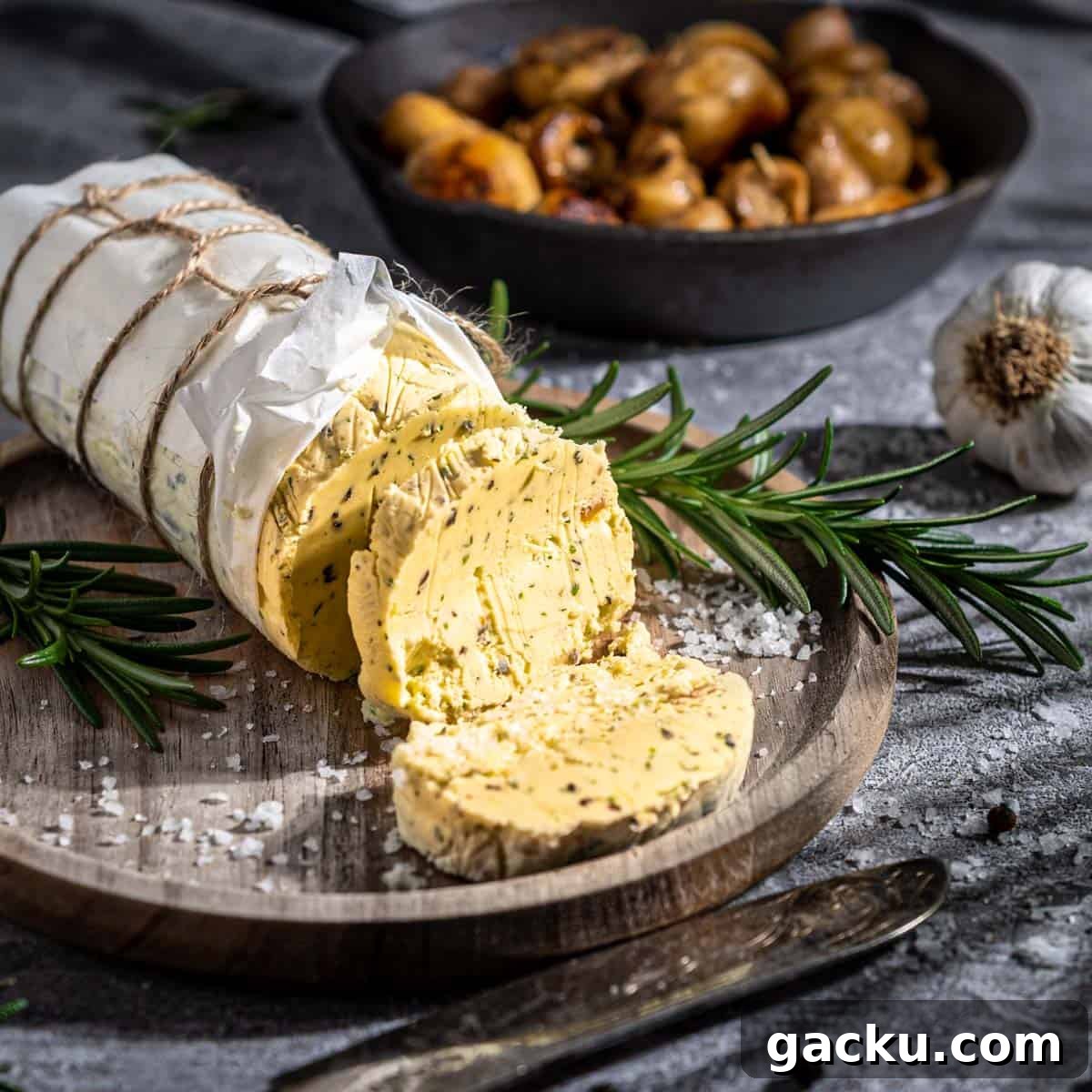
We fell for this versatile roasted garlic compound butter — it’s become a fridge staple we can’t live without. ❤️
Bold and aromatic, it lifts almost any dish. Spread it on warm bread for irresistible garlic bread, melt it over a hot steak, toss it with pasta for a quick creamy sauce, or stir it into vegetables for extra depth. A spoonful on a baked potato is heavenly.
[feast_advanced_jump_to]
What magic occurs when you roast garlic?
Roasting transforms garlic: it softens the cloves, tames the sharp bite and brings out a mellow, sweet, nutty character. Slow roasting caramelises the natural sugars and concentrates flavor, turning harsh raw garlic into a creamy, spreadable ingredient with deep roasted notes. The result is a butter that’s both sweet and savory with a rich garlic essence.
It’s a simple technique with big rewards — you’ll find yourself adding it to everything.
What’s to love about this recipe
- This roasted garlic compound butter is incredibly versatile and stores well in the fridge or freezer for quick flavour boosts.
- Making your own compound butter lets you customise the herbs and seasonings to your taste.
- It looks elegant served on the table and makes a lovely finishing touch.
- Portion-friendly: roll into a log and slice only what you need.
Key ingredient notes and substitutions
See the recipe card below for exact quantities.
Garlic
Use about 150g of whole, unpeeled garlic heads (not loose cloves). Roasting mellows and concentrates the flavour, so you need a generous amount of heads to get a pronounced roasted garlic taste.
Olive oil
Olive oil coats the garlic before roasting and helps caramelise the cloves. Vegetable oil can be substituted if preferred.
Butter
Salted butter gives the fullest flavour, but unsalted works if you add flaky sea salt to taste. Use butter at room temperature so it blends smoothly.
Herbs
The recipe uses parsley and rosemary, but you can swap or add thyme, basil, oregano, coriander, chives or mint depending on the dish. Lemon zest is a bright addition, and fresh herbs make the butter pop — experiment freely.
Instructions: Step-by-step
- Preheat the oven to 180°C / 356°F (gas mark 4). Line a baking sheet with foil for easy cleanup.
- Slice the very top off each garlic head to expose the cloves — this helps oil and heat penetrate and makes it easy to squeeze the roasted garlic out later.
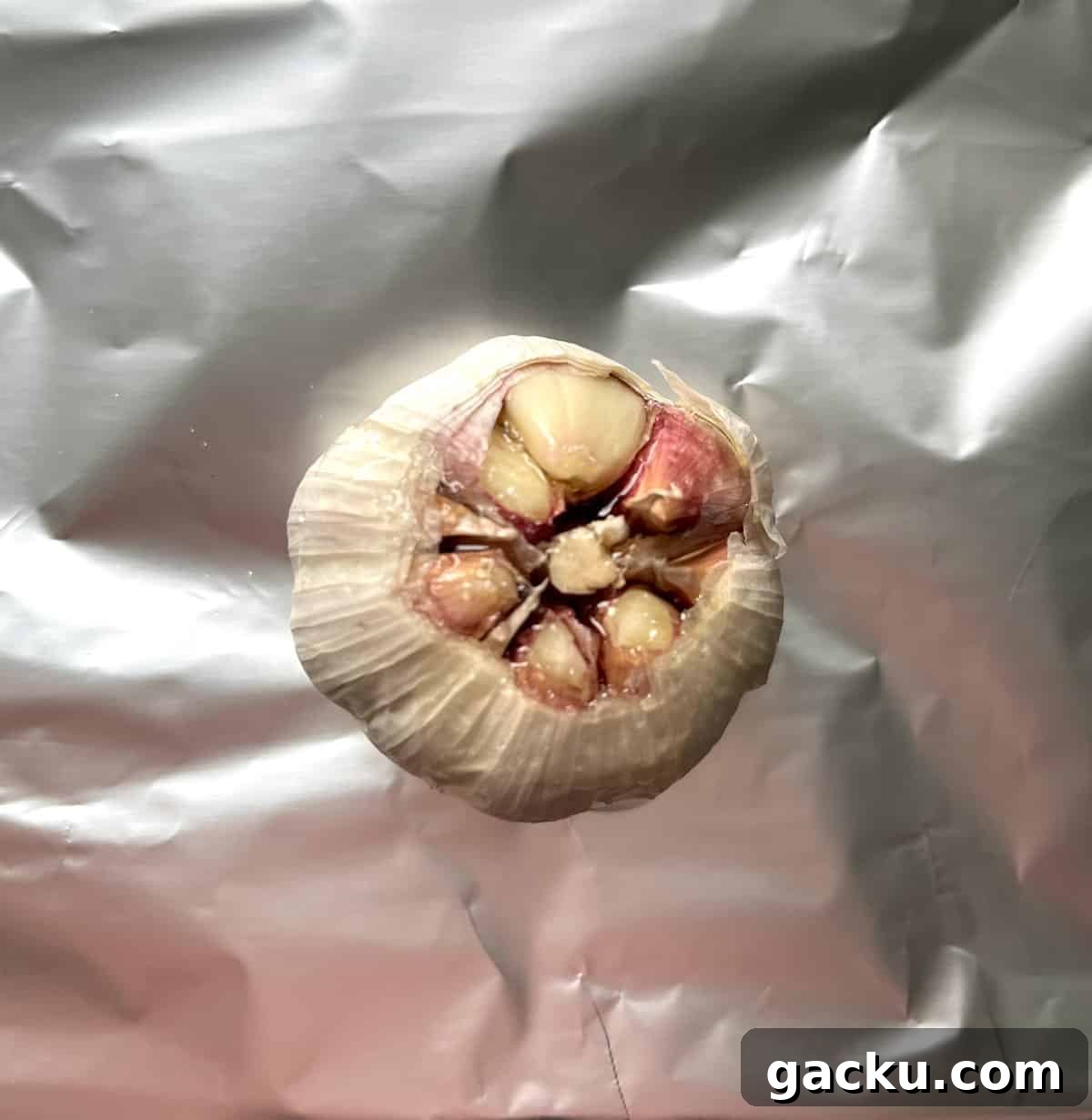
- Place each head on a square of foil (about 20cm x 20cm). Drizzle roughly one teaspoon of olive oil over the cut top of each head, then wrap the foil into a sealed parcel and arrange on the baking sheet.
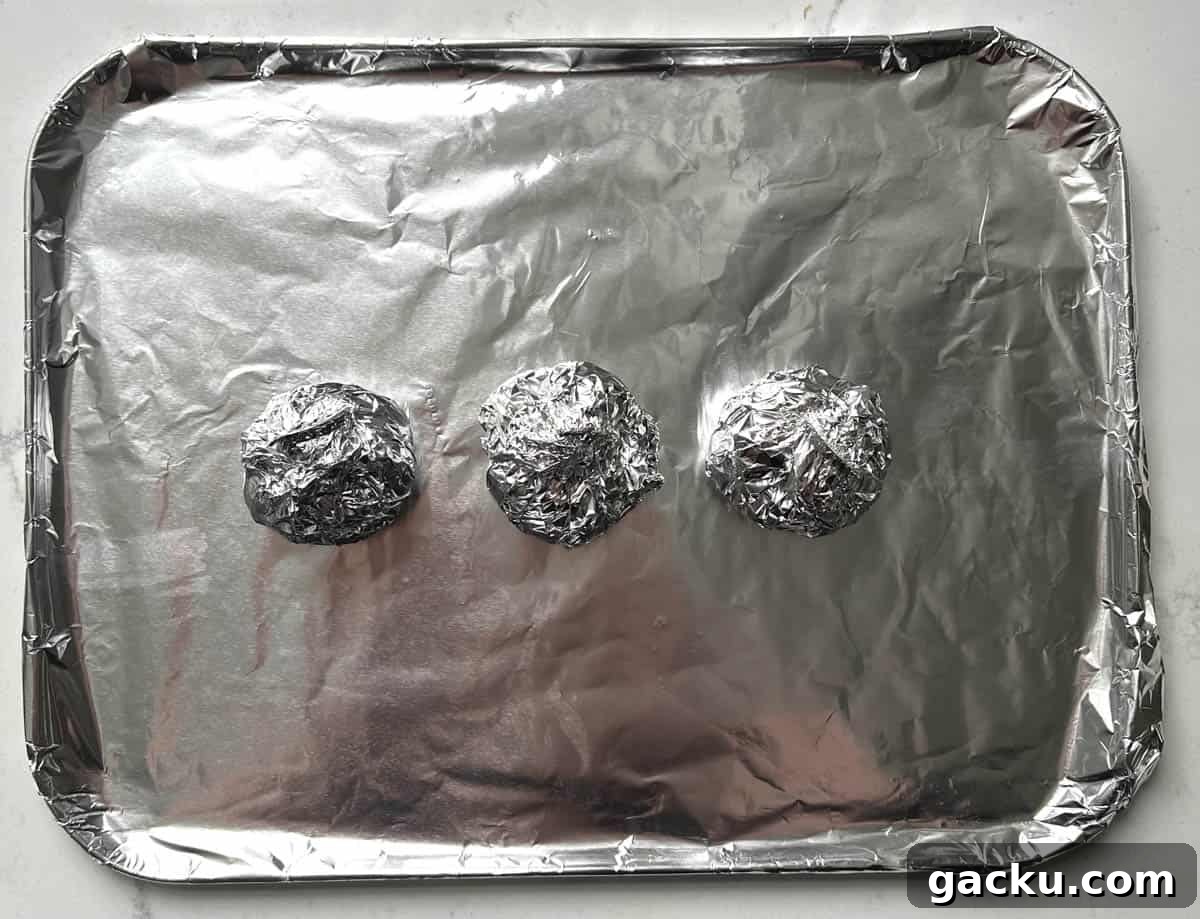
- Roast for about 45 minutes, until the cloves are soft and lightly caramelised. If needed, unwrap one parcel and return to the oven for another 5 minutes.
- Let the garlic cool for 15 minutes, then squeeze the soft cloves from their skins into a bowl.
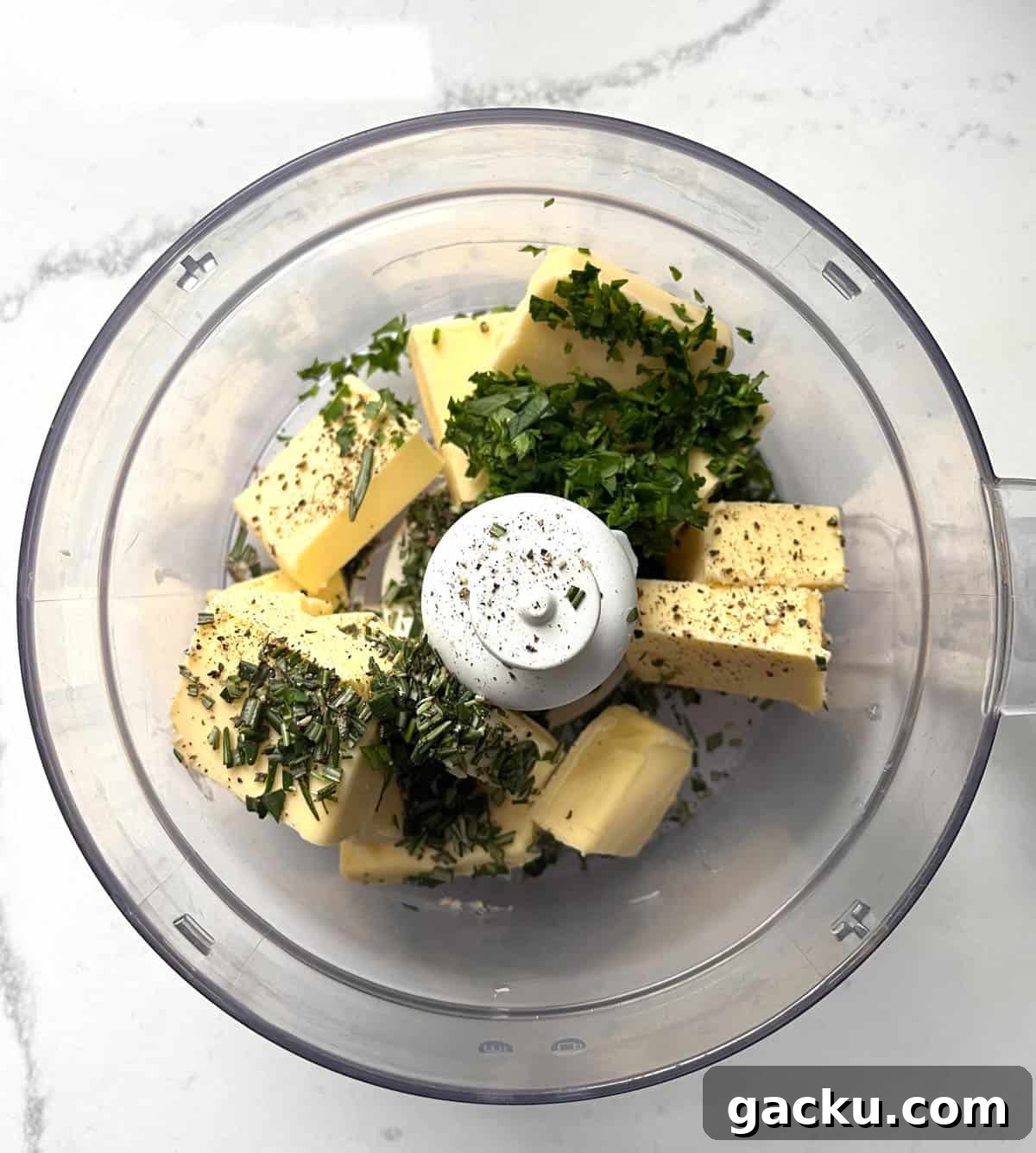
- Combine softened butter, chopped fresh herbs and a few grinds of black pepper in a food processor and blend until smooth.
- Add the roasted garlic and pulse until the cloves are evenly distributed. Taste and adjust seasoning if needed.
- Transfer the mixture to cling film, shape into a tight log, wrap, and chill in the fridge until firm.
Serving suggestions
- Pipe butter rosettes with a piping bag instead of rolling a log for an elegant presentation.
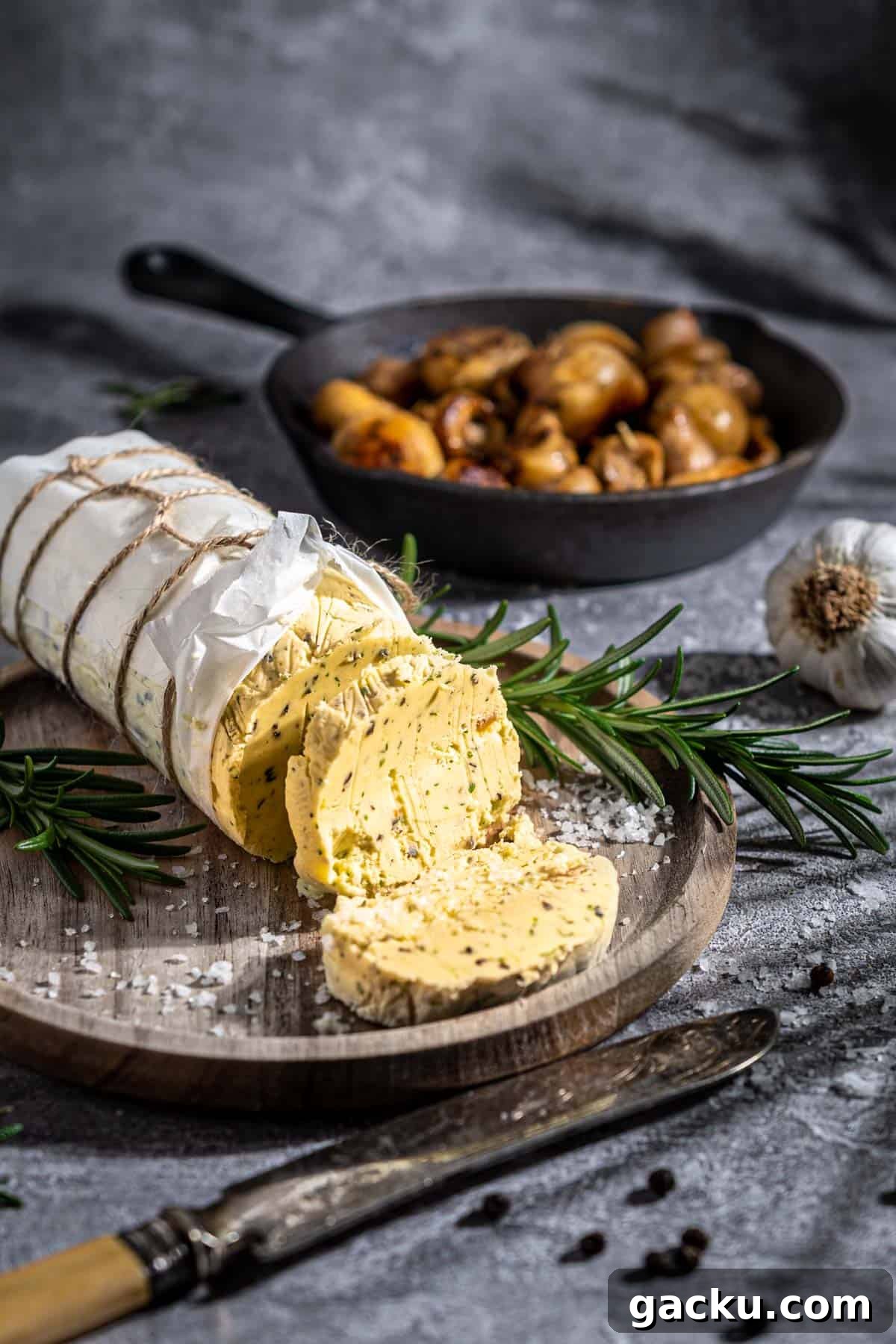
- Wrap in baking paper and tie with butcher’s string for a rustic look when serving at the table.
- Slice into rounds to serve individual portions or keep in an airtight container in the fridge for cooking and finishing dishes.
Uses
- Melt over fillet, ribeye, sirloin or rump steaks.
- Toss with sautéed mushrooms or steamed green vegetables.
- Spoon over fish, pork chops, prime rib, roast chicken or turkey.
- Stir into pasta, use on baked potatoes, or spread on fresh crusty bread for garlic bread.
- Add to roasted or steamed vegetables, crackers, or use to fry onions for extra flavour.
Variations
Try these swaps to change the flavour profile:
- Herbs: mint, coriander, basil, thyme, chives, tarragon.
- Spice: red pepper flakes, smoked paprika, chipotle or harissa.
- Veg add-ins: sun-dried tomatoes, roasted peppers, caramelised shallots or crispy onions.
- Citrus: lemon or orange zest for brightness.
- Nuts & cheese: chopped toasted nuts, Parmesan or blue cheese for richness.
Storage
Keep tightly wrapped compound butter in the fridge for up to one month. For longer storage, freeze for up to three months and thaw overnight in the refrigerator before using.
What exactly is compound butter?
Compound butter is simply butter mixed with additional flavourings — herbs, spices, aromatics or other ingredients — and then reformed and chilled. It’s used to finish meats and vegetables, spread on bread, or melt into sauces to add concentrated flavour.
More spread recipes
- How to make butter rosettes
- Quick Romesco Dip (5-minutes)
- Easy beetroot hummus
- Easy Pistachio Pesto
Recipe
Roasted garlic compound butter
Ingredients
- 150 grams garlic heads – weight of unpeeled, whole garlic heads
- 20 millilitre olive oil – to drizzle over garlic heads (about 1 tsp each)
- 250 grams salted butter – softened
- 1 tablespoon parsley – finely chopped
- 1 teaspoon rosemary – finely chopped
- few grinds black pepper
Instructions
-
Preheat oven to 180°C / 356°F (gas mark 4). Line a baking sheet with foil.
-
Slice the top off each garlic head to expose the cloves so oil and heat penetrate efficiently.
-
Place each head on a 20cm x 20cm square of foil, drizzle about one teaspoon of olive oil over the cut top, then wrap into sealed parcels.
-
Roast for 45 minutes until cloves are soft and lightly caramelised. If needed, give an extra 5 minutes.
-
Cool roasted garlic for 15 minutes, then squeeze the soft cloves from their skins.
-
Blend softened butter and herbs until smooth, then add roasted garlic and blend until evenly incorporated.
-
Shape the butter onto cling film into a log, wrap tightly and chill until firm.
Nutritional data disclaimer
The nutritional information provided is an estimate calculated by a third party and may vary depending on brands and exact ingredients used. Consult a qualified professional for personalised dietary advice.
Nutrition
For food safety advice, including guidance on food allergies, consult official food safety resources or a qualified professional.